
You’re three months into dating someone who checks all the boxes on paper, but your stomach still twists every time they text. You lie awake analyzing conversations, wondering if you’re self-sabotaging again or if your gut is screaming something you need to hear.
This confusion between relationship anxiety and being with the wrong person keeps millions of people stuck in relationships that drain them or running from connections that could actually work.
Relationship anxiety stems from your attachment patterns and triggers consistent worry across partners, while being with the wrong person creates specific, situation-based discomfort tied to their behaviors. Learning to distinguish between these two requires examining whether your anxiety existed before this relationship, intensifies around particular actions, or follows familiar patterns from your past. The right approach helps you either heal your anxiety or confidently walk away from incompatibility.
Understanding relationship anxiety versus incompatibility
Relationship anxiety feels like a constant hum of worry beneath everything good happening in your dating life. It shows up as obsessive thoughts about whether they like you enough, fear they’ll leave, or hypervigilance about every shift in their tone or texting frequency.
Being with the wrong person feels different. The discomfort connects directly to their specific behaviors, values, or treatment of you. Your body reacts to concrete actions, not imagined scenarios.
The challenge? Both create physical tension, sleepless nights, and the urge to either cling tighter or run away completely.
Here’s what makes them distinct:
- Relationship anxiety follows you from partner to partner with similar patterns
- Wrong person discomfort stays tied to this specific individual’s choices
- Anxiety often peaks during good moments when things feel “too perfect”
- Incompatibility stress increases when you’re actually together, not apart
- Anxiety asks “what if” questions about the future constantly
- Wrong person situations present clear “what is” problems in the present
The patterns that reveal relationship anxiety
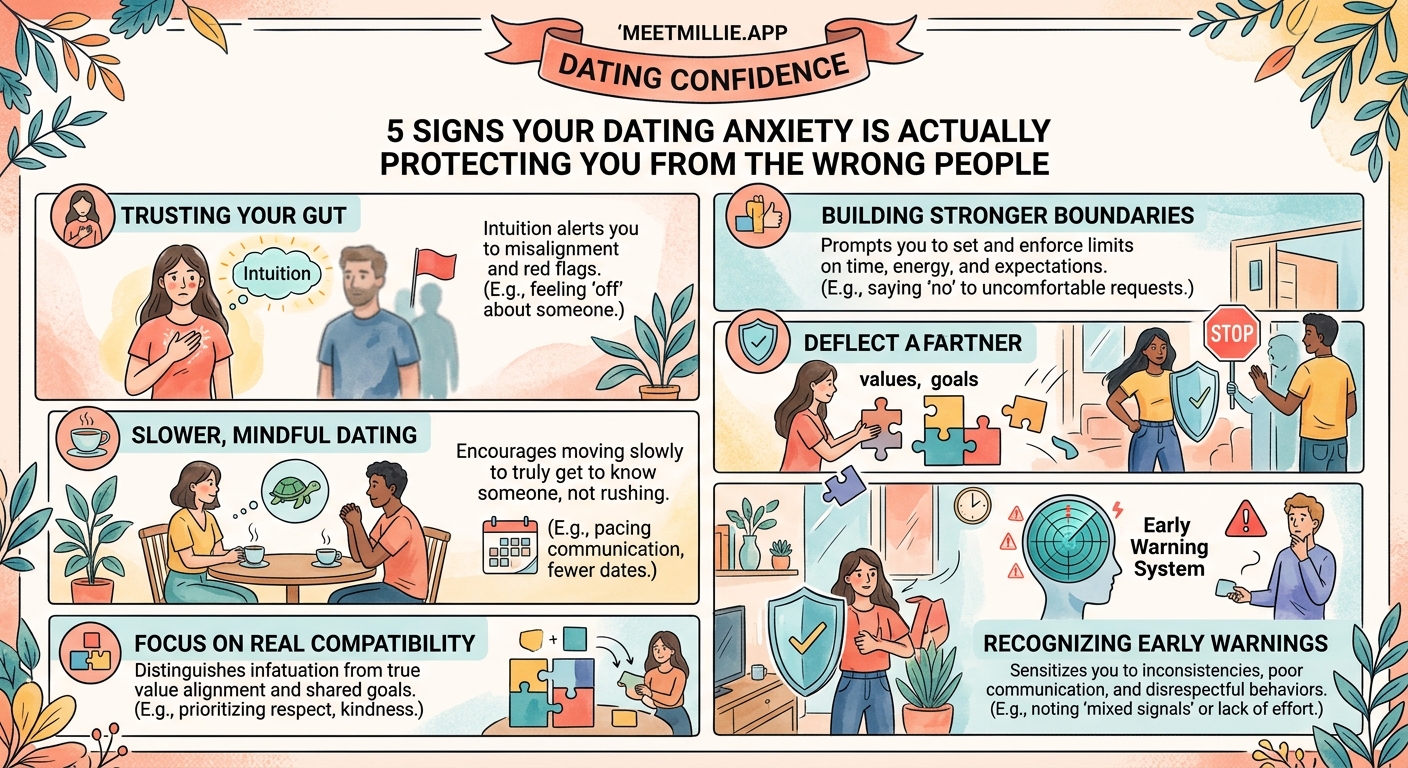
If you’ve felt this way in multiple relationships, even with vastly different people, you’re likely dealing with anxiety rooted in your attachment style rather than partner selection.
Anxious attachment developed early, usually from inconsistent caregiving. Your nervous system learned that love comes and goes unpredictably. Now it scans for threats to connection even when none exist.
Common anxiety patterns include:
- Needing constant reassurance that they still care about you
- Interpreting normal space or busy schedules as rejection
- Creating tests or drama to see if they’ll stay
- Feeling most anxious right after intimate, connected moments
- Obsessively checking their social media or text response times
- Catastrophizing small conflicts into relationship-ending events
These patterns existed before this person. They’ll exist after. The anxiety lives in you, triggered by intimacy itself, not by who you’re intimate with.
“Anxious attachment makes you believe every relationship is one mistake away from ending. You’re not responding to your partner. You’re responding to old wounds that convinced you love always leaves.” – Dr. Amir Levine, Attached
If you find yourself overthinking every text message regardless of who sends it, that’s your clue.
Signs you’re actually with the wrong person
Sometimes your anxiety isn’t irrational. Sometimes it’s your intuition wrapped in physical symptoms, trying to get your attention.
Wrong person anxiety connects to specific, observable behaviors that would make most people uncomfortable. Your nervous system responds to real incompatibility, not imagined abandonment.
| Sign | Anxiety Pattern | Wrong Person Reality |
|---|---|---|
| Communication | You worry they’ll stop texting | They actually ignore you for days without explanation |
| Conflict | You fear any disagreement means breakup | They use silent treatment, name-calling, or intimidation |
| Future talk | You’re anxious they won’t commit eventually | They explicitly say they don’t want what you want |
| Behavior consistency | You worry their feelings changed overnight | Their actions contradict their words regularly |
| Your needs | You’re scared to express needs | They dismiss or mock your needs when expressed |
The wrong person makes you anxious because they’re actually unreliable, dismissive, or incompatible with your core values. Your body knows before your mind accepts it.
Watch for these specific red flags that indicate real problems, not anxiety:
- They show clear red flags that your friends also notice
- Your values around money, kids, lifestyle, or integrity fundamentally clash
- They criticize your appearance, career, friends, or personality regularly
- You feel relief when plans cancel rather than disappointment
- They pressure you sexually or ignore your boundaries
- You’ve caught them in lies about where they were or who they’re with
- They refuse to define the relationship after months of dating
How to test which one you’re experiencing
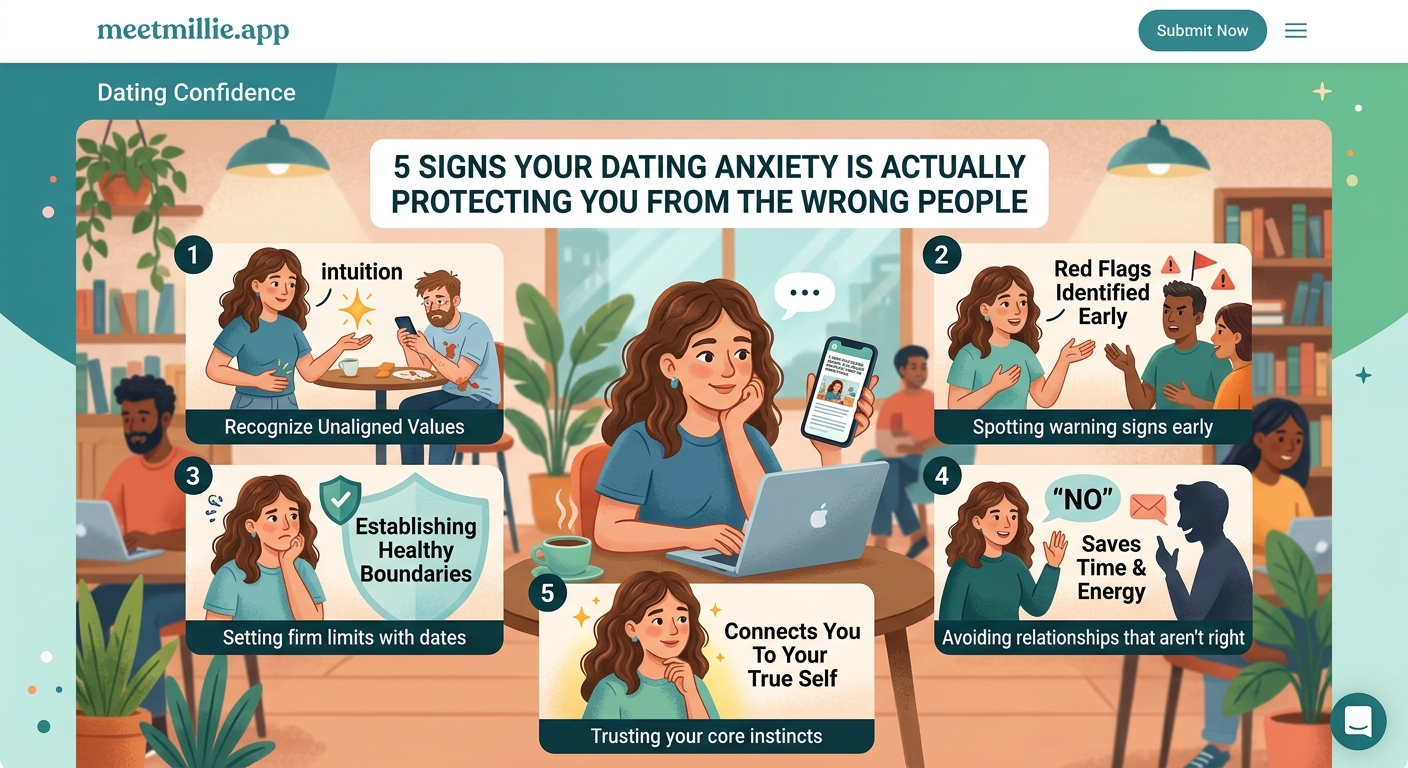
Distinguishing between your anxiety and their unsuitability requires honest self-examination. This process helps clarify what’s really happening.
-
Track your anxiety triggers for two weeks. Write down every moment you feel anxious about the relationship. Note what happened right before. Did they actually do something concerning, or did your mind spiral from nothing concrete?
-
Ask trusted friends for their read. People who know you well can spot whether you’re repeating old patterns or reacting to genuine problems. They’ve watched you date before. They know your defaults.
-
Notice your body’s response to their presence. Do you relax when you’re actually together and only spiral when apart? That suggests anxiety. Do you tense up when they walk in the room? That suggests incompatibility.
-
Examine your relationship history. Have you felt this exact way with multiple partners who treated you well? Anxiety. Is this the first time someone’s behavior has made you this consistently uncomfortable? Possibly the wrong fit.
-
Check if the relationship is moving past the honeymoon phase naturally. Anxiety about deepening intimacy differs from anxiety about someone’s character or treatment of you.
The answers won’t always feel clear immediately. Give yourself time to observe patterns rather than making decisions during peak anxiety moments.
What to do if it’s your anxiety
Recognizing your anxiety as the issue brings relief and responsibility. You can’t control another person, but you can absolutely work on your attachment patterns.
Start with these concrete steps:
- Find a therapist who specializes in attachment theory and relationship anxiety
- Practice self-soothing techniques when anxiety spikes instead of seeking reassurance
- Challenge catastrophic thoughts by asking for evidence they’re actually losing interest
- Build a life outside the relationship so your entire mood doesn’t hinge on their texts
- Communicate your attachment style to your partner so they understand your triggers
- Consider whether you’re actually ready to date or need more healing time first
Anxious attachment responds well to treatment. You can develop earned secure attachment through consistent therapy work and choosing partners who provide reliable, warm responsiveness.
The right partner for someone with anxious attachment stays patient during your healing process. They offer reassurance without enabling your anxiety. They maintain consistency even when you test them.
But they can’t fix your anxiety for you. That’s your work.
What to do if they’re actually wrong for you
If your anxiety connects to legitimate incompatibility or poor treatment, you need an exit strategy, not a coping mechanism.
Leaving someone who triggers justified anxiety takes courage. You might still care about them. The relationship might have good moments mixed with the bad. They might promise to change.
Here’s how to move forward:
- List the specific behaviors or incompatibilities causing your distress
- Share your concerns clearly and see if they take responsibility or deflect
- Set a timeline for seeing meaningful change if they commit to it
- Notice whether your anxiety decreases when you imagine leaving
- Reach out to friends or family for support in maintaining boundaries
- Plan practical logistics like living situations before having the final conversation
- Accept that compatibility isn’t about good or bad people, just fit
You don’t need to wait until someone is abusive to leave. Incompatibility is reason enough.
Some people trigger your anxiety because they’re emotionally unavailable, inconsistent, or want different things. That doesn’t make you anxious. That makes you human, responding normally to an unstable situation.
When it’s both anxiety and the wrong person
Sometimes you’re dealing with both. Your anxious attachment draws you to avoidant partners who trigger your deepest fears. They’re not right for you, and you’re also working through your own patterns.
This combination feels especially confusing because your anxiety isn’t entirely irrational. They are pulling away. They are inconsistent. But you’re also choosing people who recreate your childhood attachment wounds.
The pattern looks like this:
- You’re attracted to emotionally unavailable people who feel like a challenge
- Their hot-and-cold behavior triggers your anxiety, which you then blame yourself for
- You work harder to win their affection, which pushes them further away
- The relationship ends, confirming your fear that you’re too much or not enough
- You repeat the cycle with someone similar
Breaking this pattern requires addressing both issues. Work on your anxiety while also raising your standards for how partners treat you.
Choose people who are taking things slow because they want to build something solid, not because they’re keeping options open.
Your anxiety has valuable information either way
Whether your discomfort stems from relationship anxiety or genuine incompatibility, it’s telling you something important about your needs, boundaries, or healing journey.
Anxiety about intimacy signals unresolved attachment wounds that deserve attention and care. Anxiety about a specific person’s behavior signals that your standards need defending.
Both deserve your attention. Neither makes you broken or difficult.
The goal isn’t eliminating all anxiety from dating. Some nervousness around vulnerability is normal and even healthy. The goal is developing the clarity to know which anxiety to work through and which to listen to.
Trust yourself enough to get support figuring out the difference. Your future relationships depend on learning this skill now.