
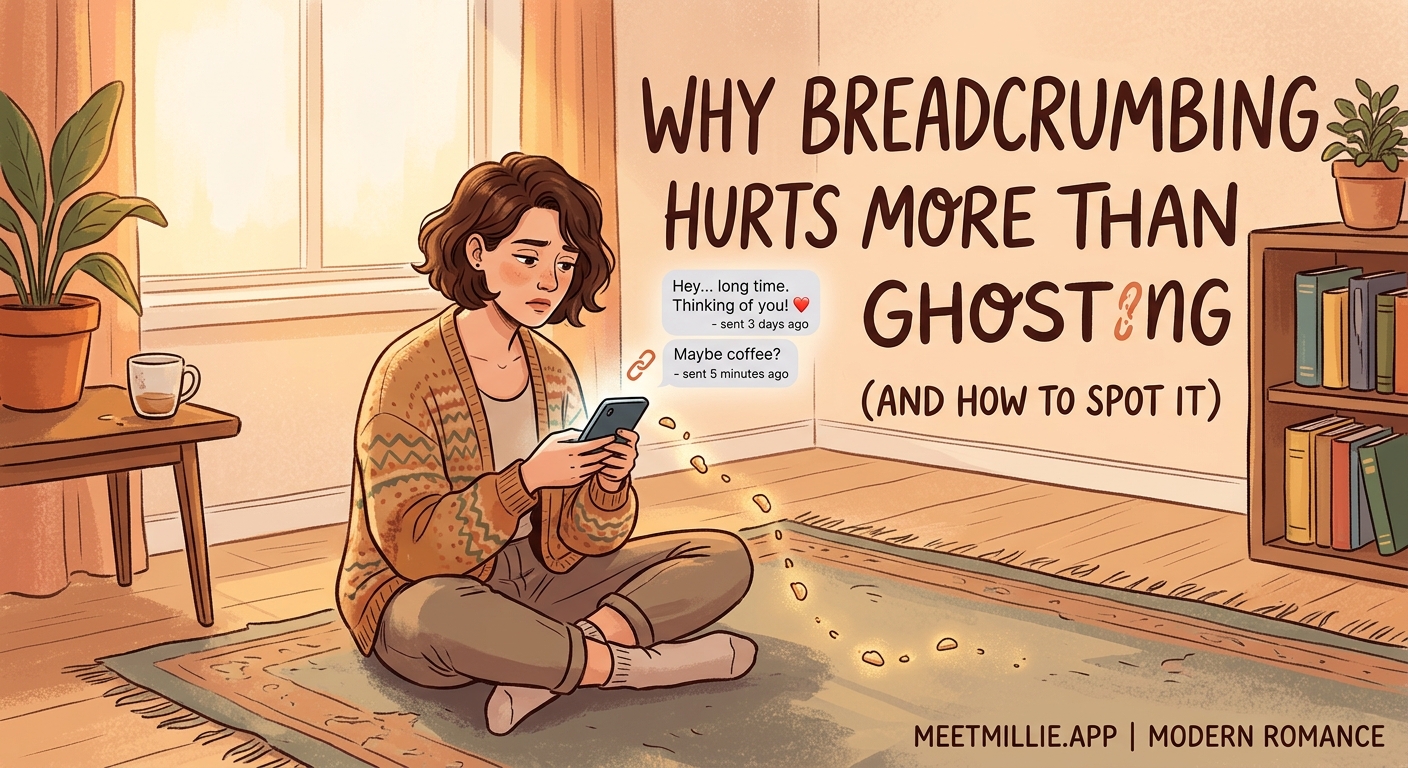
You check your phone for the third time in an hour. Still nothing. Then, just as you’re about to give up, a text appears. It’s short, maybe even sweet, but it doesn’t lead anywhere. No plans. No real conversation. Just enough to keep you wondering if they’re still interested.
This pattern feels different from being ghosted. At least with ghosting, you know where you stand. But this? This keeps you in limbo, constantly second-guessing yourself and refreshing your messages.
Breadcrumbing causes more psychological harm than ghosting because it maintains false hope through sporadic attention. While ghosting provides painful clarity, breadcrumbing creates ongoing confusion and self-doubt. Recognizing inconsistent communication patterns, one-sided effort, and vague responses helps you identify breadcrumbing early. Setting firm boundaries and choosing people who match your energy protects your emotional wellbeing and saves time you’d otherwise waste on unavailable partners.
What makes breadcrumbing different from ghosting
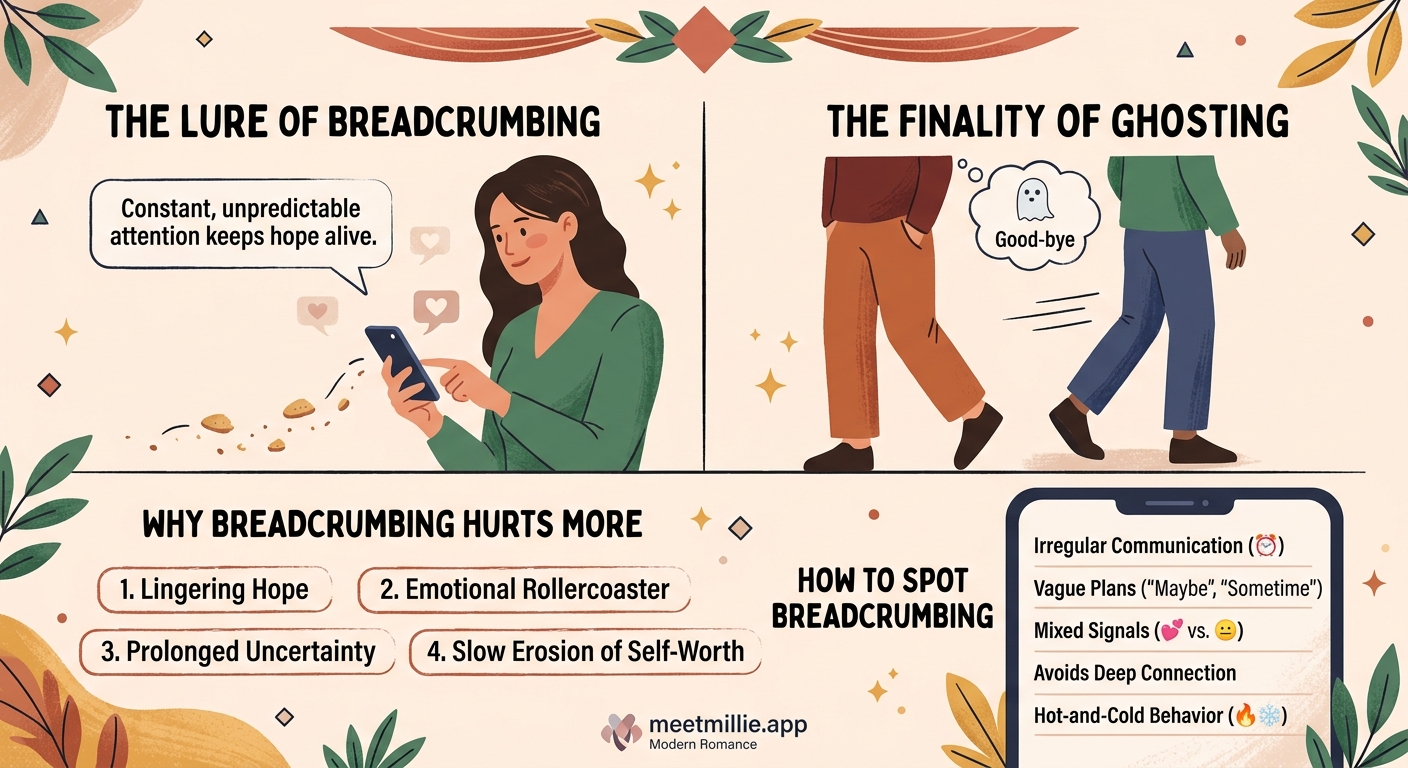
Ghosting means someone disappears completely. No texts, no calls, no explanation. They’re just gone.
Breadcrumbing is trickier. Someone leaves just enough crumbs of attention to keep you interested. A late-night text here. A like on your photo there. Maybe a “we should hang out soon” that never materializes.
The key difference? Ghosting ends the confusion. Breadcrumbing prolongs it.
When someone ghosts you, your brain eventually accepts the rejection. You move on. But breadcrumbing keeps activating your reward system. Each small interaction triggers a hit of dopamine, making you hope this time will be different.
That’s why breadcrumbing often hurts more. You’re stuck in a cycle of hope and disappointment that can last weeks or even months.
The psychology behind why breadcrumbing damages you more
Your brain craves certainty. Even negative certainty feels better than ambiguity.
Research on intermittent reinforcement shows that unpredictable rewards create stronger attachment than consistent ones. Slot machines work on this principle. So does breadcrumbing.
When someone ghosts you, you experience acute rejection. It stings, but you can process it and heal. When someone breadcrumbs you, you experience chronic uncertainty. Your nervous system stays activated, constantly scanning for signals about where you stand.
This ongoing stress affects your self-esteem differently than ghosting does. With ghosting, you might think “they weren’t interested.” With breadcrumbing, you think “maybe I’m not doing enough” or “if I just wait a little longer.”
You start questioning your judgment. You analyze every word in their messages. You wonder if you’re being too demanding or not patient enough.
“Breadcrumbing creates a trauma bond through inconsistency. Your brain becomes addicted to solving the puzzle of their behavior, which keeps you emotionally invested in someone who’s barely present.” – Dr. Sarah Martinez, relationship psychologist
The emotional whiplash between hope and disappointment also depletes your energy. You can’t fully invest in meeting new people because you’re still holding space for someone who’s barely there.
How to spot breadcrumbing before it wrecks your confidence
Recognizing the pattern early saves you months of confusion. Here are the clearest signs:
Communication patterns that signal breadcrumbing:
- They text sporadically, often after days or weeks of silence
- Messages arrive late at night or when they’re likely bored
- They respond to your messages but rarely initiate meaningful conversation
- Their replies are brief and don’t invite deeper discussion
- They frequently cancel plans or keep things vague about meeting up
- They’re active on social media but claim they’re “too busy” to see you
The timing matters too. If someone only reaches out when their other options fall through, you’re not a priority. You’re a backup plan.
Pay attention to how you feel after interacting with them. Genuine interest makes you feel energized and valued. Breadcrumbing leaves you anxious and confused.
The breadcrumbing playbook broken down
Understanding common breadcrumbing tactics helps you identify them faster:
| Breadcrumbing Tactic | What It Looks Like | Why It Keeps You Hooked |
|---|---|---|
| Future faking | “We should definitely go to that new restaurant sometime” | Creates hope without commitment |
| Hot and cold | Intense attention followed by days of silence | Triggers anxiety and need for reassurance |
| Vague availability | “I’m so busy right now but I want to see you” | Shifts blame away from their lack of interest |
| Digital-only connection | Lots of texting but never making concrete plans | Maintains connection without real investment |
| Late-night attention | Only messaging after 10 PM | Suggests you’re an afterthought or convenience |
| Compliments without follow-through | “You’re amazing” but won’t commit to a date | Gives validation while avoiding real effort |
Each tactic serves the same purpose: keeping you interested while they avoid commitment or accountability.
Step-by-step guide to handling breadcrumbing
If you suspect someone is breadcrumbing you, here’s how to address it:
-
Document the pattern over two weeks. Screenshot timestamps and note how often they initiate versus respond. This removes emotion from your assessment and shows you the facts.
-
Set a clear boundary through direct communication. Send one message stating what you need: “I’m looking for someone who can make time for regular dates. If that’s not where you’re at right now, I understand, but I need to know.” Their response (or lack of one) tells you everything.
-
Give them exactly one week to demonstrate change. If they wanted to see you, they’d make it happen within seven days. No exceptions, no excuses that hold weight.
-
Cut contact completely if nothing changes. Don’t explain again. Don’t leave the door open. Block if necessary. People who breadcrumb often try to reel you back in once you pull away.
The hardest part? Actually following through when they give you another excuse or another crumb. But this is where you protect your time and emotional energy for someone who won’t make you guess.
Why ghosting provides closure that breadcrumbing never will
Ghosting hurts in the moment. But it forces you to face reality.
When someone disappears completely, you can’t misinterpret their intentions. There’s no “maybe they’re just busy” or “maybe they’re scared of commitment.” They’re gone. That clarity, however painful, lets you grieve and move forward.
Breadcrumbing denies you that closure. Every small interaction resets your healing process. You’re constantly re-evaluating whether to stay or go.
Many people report feeling relief once someone who was breadcrumbing them finally ghosts completely. The ambiguity ending feels like permission to stop hoping and start healing.
That doesn’t make ghosting good behavior. Both are disrespectful ways to treat someone. But if you had to choose which one to experience, ghosting at least respects your time by ending things definitively.
Common mistakes people make when being breadcrumbed
Recognizing these errors helps you avoid prolonging your own suffering:
- Making excuses for their behavior based on what they say rather than what they do
- Continuing to initiate contact even though they rarely reciprocate
- Accepting breadcrumbs because you think it’s better than being alone
- Waiting months for someone to “figure out what they want”
- Blaming yourself for their inconsistency
- Staying because of the potential you see in them rather than the reality they’re showing you
The biggest mistake? Thinking you can change the dynamic by being more understanding, more patient, or more available. Breadcrumbing isn’t about you lacking something. It’s about them choosing not to prioritize you.
If you find yourself constantly overthinking text messages, you might benefit from learning how to stop overthinking every text message you send so you can approach communication with more confidence.
What breadcrumbing reveals about someone’s character
Actions show you who someone really is. Breadcrumbing reveals several character traits worth noting:
Someone who breadcrumbs lacks emotional maturity. They can’t have an honest conversation about their level of interest or availability. Instead, they avoid discomfort by keeping you in limbo.
They also demonstrate selfishness. They want the benefits of your attention without the responsibility of actually dating you. Your confusion and hurt matter less than their convenience.
Most telling? They’re comfortable with dishonesty. Not outright lies necessarily, but the dishonesty of implying interest they don’t have. Of suggesting future plans they won’t keep.
These traits don’t change because you’re patient or understanding. They change when someone decides to do the internal work required to show up differently. That’s not your job to wait for.
Protecting yourself from both breadcrumbing and ghosting
Prevention starts with recognizing your own worth and setting standards early.
Before you get emotionally invested, watch how someone behaves in the first few weeks. Consistent people show up consistently. They make plans and keep them. They communicate clearly about their interest and availability.
If someone’s behavior confuses you early on, trust that feeling. Confusion isn’t a sign you need to try harder to understand them. It’s often a sign they’re showing you exactly who they are.
Set a personal rule: you match energy, not potential. If someone texts once a week, you text once a week. If they never suggest plans, you stop suggesting them. This protects you from over-investing in people who aren’t investing in you.
Also remember that first date red flags you shouldn’t ignore often predict later communication issues. Someone who’s vague or inconsistent from the start rarely becomes more reliable over time.
The recovery process after experiencing breadcrumbing
Healing from breadcrumbing takes longer than healing from ghosting because you’ve been in a state of chronic stress.
Give yourself permission to feel angry. You were manipulated, even if unintentionally. That anger is valid and actually helpful for moving on.
Stop checking their social media. Every glimpse into their life reactivates your attachment and resets your healing timeline. Block or mute them everywhere.
Reconnect with your own life outside of dating. Breadcrumbing often makes you so focused on decoding someone else’s behavior that you neglect your own interests and friendships. Rebuilding that foundation reminds you that your worth isn’t determined by someone’s inconsistent attention.
Consider this a valuable learning experience. You now know what breadcrumbing looks like. You’ll spot it faster next time and exit sooner.
If you’re wondering whether you’re ready to date again after this experience, check out these signs you’re actually ready to date again after a breakup to make sure you’ve fully healed.
Building better communication standards for future connections
The best defense against breadcrumbing is knowing what healthy communication looks like and refusing to accept less.
Healthy communication includes:
- Consistent response times that match someone’s stated interest level
- Clear expressions of interest backed up by action
- Honest conversations about availability and relationship goals
- Mutual effort in planning and initiating contact
- Respect for your time demonstrated through kept commitments
When you meet someone new, pay attention to whether they meet these standards within the first month. That’s enough time to see patterns without over-investing emotionally.
Also practice direct communication yourself. Ask clear questions about what someone wants. State your own needs plainly. This filters out people who prefer ambiguity and attracts people who value straightforward connection.
Understanding what taking things slow actually means in modern dating can help you distinguish between someone who’s genuinely pacing a relationship and someone who’s just stringing you along.
When breadcrumbing happens in established relationships
Breadcrumbing doesn’t only happen in early dating. Sometimes it emerges in relationships that were once consistent.
If your partner suddenly becomes distant but won’t discuss it, that’s relationship breadcrumbing. They’re giving you just enough to keep you from leaving but not enough to maintain real intimacy.
This often signals:
- They’re considering ending the relationship but haven’t decided
- They’re emotionally invested elsewhere but keeping you as a backup
- They’re going through something personal but won’t communicate about it
- The relationship has run its course but they’re avoiding the conversation
The solution remains the same: direct communication and clear boundaries. “I’ve noticed you’ve been distant lately. I need us to talk about what’s happening and whether you want to continue this relationship.”
If they can’t or won’t have that conversation, you have your answer. A relationship requires two people who are both present and invested.
Choosing people who choose you back
The most important lesson from understanding breadcrumbing versus ghosting is this: you deserve people who are sure about you.
Not perfect people. Not people who never have doubts or busy periods. But people who communicate clearly, show up consistently, and treat your time as valuable as their own.
When you stop accepting breadcrumbs, you create space for people who offer the whole meal. You stop wasting months decoding mixed signals and start building connections with people whose interest is obvious.
That doesn’t mean dating becomes easy. But it does mean you’ll spend less time confused and more time actually enjoying the process of getting to know someone who’s equally excited to know you.
Your willingness to walk away from breadcrumbing is one of the most powerful dating skills you can develop. It shows you value yourself enough to require mutual effort. And that standard attracts the kind of people worth your time.