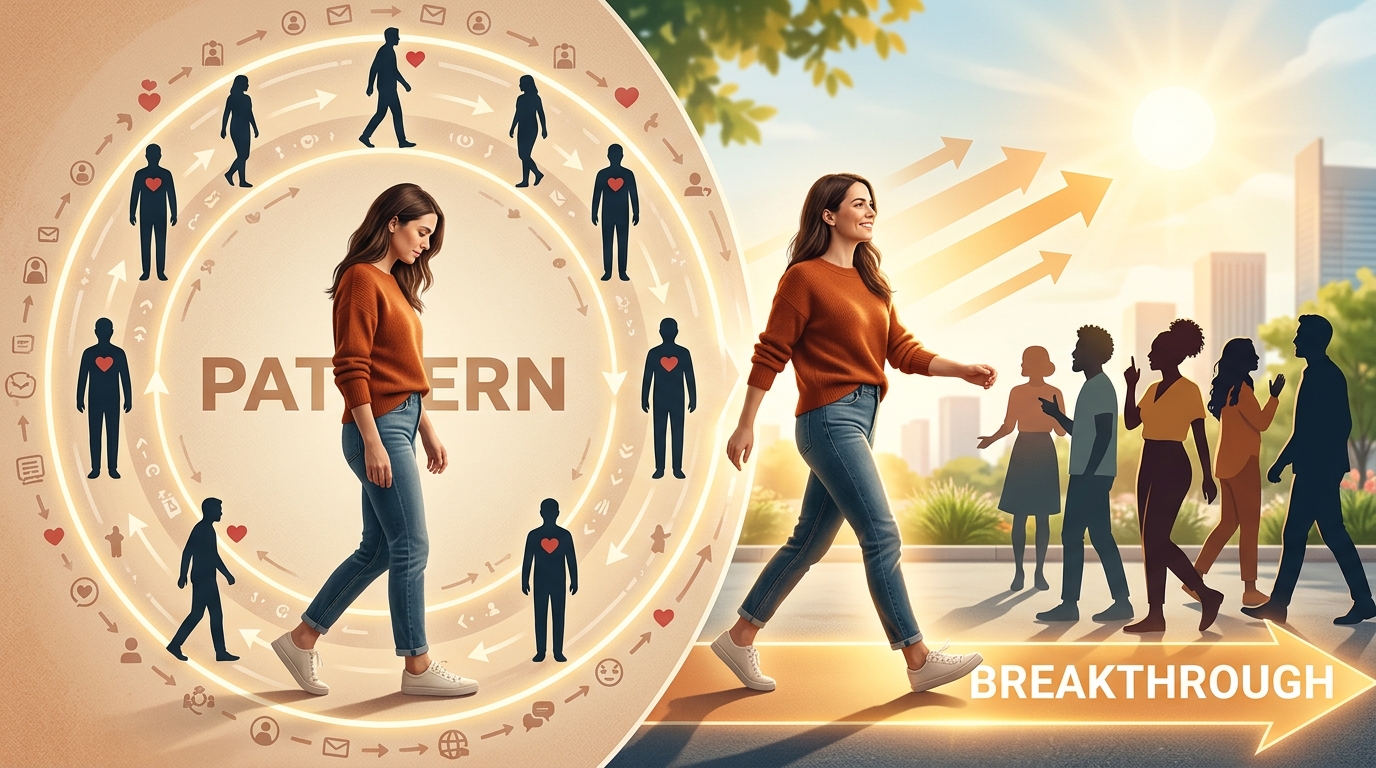
You’ve been here before. Different name, different face, but somehow the same story. The emotionally unavailable partner who keeps you at arm’s length. The charismatic one who turns out to be unreliable. The person who seems perfect until the exact same issues surface three months in.
You’re not imagining it. And you’re definitely not alone.
Repetitive relationship patterns stem from attachment styles, unresolved emotional wounds, and subconscious comfort with familiar dynamics. Breaking these cycles requires identifying your specific pattern, understanding its psychological roots, examining your selection process, and actively rewiring your attraction responses through conscious dating choices and personal growth work.
The Psychology Behind Repetitive Attraction
Your brain is wired to seek familiarity, even when familiar feels terrible.
This isn’t a character flaw. It’s neuroscience.
When you grow up with certain relationship dynamics, your brain creates neural pathways that recognize those patterns as “normal.” Your nervous system literally feels more comfortable with what it knows, even if what it knows is dysfunction.
Attachment theory explains much of this. Developed by psychologist John Bowlby, it describes how early relationships with caregivers shape your adult romantic patterns.
People with anxious attachment often attract avoidant partners. The push-pull dynamic feels electric, but it’s really just familiar. If you learned love meant chasing, you’ll unconsciously seek people who make you chase.
Those with avoidant attachment tend to choose anxious partners or other avoidants. Either way, intimacy stays at a safe distance.
Secure attachment is the goal, but it’s not always the starting point.
“We don’t just repeat our past in relationships. We’re often trying to resolve it. The problem is we keep choosing the same type of person, hoping for a different outcome.” – Dr. Amir Levine, attachment researcher
Five Reasons You’re Stuck in the Same Pattern
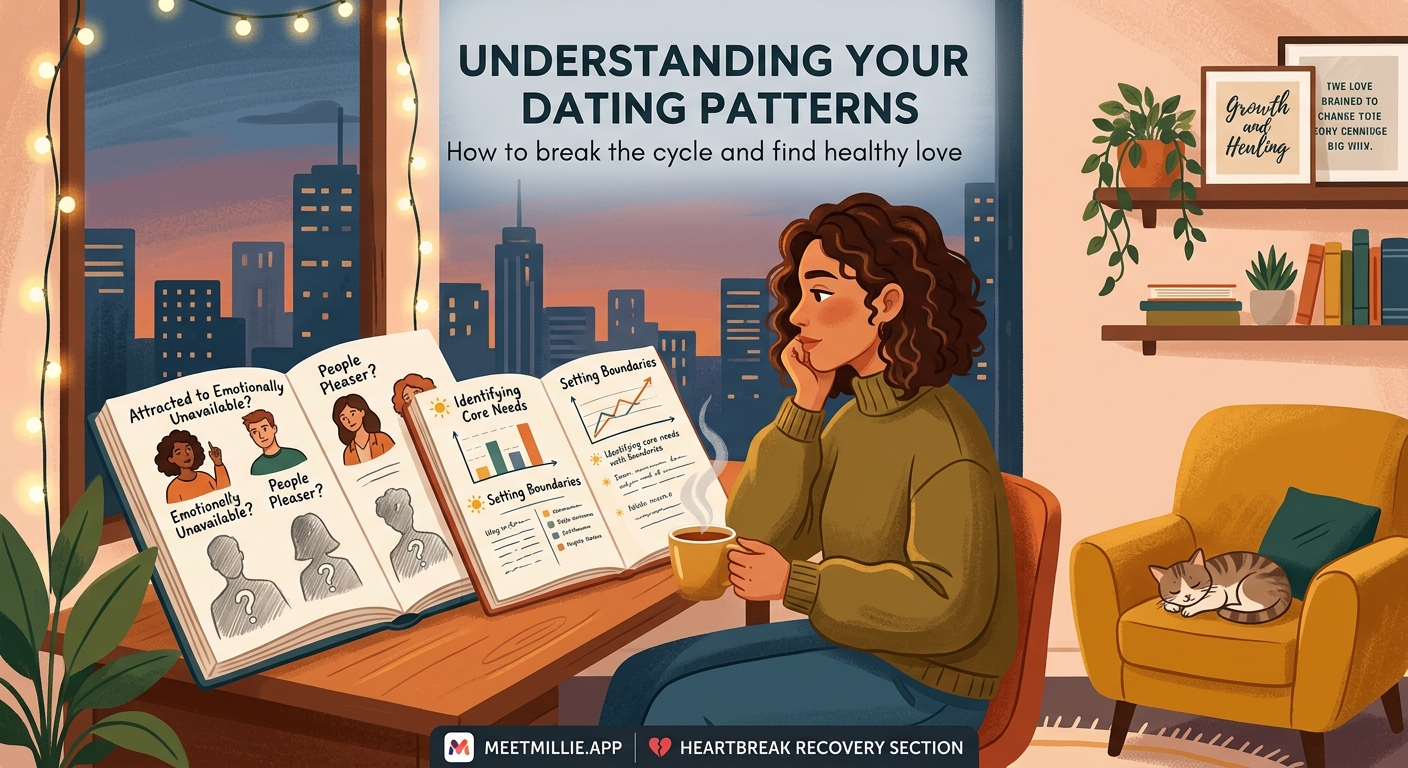
You’re trying to heal old wounds through new people
This one’s sneaky.
Your subconscious thinks: “If I can get this emotionally unavailable person to choose me, I’ll finally prove I’m worthy.”
But that’s not how healing works.
You’re essentially casting the same actor in different productions of the same play, hoping this time the ending changes. It won’t. The script is the problem, not the performance.
Your self-concept hasn’t changed
How you see yourself determines who you think you deserve.
If deep down you believe you’re too much, not enough, or fundamentally flawed, you’ll select partners who confirm that belief. It’s called confirmation bias, and it runs your dating life more than you’d like to admit.
When someone treats you well, it might feel wrong. Boring. Like something’s missing.
What’s missing is the drama your nervous system expects.
You mistake chemistry for compatibility
That instant spark? The butterflies? The obsessive thoughts?
Often, that’s not attraction to a healthy partner. It’s your attachment system recognizing a familiar wound.
Real compatibility can feel calm. Steady. Almost too easy.
People often describe meeting their person as “different from anything before” precisely because it doesn’t trigger old patterns. It feels foreign because it’s healthy.
You’re not addressing your own patterns first
You can’t outrun your issues by finding the right person.
If you have unresolved trauma, poor boundaries, or unhealthy coping mechanisms, those will show up in every relationship. Different partner, same problems, because you’re bringing the same version of yourself.
The work has to happen inside you first.
You’re selecting from the same pool
Where you look determines what you find.
If you’re always meeting people at bars and wondering why they’re all heavy drinkers, that’s not coincidence. If you’re attracted to “bad boys” or “fixer-uppers,” you’re filtering for those traits, consciously or not.
Your selection criteria might be the problem, not the available options.
How to Identify Your Specific Pattern
Breaking a cycle starts with seeing it clearly.
Most people know they have a type, but they’ve never actually mapped it. Here’s how:
-
List your last three to five significant relationships or dating situations. Include the ones that didn’t work out, especially those.
-
Write down the common traits, behaviors, and dynamics. Not physical characteristics. Focus on emotional patterns, communication styles, availability, how conflict happened, and how things ended.
-
Look for the thread. What shows up every time? The workaholic? The person with an ex they’re not over? The one who’s great until commitment comes up?
-
Identify your role in the pattern. What did you do in each situation? Did you pursue? Wait? Tolerate poor treatment? Ignore red flags? This part is hard but essential.
-
Connect it to your past. Does this dynamic remind you of a parent, caregiver, or early relationship? The connection isn’t always obvious, but it’s usually there.
This exercise isn’t about blame. It’s about awareness.
You can’t change what you can’t see.
The Familiarity Trap
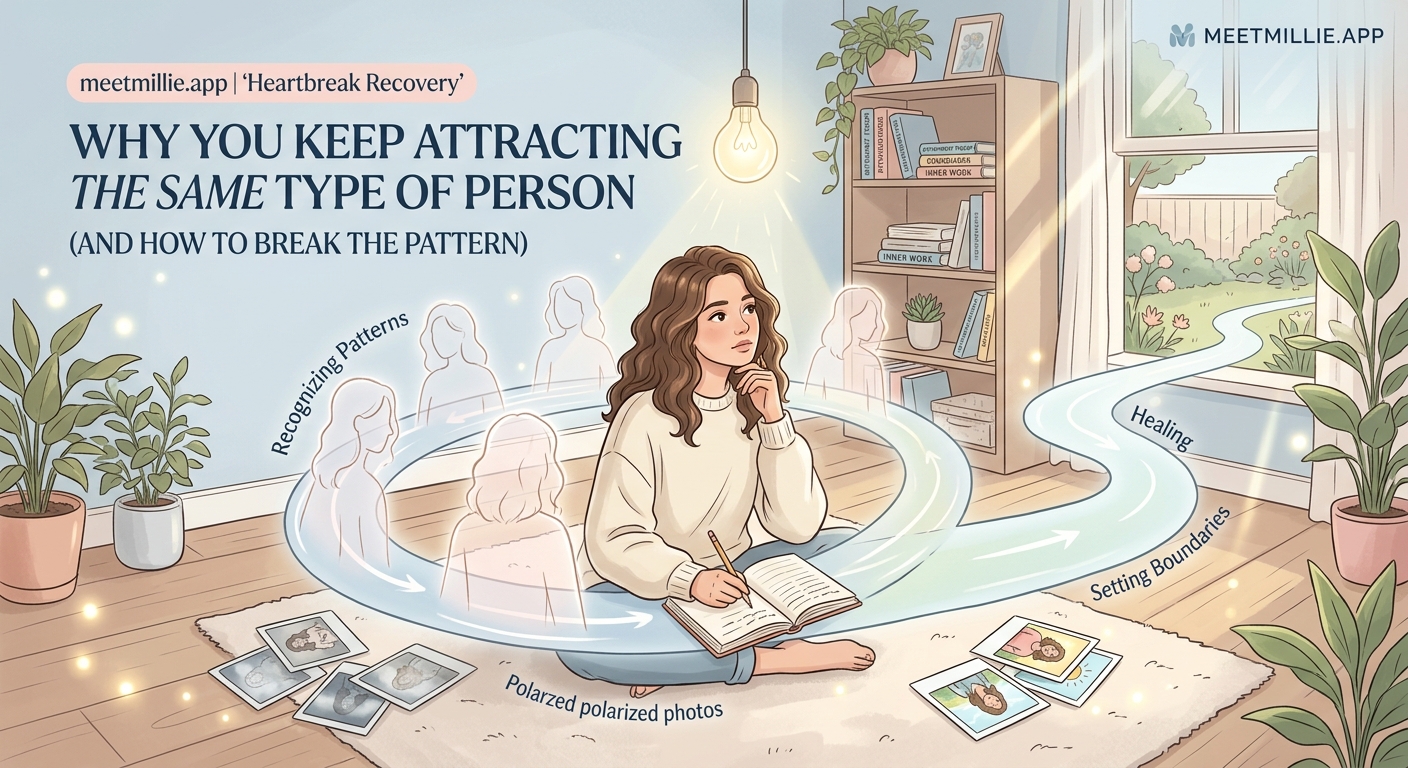
Your comfort zone is killing your love life.
When someone feels “right,” ask yourself: right for my growth, or right for my patterns?
Familiarity registers as attraction in your brain. The person who makes you anxious might feel more exciting than the person who’s consistently available. That’s not preference. That’s programming.
Here’s what familiar often looks like in practice:
- The person who’s hot and cold feels more interesting than someone who’s steady
- You’re more attracted to people you have to win over than people who clearly like you
- Relationships that require constant effort feel more meaningful than easy ones
- You interpret anxiety as passion and calm as lack of chemistry
The familiarity trap convinces you that healthy love will feel wrong because it’s different from what you know.
Breaking free means tolerating discomfort while your nervous system adjusts to something new.
Red Flags Versus Triggers
Not every warning sign is a dealbreaker, and not every uncomfortable feeling is a red flag.
Learning the difference is critical.
| Red Flags (Actual Problems) | Triggers (Your Stuff) |
|---|---|
| Consistent disrespect or boundary violations | Feeling anxious when someone is genuinely kind |
| Lying or deceptive behavior | Discomfort with healthy communication |
| Inability to take responsibility | Fear when someone is emotionally available |
| Controlling or manipulative actions | Boredom in the absence of drama |
| Dismissing your feelings repeatedly | Panic when things are going well |
Red flags are about the other person’s behavior. They’re patterns of harm.
Triggers are about your nervous system’s response to unfamiliar (often healthier) dynamics.
If someone’s behavior would concern your best friend, it’s probably a red flag. If you’re the only one worried and they’re treating you well, it might be a trigger.
Both require attention, but they need different responses.
Red flags mean exit. Triggers mean therapy.
Rewiring Your Attraction System
You can change who you’re drawn to, but it takes intentional work.
Your brain built these pathways over years. Rebuilding takes time and repetition.
Start with conscious dating. Instead of following your gut (which is just your pattern), date with intention. Create a list of non-negotiable qualities based on values, not feelings. When you meet someone, check them against the list before your heart gets involved.
Practice sitting with discomfort. When someone healthy feels “wrong,” don’t run. Notice the feeling. Name it. Remind yourself that different doesn’t mean bad. Your nervous system needs evidence that safe love is possible.
Date people who seem “boring” at first. Give them three dates minimum. Sometimes attraction builds slowly with the right people because there’s no trauma bond accelerating things. Real connection takes time to develop.
Work with a therapist. Particularly one trained in attachment theory or trauma. You can’t think your way out of patterns formed before you had language. Professional support helps rewire at the nervous system level.
Build security within yourself first. Develop routines, friendships, hobbies, and self-care practices that make you feel grounded. The more secure you are alone, the less you’ll tolerate insecurity in partnership.
Recognizing first date red flags you shouldn’t ignore even if there’s chemistry becomes easier when you’re not being led solely by attraction.
Common Patterns and What They Mean
The Unavailable Partner
You’re drawn to people who can’t fully commit. They’re married, fresh out of a relationship, geographically distant, or emotionally walled off.
What it often means: You learned that love requires pursuit. Or you’re ambivalent about commitment yourself and choose partners who won’t push for it.
The shift: Notice when you’re more invested in potential than reality. Start choosing people who are available now, not who they might become later.
The Fixer-Upper
Every partner is a project. They need saving, supporting, or improving.
What it often means: You derive worth from being needed. Or you’re avoiding your own issues by focusing on theirs.
The shift: Build your self-worth outside of relationships. Choose partners who have their life together and don’t need rescuing.
The Dramatic One
Every relationship is intense. Highs are euphoric, lows are devastating. There’s always something happening.
What it often means: You mistake intensity for intimacy. Calm feels like disconnection because you learned love is supposed to hurt.
The shift: Recognize that sustainable love is steady. Let yourself be bored sometimes. Drama isn’t depth.
The Repeat of a Parent
Your partners share key traits with a parent, usually the one you had the most complicated relationship with.
What it often means: You’re trying to resolve childhood wounds through romantic relationships. Classic repetition compulsion.
The shift: Therapy. Seriously. This one’s deep and usually needs professional help to untangle.
Building New Selection Criteria
If your current criteria keep failing you, it’s time for new ones.
Most people choose partners based on:
– Physical attraction
– Chemistry
– Shared interests
– How the person makes them feel
These aren’t bad criteria, but they’re incomplete.
Add these to your list:
– Emotional availability. Are they capable of and interested in intimacy?
– Consistent behavior. Do their actions match their words over time?
– Healthy conflict resolution. How do they handle disagreement?
– Respectful communication. Do they listen and consider your perspective?
– Personal responsibility. Can they acknowledge mistakes and apologize?
– Compatible values. Not hobbies. Core beliefs about life, family, money, growth.
– Secure attachment behaviors. Do they move toward you during stress or away?
These qualities predict relationship success far better than butterflies do.
When you’re working on how to stop overthinking every text message you send, you’re often with the wrong person. The right match doesn’t make you anxious.
The Role of Self-Worth
You’ll keep attracting the same type of person until you believe you deserve better.
Not intellectually. Emotionally.
You can say you deserve respect while accepting breadcrumbs. You can claim you want commitment while choosing unavailable people. Your actions reveal your true beliefs about your worth.
Building genuine self-worth requires:
- Setting and maintaining boundaries. Even when it costs you the relationship.
- Choosing yourself first. Your needs matter as much as theirs.
- Ending things that don’t serve you. Even if you’re lonely.
- Investing in your own growth. Therapy, hobbies, friendships, health.
- Celebrating your wins. Stop waiting for someone else to validate you.
When your self-worth is solid, you naturally filter out people who can’t meet you at your level. You won’t need to force yourself to walk away from red flags because they’ll be automatically unappealing.
Understanding why you keep attracting people who don’t value you and how to change it often comes down to this fundamental issue.
What Healthy Attraction Actually Feels Like
If you’ve never experienced secure attachment, you might not recognize it.
Healthy attraction can feel:
– Calm instead of chaotic
– Steady instead of unpredictable
– Easy instead of hard-won
– Safe instead of exciting in a triggering way
– Boring compared to dramatic relationships
This doesn’t mean no passion or excitement. It means the foundation is stable.
You’re not anxious about where you stand. You don’t analyze every text. You trust their words because their actions consistently match. Conflict feels productive, not destructive.
It might not give you the high that toxic relationships do, because you’re not riding an emotional roller coaster. Your nervous system might even resist it at first, interpreting safety as lack of interest.
That’s normal. It’s also why people often let good partners go while chasing bad ones.
Train yourself to recognize green flags:
– They’re consistent and reliable
– They communicate clearly and directly
– They respect your boundaries without pushback
– They’re interested in your life and feelings
– They handle conflict with maturity
– They’re emotionally available and vulnerable
– They follow through on commitments
These might not create butterflies initially, but they create lasting love.
Breaking the Pattern in Real Time
Knowledge alone won’t change your patterns. You need new behaviors.
When you feel instant chemistry, pause. Don’t act on it immediately. Ask yourself what specifically you’re responding to. Is it genuine compatibility or familiar wounds?
When someone seems “too nice,” investigate that feeling. Why does kindness feel wrong? What would it mean if you deserved to be treated well?
When you want to ignore a red flag, tell someone. Accountability helps. Your friends can often see what you can’t.
When you’re about to repeat the pattern, do something different. Even if it feels wrong. Even if you’re scared. Growth lives outside your comfort zone.
When you feel bored with someone healthy, stick around longer. Give it time. Let your nervous system adjust to calm.
The pattern will fight back. Your brain will insist the familiar person is “the one” and the healthy person is wrong. That’s fear, not intuition.
Learning to distinguish between the two takes practice.
If you’re wondering about what does taking things slow actually mean in modern dating, it often means giving yourself time to notice patterns before you’re too invested.
When to Seek Professional Help
Some patterns are too deep to shift alone.
Consider therapy if:
– You’ve tried changing your patterns but keep defaulting to the same type
– Your relationships consistently end the same way
– You experienced childhood trauma or neglect
– You struggle with anxiety or depression in relationships
– You recognize the pattern but can’t seem to choose differently
– You’re repeating a parent’s relationship dynamics
A therapist trained in attachment theory, EMDR, or internal family systems can help rewire these patterns at the root level. This isn’t weakness. It’s efficiency.
You wouldn’t try to fix a broken bone without medical help. Deep relationship patterns often need the same professional intervention.
After going through 7 signs you’re actually ready to date again after a breakup, therapy can ensure you don’t carry old patterns into new situations.
Your Pattern Isn’t Your Destiny
You’ve been choosing the same type of person because your brain learned to recognize that as love.
But learning can be undone.
Every time you notice the pattern, you weaken it. Every time you choose differently, you build a new pathway. Every time you sit with the discomfort of healthy love, you teach your nervous system it’s safe.
This work is hard. It’s slower than you want. It requires choosing logic over feelings sometimes, which goes against every romantic notion you’ve been taught.
But staying in the pattern is harder.
Another year of the same heartbreak. Another relationship that starts promising and ends predictably. Another person who confirms your worst fears about yourself.
You can’t change your past, but you can stop recreating it. The pattern breaks the moment you decide you’re worth the discomfort of something new.
Start small. Notice one thing today. Question one attraction this week. Set one boundary you’d normally let slide.
The person you’re meant to be with might not feel like “your type” at all. And that might be exactly the point.