
You know that feeling when everything seems perfect on paper, but something in your gut whispers “wait”? That moment when the conversation flows, the attraction is real, but a small comment or action makes you pause?
Those moments matter more than you think.
Chemistry can be intoxicating. It can make you overlook behaviors that will cause problems later. The butterflies in your stomach shouldn’t silence the alarm bells in your head.
First date red flags reveal core character traits and [relationship patterns](https://en.wikipedia.org/wiki/Interpersonal_relationship) that won’t improve with time. Strong chemistry doesn’t erase disrespectful behavior, poor communication, or incompatible values. Learning to recognize these warning signs early saves you from investing months or years in the wrong person. Trust your observations over your attraction, and remember that how someone treats you on date one predicts how they’ll treat you on date one hundred.
How They Talk About Their Ex Tells You Everything
The way someone discusses past relationships reveals their emotional maturity and self-awareness.
If your date spends 20 minutes trashing their ex, consider what that means. Sure, bad breakups happen. But someone who takes zero responsibility for any relationship failure lacks the ability to reflect on their own behavior.
Listen for blame patterns. Do they paint themselves as the perpetual victim? Does every ex sound “crazy” or “obsessed”? That’s a warning sign wrapped in a story.
Healthy people can acknowledge what went wrong without villainizing their former partners. They can say “we wanted different things” or “I realized I wasn’t ready for commitment” without making it a dramatic saga.
If they’re still visibly angry about a relationship that ended two years ago, they’re not over it. You’ll be competing with that unresolved baggage.
Pay attention if they mention an ex constantly, even in positive ways. That person still occupies too much mental real estate.
Watch How They Treat Service Staff
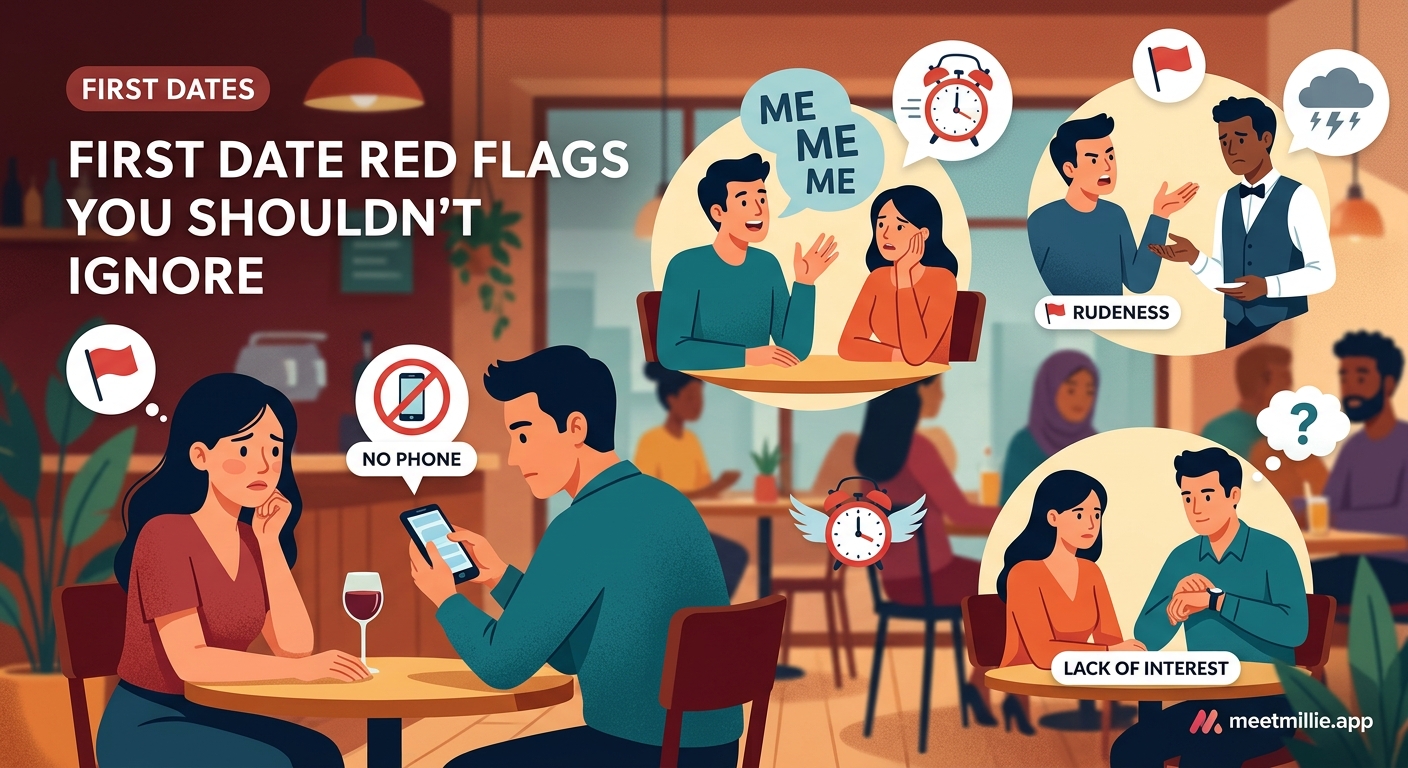
This one never fails.
A person who snaps fingers at servers, speaks condescendingly to bartenders, or ignores the coat check attendant is showing you exactly who they are.
Kindness isn’t something people turn on and off based on who’s watching. If they’re rude to someone they perceive as “beneath” them, that rudeness will eventually turn toward you.
Notice if they say “please” and “thank you.” See if they make eye contact with staff members. Check whether they clean up after themselves or leave a mess for others to handle.
Someone who treats service workers with respect demonstrates empathy and consideration. These qualities matter in every relationship interaction you’ll have together.
The reverse is also telling. Excessive flattery or flirtation with servers while you’re sitting right there shows poor boundaries and attention-seeking behavior.
Their Phone Behavior Reveals Priorities
We all use our phones. That’s not the issue.
The issue is someone who checks their phone every three minutes, responds to texts mid-conversation, or scrolls through social media while you’re talking.
You’re on a first date. This should be the peak of their interest and attention. If they can’t focus on you now, imagine how distracted they’ll be six months in.
Watch for these specific behaviors:
- Phone face-up on the table, checking every notification
- Taking calls that aren’t emergencies without excusing themselves
- Texting while you’re speaking
- Posting about the date in real time instead of being present
- Showing you their ex’s social media profiles
Someone genuinely interested in getting to know you will put the phone away. They’ll be curious about your stories, ask follow-up questions, and maintain eye contact.
If they apologize for one urgent text and explain the situation, that’s different. But chronic phone use during your conversation signals where you rank in their priorities.
Love Bombing Feels Good But Isn’t
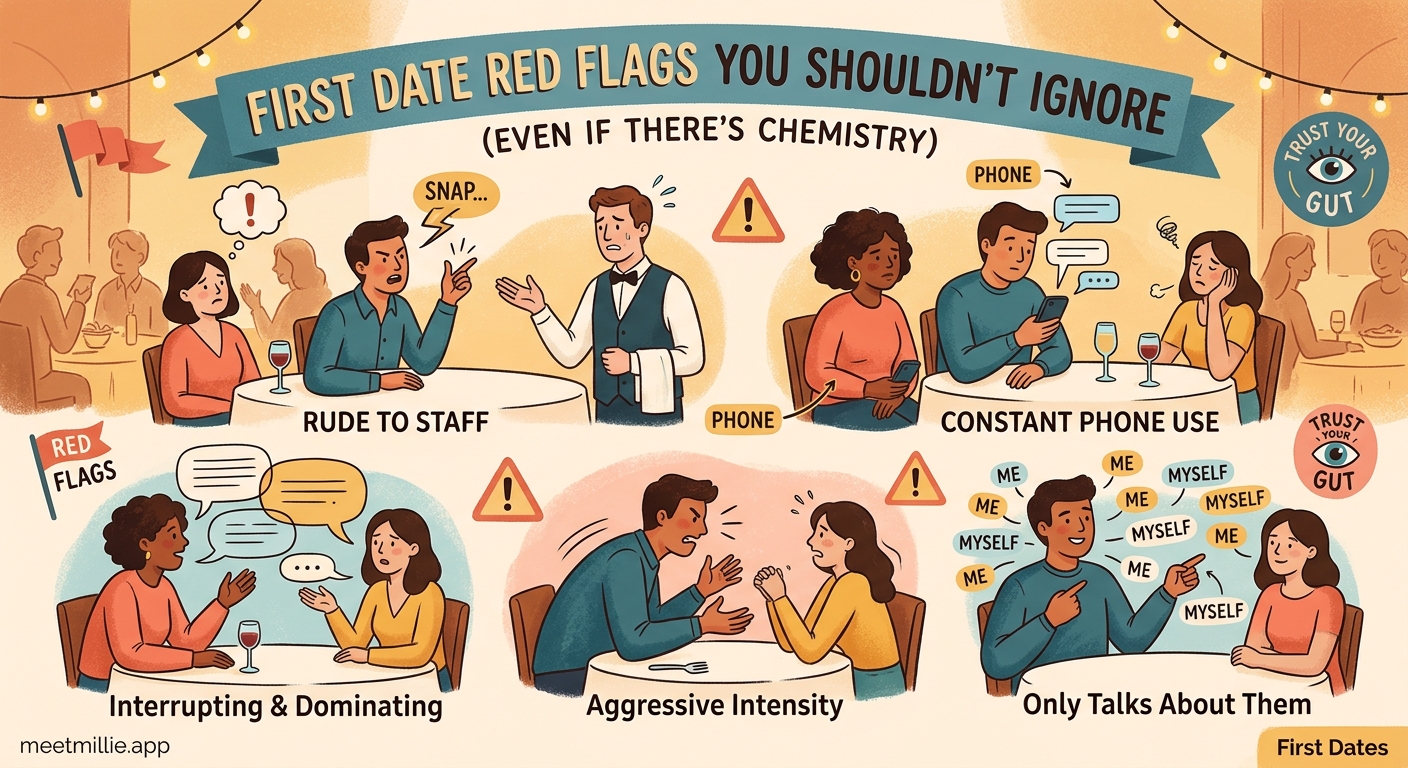
Intense attention feels amazing after disappointing dating experiences. Someone who texts constantly, plans elaborate dates, and talks about the future after knowing you for 48 hours seems like a dream.
It’s not. It’s a red flag.
Love bombing is a manipulation tactic. People who do this are trying to create artificial intimacy and emotional dependence before you have time to evaluate them clearly.
Real connection builds gradually. Healthy people don’t profess deep feelings for someone they barely know.
Be wary of:
- Over-the-top compliments that feel generic or excessive
- Pressure to define the relationship immediately
- Talking about meeting your family or moving in together on date one
- Getting upset if you don’t respond to texts within minutes
- Mirroring everything you say to seem perfectly compatible
This behavior often precedes controlling or emotionally abusive patterns. The person creates an intense bond, then uses that bond to manipulate you later.
When someone shows you their whole hand before you’ve even placed a bet, something’s wrong with the game.
Notice If They Actually Listen
Conversation should flow both ways.
If your date dominates every topic, interrupts your stories, or circles back to themselves constantly, they’re not interested in knowing you. They’re interested in an audience.
Good listeners ask questions. They remember details you mentioned earlier and reference them later. They seem curious about your experiences, opinions, and feelings.
Bad listeners wait for you to stop talking so they can talk again. They one-up your stories. They change the subject when you’re sharing something important.
Try this test: mention something specific about your life, like your job or a hobby. See if they ask a single follow-up question or immediately launch into their own related story.
Someone who can’t listen on a first date won’t suddenly develop that skill in a relationship. You’ll spend years feeling unheard and invisible.
Their Relationship With Truth Matters
Small lies on a first date are massive red flags.
Maybe they exaggerate their job title. Perhaps they claim to love hiking when their Instagram shows they haven’t left their apartment in months. They might lie about their age, relationship status, or living situation.
If someone lies about small things when they’re trying to impress you, what will they lie about when the stakes are higher?
Watch for inconsistencies in their stories. Notice if details change when they retell the same anecdote. Pay attention to vague answers about basic questions.
Someone who’s honest might be imperfect, but they’ll own it. They’ll admit they’re not great at cooking instead of pretending they’re a chef. They’ll acknowledge they’re working on their career instead of inflating their position.
Honesty builds trust. Lies, even small ones, erode it before it can even form.
Disrespecting Your Boundaries Starts Early
You suggest coffee, they insist on dinner and drinks. You say you need to leave by 9pm, they pressure you to stay longer. You decline a second drink, they order one for you anyway.
These aren’t romantic gestures. They’re boundary violations.
Someone who respects you will accept your “no” the first time. They won’t guilt trip, negotiate, or ignore your stated preferences.
This applies to physical boundaries too. If you’re not comfortable with certain touches or kisses on a first date, that should be the end of the discussion. Anyone who pouts, pressures, or tries to change your mind is showing you they value their wants over your comfort.
Boundary-respecting people might feel disappointed, but they’ll honor your limits without making it your problem.
Pay close attention to how they respond when you assert yourself. That response predicts how every future disagreement will go.
The Alcohol Issue Can’t Be Ignored
Not everyone who drinks heavily on a first date has a problem. But it’s worth noticing.
If your date orders multiple drinks before the food arrives, gets visibly intoxicated, or suggests moving to another bar when the current one closes, consider what that pattern might mean.
You’re not their therapist or their parent. You’re evaluating whether this person is a good match for you.
Someone who can’t get through a first date without excessive alcohol might struggle with anxiety, social skills, or substance dependence. None of these are your responsibility to fix.
Also notice if they pressure you to drink more than you want. Respect for your choices about alcohol consumption is basic decency.
Money Behavior Shows Values
How someone handles the bill reveals their character and expectations.
There’s no single “right” way to split a check. But there are wrong ways to handle the situation.
Red flags include:
- Assuming you’ll pay without discussion
- Making a scene about who pays
- Ordering expensive items then expecting you to split evenly
- Criticizing how you handle money
- Being cheap in ways that seem controlling rather than frugal
Someone who says “I’d like to treat you” or “should we split this?” is communicating clearly. Someone who creates awkwardness or conflict around money will do the same with every financial decision in your relationship.
Notice also if they tip appropriately. Someone who leaves $2 on a $60 check is telling you something about their values.
Comparing Approaches to Common Situations
Different people handle first date scenarios differently. Here’s how to distinguish concerning patterns from normal variation:
| Situation | Green Flag Response | Red Flag Response |
|---|---|---|
| You mention a boundary | “I totally understand and respect that” | “You’re being too sensitive” or ignoring it |
| Discussing past relationships | Brief, balanced, takes some responsibility | Long rants, blaming, still angry |
| Phone rings during date | Silences it or briefly apologizes if urgent | Answers every call, texts throughout |
| Check arrives | Clear communication about payment | Awkwardness, pressure, or entitlement |
| You disagree about something minor | “That’s an interesting perspective” | Defensiveness or trying to prove you wrong |
| Plans change unexpectedly | Flexible and understanding | Frustrated or controlling |
Questions That Reveal Character
The questions someone asks tell you what they value and whether they see you as a whole person.
Good questions show genuine curiosity: “What made you choose your career?” “What do you do for fun?” “What’s important to you in a relationship?”
Bad questions are invasive, inappropriate, or transactional: “What’s your salary?” “Why are you still single?” “Do you want kids?” (on date one, before establishing basic compatibility).
Someone who asks only surface questions or turns every answer back to themselves isn’t building connection. They’re filling time.
Notice if they remember your answers. If you mention your sister’s wedding and they ask about it later, they’re paying attention. If they ask the same question twice, they’re not.
The Negativity Pattern You Can’t Fix
Some people complain about everything. The restaurant is too cold. The music is too loud. Their job is terrible. Their family is dysfunctional. The city they live in is the worst.
Chronic negativity is exhausting to be around. It also suggests someone who externalizes blame and struggles to find satisfaction.
You can’t fix this pattern with your positive energy. You’ll just drain yourself trying.
Notice the ratio of complaints to positive observations. Everyone vents occasionally. But if your date can’t find anything good to say about their life, your relationship won’t be the magical exception.
Negativity also appears as cynicism about love itself. If they say “all relationships end badly” or “nobody stays together anymore,” believe them. They’re telling you their expectations.
Your Gut Feeling Deserves Respect
Your intuition processes information faster than your conscious mind. When something feels off, even if you can’t articulate why, that feeling matters.
Maybe they said all the right things, but you feel drained instead of energized. Perhaps nothing was obviously wrong, but you’re not excited about seeing them again.
Don’t talk yourself out of these feelings because the person seems “good on paper” or because you’re tired of dating.
Your gut has access to subtle cues: micro-expressions, tone shifts, energy changes, inconsistencies you noticed but didn’t consciously catalog.
“The best predictor of future behavior is past behavior. What someone shows you on a first date is the best version of themselves. If you’re seeing red flags now, they’ll only become more pronounced over time.”
Red Flags Versus Dealbreakers
Not every red flag means you should end the date early and block their number. But you should know the difference between a yellow flag and a red one.
Yellow flags are things to watch: they seem slightly nervous, they’re a bit awkward, they mention their ex once in context. These might improve with comfort and time.
Red flags are character issues: they’re rude to staff, they disrespect your boundaries, they lie about basic facts, they can’t stop talking about themselves.
Here’s a simple test: Would this behavior be acceptable from a friend? If your best friend treated you the way this date is treating you, would you tolerate it?
If the answer is no, chemistry doesn’t change the math.
Making Sense of Mixed Signals
Sometimes dates send confusing messages. They’re attentive but check their phone constantly. They’re generous but make subtle critical comments. They seem interested but also distracted.
Mixed signals usually mean one of two things: they’re genuinely conflicted, or they’re keeping you on the hook while exploring other options.
Neither scenario is promising.
Someone who’s truly interested and emotionally available will show it consistently. They won’t leave you guessing or analyzing every interaction.
If you’re already confused and anxious after one date, imagine how you’ll feel three months in.
What to Do When You Spot Red Flags
Recognizing red flags is step one. Acting on them is step two.
You don’t owe anyone a second date. You don’t need to provide a detailed explanation for why you’re not interested. A simple “I don’t think we’re a match, but I wish you well” is sufficient.
If you’re on the fence about whether something is truly a red flag, consider these steps:
- Name the specific behavior that concerns you
- Ask yourself if this behavior aligns with your values and needs
- Consider whether you’d accept this from a partner long-term
- Trust your assessment over your attraction
- Make a decision based on what you observed, not potential
Don’t convince yourself you’re being too picky or too judgmental. Standards exist to protect you from incompatible or harmful relationships.
Remember that what you choose to wear on a first date matters less than what you choose to accept from the person sitting across from you.
When Chemistry Clouds Judgment
Strong physical attraction releases actual chemicals in your brain. Dopamine, oxytocin, and adrenaline create feelings of euphoria and attachment.
These chemicals are powerful. They can make red flags look like quirks. They can convince you that this person is different, special, worth the risk.
But chemistry without compatibility leads to toxic relationships. You’ll have intense highs and devastating lows. You’ll excuse behavior you’d never accept from someone you weren’t attracted to.
Ask yourself: If this person looked completely average to you, would their behavior still be acceptable? If the answer is no, you’re letting chemistry override your judgment.
Attraction is important. But it’s not enough. And it shouldn’t cost you your self-respect or safety.
The Timeline Question
Some people wonder how long a first date should last to properly assess compatibility. The truth is, major red flags usually appear within the first 30 minutes.
You don’t need hours to notice if someone is rude, self-absorbed, or disrespectful. These traits emerge immediately because people struggle to maintain a facade under the stress of a first date.
If you’re seeing concerning behavior early, extending the date won’t make it better. It will just give you more data confirming what you already noticed.
Trust that you have enough information to make a decision. You’re not conducting a scientific study. You’re evaluating whether this person deserves more of your time.
Your Dating History Affects Your Radar
If you’ve been in relationships with people who showed these same red flags, you might be desensitized to them. What should alarm you feels normal or familiar.
This is why doing your own work between relationships matters. Therapy, self-reflection, and honest conversations with trusted friends help recalibrate your warning system.
You might need to actively remind yourself that certain behaviors aren’t acceptable, even if you’re used to them.
Write down your non-negotiables before you start dating. When you’re in the moment, chemistry and loneliness can make you forget what you promised yourself you’d never accept again.
Building Better Pattern Recognition
The more first dates you go on, the better you’ll get at spotting red flags. You’ll recognize familiar patterns faster. You’ll trust your instincts more readily.
This doesn’t mean becoming cynical or closed off. It means becoming discerning.
Keep mental notes of what worked and what didn’t in past dating experiences. Notice which early warning signs predicted later problems. Learn from patterns without letting them make you bitter.
Good pattern recognition helps you identify green flags too. You’ll notice when someone is genuinely kind, emotionally available, and interested in you as a whole person.
Moving Forward With Confidence
Recognizing first date red flags doesn’t guarantee you’ll never make a dating mistake. But it dramatically improves your odds of building something healthy.
Every time you honor a red flag instead of ignoring it, you’re choosing yourself. You’re saying your time, energy, and emotional well-being matter more than potential or chemistry.
This gets easier with practice. The first few times you walk away from someone attractive but wrong for you, it feels hard. Eventually, it feels empowering.
You’re not being picky. You’re being smart. You’re not overthinking. You’re paying attention.
The right person won’t set off alarm bells. They won’t make you question your judgment or explain away their behavior. They’ll make you feel respected, heard, and valued from the very first conversation.
That’s worth waiting for. That’s worth protecting your standards for. And that starts with trusting what you see on date one, even when chemistry tries to convince you otherwise.