
You’ve matched, messaged, and finally set up that first date. Now you’re wondering if you should plan for coffee, dinner, or something in between. The truth is, there’s no magic number that works for everyone, but there are clear signals that tell you when to stay and when to gracefully exit.
Most successful first dates last between 60 and 90 minutes, giving you enough time to assess chemistry without overcommitting. Start with a low-pressure activity that allows natural conversation flow. Watch for engagement cues like leaning in, asking questions, and suggesting extended plans. If the vibe feels off after 30 minutes, have an exit strategy ready. The best dates end while you’re both still having fun, leaving anticipation for a second meeting.
The Sweet Spot for First Date Duration
Most dating experts agree that 60 to 90 minutes hits the perfect balance. This window gives you enough time to get past initial nerves and have meaningful conversation without the pressure of a three-hour dinner commitment.
Think of it like sampling a new restaurant. You want enough time to taste the food and decide if you’ll come back, but you don’t need to order the entire menu on your first visit.
Starting with a shorter timeframe also gives you flexibility. If things are going great, you can extend naturally. If not, you have a built-in exit without awkwardness.
Why Shorter Often Beats Longer
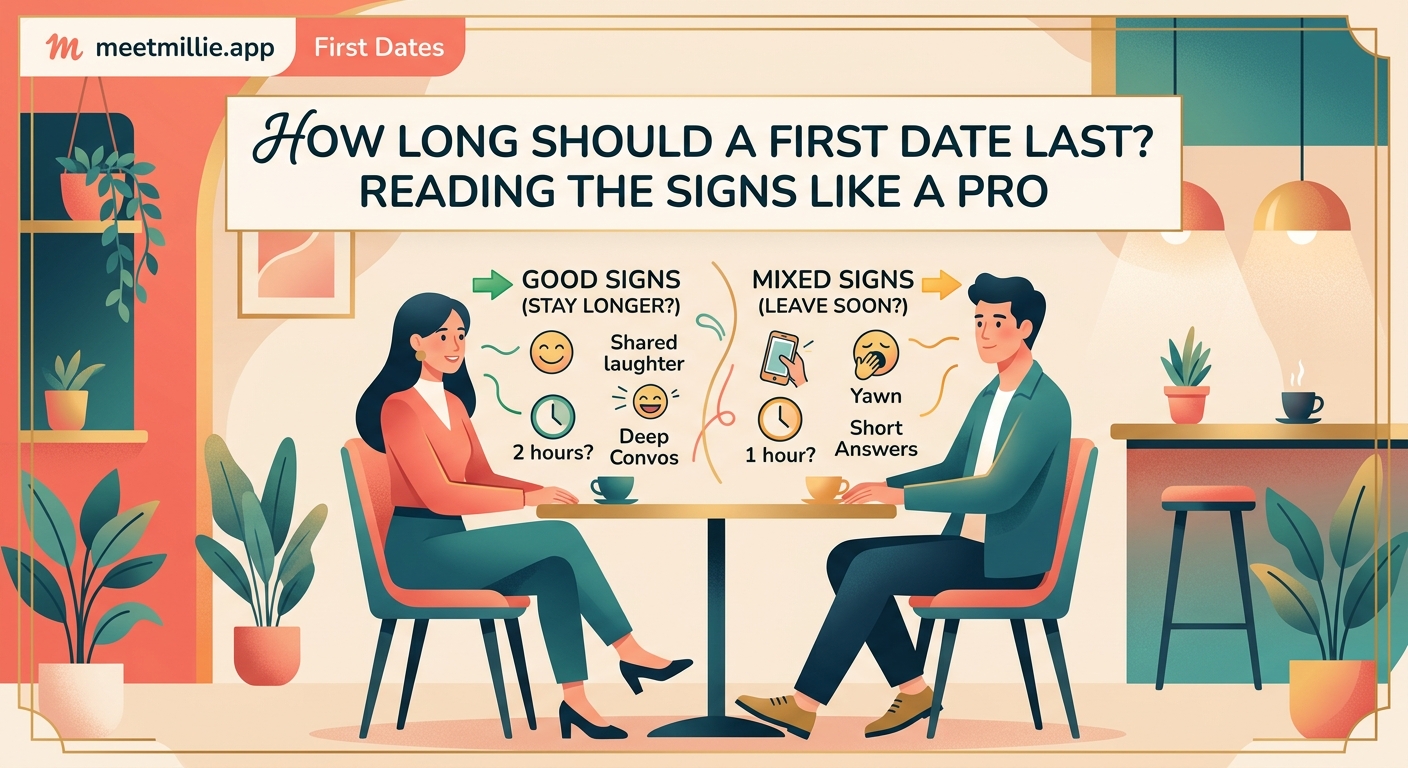
Shorter first dates protect both people from exhausting themselves trying to fill silence. When you know you only have an hour, conversation feels more focused and intentional.
Long dinners can feel like interrogations. You’re stuck across from someone for two or three hours, and if the chemistry isn’t there, every minute drags.
Coffee dates, afternoon walks, or happy hour drinks naturally create boundaries. These settings make it easy to say “I have plans later” without seeming rude.
Another benefit: shorter dates leave room for mystery. You don’t reveal your entire life story in one sitting, which gives you material for future conversations.
Reading the Signs That It’s Going Well
Your date’s body language tells you more than their words. Here’s what to watch for:
- They maintain eye contact and smile frequently
- Their body angles toward you, not away
- They ask follow-up questions about things you mention
- They laugh at your jokes (even the mediocre ones)
- They suggest extending the date or mention doing something else together
- Time seems to fly by without awkward silences
When someone is genuinely interested, they’ll find reasons to keep the conversation going. They might order another drink, suggest walking to a different spot, or simply say “I’m having a great time.”
“The best indicator that a first date should continue is mutual enthusiasm. If both people are actively engaged and neither is checking their phone or watch, that’s your green light to extend the evening.” – Dating coach perspective
Signs It’s Time to Wrap Things Up
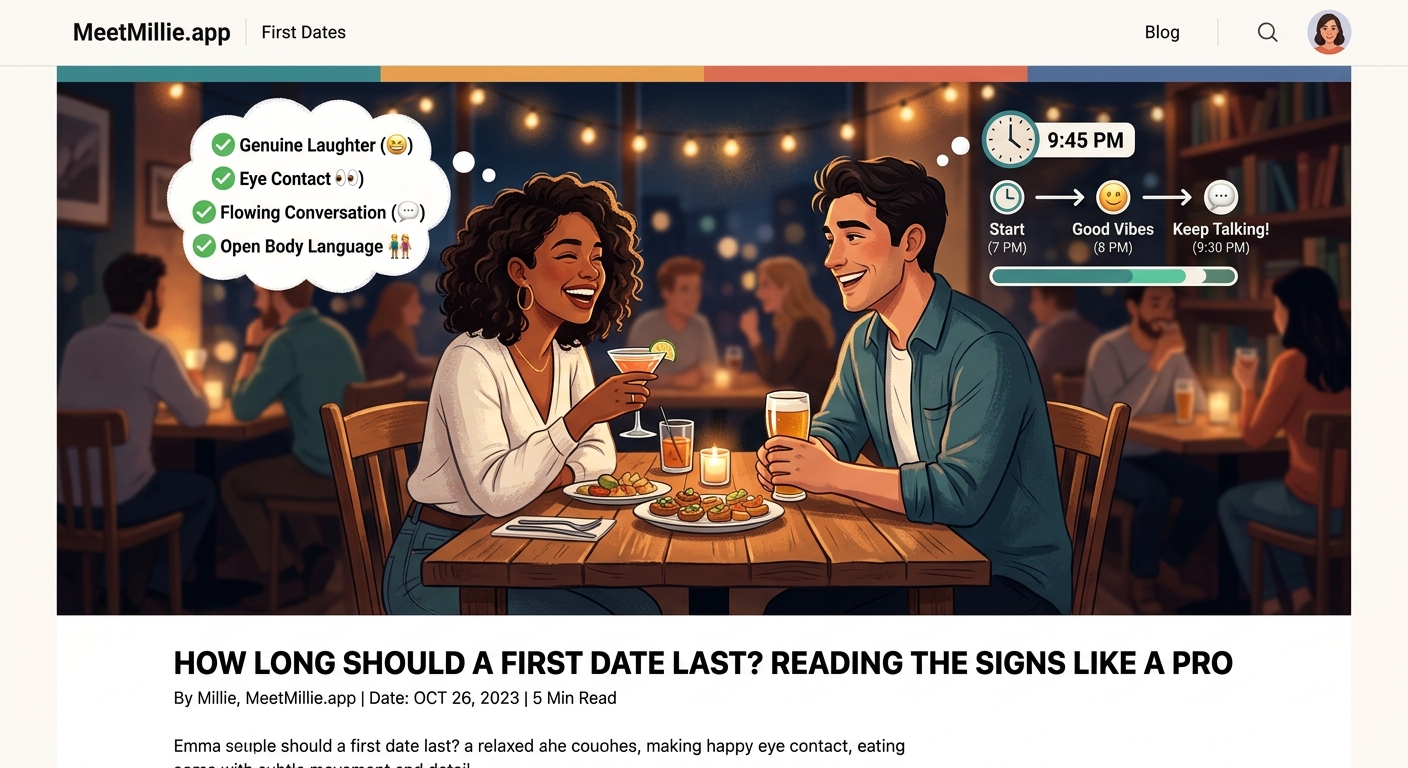
Not every date will be a winner, and that’s completely normal. Here are the red flags that suggest ending sooner rather than later:
- Frequent phone checking or distracted behavior
- Short, one-word answers to your questions
- No reciprocal questions about your life
- Physical distance (leaning back, crossed arms)
- Mentions of being tired or having an early morning
- Awkward silences that neither person tries to fill
If you notice these signs after 30 to 45 minutes, it’s perfectly acceptable to politely end the date. You’re not doing anyone a favor by dragging out an uncomfortable situation.
The Perfect First Date Timeline
Here’s a practical breakdown of how to structure your time together:
-
Minutes 0-15: The Warm-Up – Arrive, order drinks or food, settle initial nerves with light topics like weekend plans or recent experiences.
-
Minutes 15-45: The Connection Phase – Move into deeper conversation about interests, values, and what you’re looking for. This is where you assess actual compatibility.
-
Minutes 45-60: The Decision Point – By now, you should know if there’s mutual interest. If yes, this is when you might naturally extend. If no, start signaling that you need to leave soon.
-
Minutes 60-90: The Optional Extension – If things are going well, grab another drink, take a walk, or move to a different location. This extended time should feel effortless, not forced.
-
The Exit: Always Leave on a High Note – End while you’re both still engaged and having fun. This creates anticipation rather than exhaustion.
Choosing Activities That Support Your Timeline
Your activity choice directly impacts how long your date will last. Here’s how different options stack up:
| Activity Type | Typical Duration | Best For | Potential Drawback |
|---|---|---|---|
| Coffee | 45-60 minutes | First-time meetings, daytime schedules | Can feel too casual for some |
| Drinks | 60-90 minutes | After-work timing, relaxed atmosphere | Alcohol might cloud judgment |
| Dinner | 90-120 minutes | When you’re already confident about chemistry | Hard to exit if it’s not working |
| Activity Date | 60-90 minutes | Shared interests, nervous talkers | Less face-to-face conversation time |
| Walk or Hike | 30-90 minutes | Outdoor enthusiasts, free option | Weather dependent, safety concerns |
Coffee and drinks give you the most flexibility. You can extend easily if things are great, or wrap up naturally if they’re not.
Dinner commits you to at least 90 minutes together. Only choose this if you’ve had extensive messaging or phone conversations beforehand and feel confident about the connection.
Activity dates like mini golf or museum visits work well because they give you something to talk about besides yourselves. Just make sure the activity allows for actual conversation.
The Extension Strategy
When a date is going well and you both want to continue, the transition should feel organic. Here’s how to extend naturally:
Suggest a location change rather than just ordering another round at the same spot. “There’s a great ice cream place around the corner” or “Want to walk by the waterfront?” gives the date a second chapter.
Use the extension to shift the energy. If you’ve been sitting, suggest walking. If you’ve been active, find a spot to sit and talk more deeply.
Pay attention to timing. If you’re already at 90 minutes and things are great, an extension to two hours total is perfect. Pushing beyond that risks overstaying the magic.
When You Need an Exit Plan
Sometimes you know within 15 minutes that this isn’t going to work. Having a graceful exit strategy saves everyone from unnecessary discomfort.
Set up a legitimate time constraint before the date. Tell a friend to call you at a specific time, or schedule something genuinely afterward. This gives you an honest reason to leave if needed.
If the date is truly awful (rude behavior, lying about their profile, making you uncomfortable), you don’t owe them an hour of your time. A simple “This isn’t what I’m looking for, but I wish you the best” is sufficient.
For dates that aren’t terrible but just lack chemistry, finish your drink or coffee, then politely say you have other commitments. Most people will understand.
The Second Location Test
Suggesting a second location is the ultimate chemistry test. If both people enthusiastically agree to continue somewhere else, that’s a strong signal of mutual interest.
The second location doesn’t need to be fancy. A different bar, a dessert spot, or even just a walk counts. What matters is the willingness to extend time together.
If one person hesitates or makes excuses when you suggest moving, take that as your cue that they’re ready to end the date. Don’t push it.
Special Circumstances That Change the Rules
Some situations call for adjusting the standard timeline:
Long-distance or vacation dates: If you’ve traveled to meet or are in different cities, longer dates make sense. You might spend several hours together since you won’t have the option of a nearby second date.
Set-up dates through friends: When mutual friends have introduced you, there’s often more pressure to give it a fair shot. Plan for the full 90 minutes even if you’re not immediately feeling it.
Video dates before meeting: If you’ve already had video calls, your in-person first date might naturally run longer since you’ve already established some connection.
Afternoon versus evening: Daytime dates typically run shorter (45-75 minutes) while evening dates tend toward the longer end (75-120 minutes). Plan accordingly.
What Happens After the Date Ends
The timing of your follow-up matters almost as much as the date duration itself. If things went well, send a message within 24 hours saying you had a great time and suggesting specific plans for a second date.
Don’t play games with waiting three days or other outdated rules. If you liked them, let them know. If they liked you back, they’ll appreciate the directness.
If you’re not interested in a second date, send a polite message saying so rather than ghosting. “I had a nice time meeting you, but I didn’t feel a romantic connection. Best of luck out there!” is kind and clear.
Planning Your Next Move
Before your first date even happens, think through your ideal scenario. What duration feels comfortable for you? What activity allows you to be yourself?
Having a plan doesn’t mean being rigid. It means knowing your preferences and boundaries so you can make decisions in the moment based on how things actually unfold.
Consider what to wear on a first date based on your chosen activity and duration. Your outfit should match both the venue and the timeframe you’re planning.
Remember that every person and situation is different. These guidelines give you a framework, but trust your instincts above all else.
Making Every Minute Count
The actual duration of your first date matters less than the quality of connection you build during that time. An engaged 45-minute coffee date beats a distracted two-hour dinner every time.
Focus on being present rather than watching the clock. Ask genuine questions. Listen to the answers. Share things about yourself that matter.
The goal isn’t to follow a perfect script or hit an exact time marker. The goal is to determine if there’s enough mutual interest and compatibility to warrant a second meeting.
Some of the best relationships start with dates that naturally extend because neither person wants to leave. Others begin with efficient 60-minute meetings that leave both people wanting more.
Trust the process, pay attention to the signals, and remember that finding the right person often means having several first dates that don’t lead anywhere. Each one teaches you something about what you’re looking for and how to recognize it when you find it.
Start with the 60 to 90 minute framework, adjust based on the signals you’re receiving, and always end while you’re both still enjoying yourselves. That’s the formula for first dates that lead to second ones.