
You’ve been seeing someone for a few weeks now. The dates are great, the chemistry is there, and you’re starting to wonder if you should delete your dating apps. But then the doubt creeps in. Is it too soon to bring up exclusivity? What if they think you’re moving too fast? What if you wait too long and they lose interest?
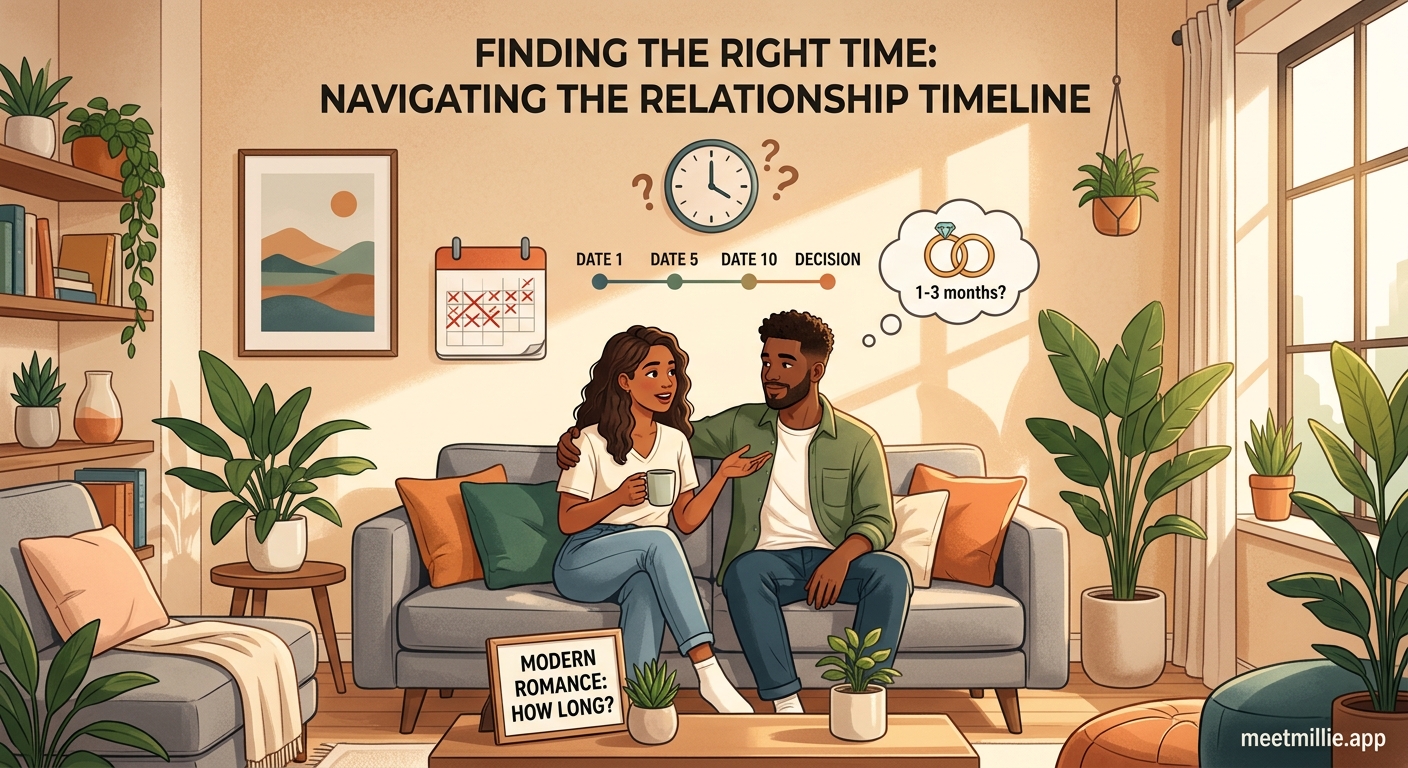
Most couples become official between two and three months of dating, but the right timeline depends on how often you see each other, how well you communicate, and whether you’ve built emotional intimacy. The best indicator isn’t a calendar date but whether you both feel secure, aligned on relationship goals, and ready to commit to exclusivity without pressure or doubt.
The myth of the perfect timeline
There’s no magic number of dates or weeks that guarantees you’re ready to make things official. Some couples know after three weeks. Others need three months. The difference isn’t about who’s doing it right or wrong. It’s about context.
If you’re seeing someone twice a week for dinner dates, you’ll need more time than a couple spending entire weekends together. If you’re both fresh out of long relationships, you might move slower than two people who’ve been single for years and know exactly what they want.
The research gives us a starting point. Studies suggest most couples have the exclusivity conversation somewhere between the two and three month mark. But that’s an average, not a rule.
What matters more than the timeline is what happens during that time.
Signs you’re ready to have the conversation

You don’t need to wait for a specific date on the calendar. You need to wait for specific feelings and behaviors to show up consistently.
Here’s what readiness actually looks like:
- You’ve stopped thinking about other dating options without forcing yourself to stop
- You feel comfortable being yourself around them, including the less polished parts
- You’ve had at least one difficult conversation and handled it well together
- You know basic but important things about their life, values, and future plans
- They’ve met at least one person who matters to you, or you’ve met someone who matters to them
- You’re not anxious about where things stand most of the time
- You can picture them in your life a few months from now without it feeling weird
If most of these feel true, you’re probably ready. If only one or two resonate, you might need more time.
What needs to happen before you go official
Making things official isn’t just about feelings. It’s about information. You need to know enough about this person to decide if exclusivity makes sense.
The conversations that matter
Before you agree to be someone’s partner, you should have talked about:
- What you’re both looking for right now. Not in theory. Right now. Are they open to a relationship, or are they still figuring things out?
- How you handle conflict. You don’t need to have had a fight, but you should have navigated at least one awkward moment or minor disagreement.
- Your communication styles. Do they text back within a reasonable time? Do they make plans in advance or always leave things last minute? Do their actions match their words?
These don’t have to be formal sit-down talks. They can happen naturally if you’re paying attention. But they need to happen.
The experiences that build trust
You also need some shared experiences. Not Instagram-worthy adventures, but real life situations where you see how someone operates.
Have you seen them stressed? Tired? Dealing with a friend crisis or a work deadline? Have they seen you in those states?
If every interaction has been a carefully curated date night, you don’t know each other yet. You know the highlight reel.
How often you see each other changes everything
Two months of seeing someone once a week is not the same as two months of seeing someone four times a week. The calendar matters less than the actual time spent together.
Let’s break it down:
| Frequency | Total Time Together in 2 Months | Equivalent to Dating Weekly For |
|---|---|---|
| Once a week (3 hours) | 24 hours | 2 months |
| Twice a week (4 hours each) | 64 hours | 5+ months |
| Three times a week (4 hours each) | 96 hours | 8 months |
If you’re seeing someone multiple times a week and really talking during those times, you can build the foundation for a relationship much faster than someone who only connects on Saturday nights.
This is why some people feel ready after a month and others need four. It’s not about the weeks. It’s about the hours and the depth of those hours.
When to bring it up without scaring them off
Timing the conversation matters, but not in the way most people think. You don’t need to wait for the perfect romantic moment. You need to wait for a calm, private moment when you’re both relaxed.
After a great date is good. During a stressful week for either of you is not. When you’re both in a good mood and have time to actually talk is ideal.
Here’s a simple framework:
- Start with what you’ve noticed. “I’ve really been enjoying spending time with you, and I feel like we’ve gotten close over the past few weeks.”
- State what you want clearly. “I’m not seeing anyone else, and I’d like us to be exclusive. How do you feel about that?”
- Give them space to respond honestly. Don’t fill the silence. Let them think and answer.
If they’re not ready, that’s valuable information. If they are, great. Either way, you’re not playing games or waiting around hoping they’ll bring it up first.
The worst thing you can do is hint around the topic for weeks, hoping they’ll pick up on it. Just ask. If asking the question scares them off, they weren’t going to commit anyway.
What if you’re on different timelines?
Sometimes one person is ready before the other. That’s normal. It doesn’t mean the relationship is doomed.
What matters is how the other person responds when you bring it up.
Good responses sound like:
– “I really like you, but I need a bit more time. Can we revisit this in a few weeks?”
– “I’m not quite ready to make it official yet, but I’m not seeing anyone else and I want to keep getting to know you.”
– “I appreciate you bringing this up. I’m feeling the same way.”
Bad responses sound like:
– “I don’t really like labels.”
– “Why do we need to define things?”
– “Let’s just see where it goes.”
The first set shows someone who respects your needs and is willing to communicate. The second set shows someone who wants the benefits of a relationship without the commitment.
If someone genuinely needs more time, they’ll give you a reason and a rough timeline. If they’re just avoiding commitment, they’ll be vague and deflect. Understanding what does taking things slow actually mean in modern dating can help you tell the difference.
Red flags that you’re moving too fast
Sometimes the urge to make things official comes from anxiety, not readiness. Here are signs you might be rushing:
- You barely know their friends or family, and they barely know yours
- You haven’t seen them handle stress or disappointment yet
- Most of your time together involves physical intimacy, not conversation
- You’re trying to lock things down because you’re worried they’ll lose interest
- You don’t actually know what they want from life in the next year or two
- You’ve ignored concerning behaviors because you don’t want to slow things down
If any of these feel true, pump the brakes. Becoming official won’t fix underlying issues. It’ll just make them harder to walk away from later.
Pay attention to any first date red flags you shouldn’t ignore even if there’s chemistry, because those patterns don’t disappear just because you slap a label on the relationship.
The exclusivity conversation template
When you’re ready to have the talk, keep it simple. Here’s what works:
“I wanted to check in about where we’re at. I’ve really enjoyed getting to know you over the past [timeframe], and I’m not interested in dating anyone else. I’d like for us to be exclusive and see where this goes. What do you think?”
That’s it. No games, no pressure, no manipulation.
If they say yes, great. Talk about what being official means to both of you. Does it mean deleting the apps? Posting on social media? Meeting each other’s friends?
If they say no or “not yet,” ask what they need to feel ready. If their answer is specific and reasonable, you can decide if you want to wait. If their answer is vague or defensive, you have your answer about their level of interest.
Common mistakes people make
Let’s talk about what doesn’t work when you’re trying to figure out the right time to make things official.
Waiting for them to bring it up first. If you want exclusivity, ask for it. Don’t play chicken with your own relationship.
Assuming you’re exclusive without confirming it. Until you’ve had the actual conversation, you’re not official. Even if it feels like you are.
Bringing it up during or right after a fight. This makes it seem like you’re trying to use the relationship as a band-aid for conflict.
Issuing an ultimatum. “We need to be official by next month or I’m done” rarely leads to a healthy relationship.
Comparing your timeline to your friends’ timelines. Your friend who got engaged after three months and your other friend who waited two years are both valid. Your situation is different from both of theirs.
Ignoring your gut because you don’t want to seem demanding. If something feels off, it probably is. Wanting clarity isn’t demanding. It’s healthy. Learning how to stop overthinking every text message you send can help you trust your instincts more.
What changes when you make it official?
Becoming exclusive should feel like a natural next step, not a dramatic shift. If going from “dating” to “in a relationship” feels like putting on a costume, something’s off.
Here’s what should change:
– You stop using dating apps and actively looking for other options
– You introduce each other as boyfriend/girlfriend or partner
– You start making plans further into the future together
– You become a priority in each other’s lives, not just a fun option
Here’s what shouldn’t change:
– How much you enjoy spending time together
– Your ability to be honest with each other
– Your individual friendships and interests
– The basic compatibility and respect you’ve built
If making things official suddenly introduces drama, jealousy, or control that wasn’t there before, that’s a problem. The label doesn’t create those issues, but it can reveal them.
When you know, you know (but give it time anyway)
Some people will tell you that when you meet the right person, you just know immediately. That’s partially true and partially dangerous advice.
Yes, sometimes you meet someone and feel a strong sense of certainty. But feelings aren’t facts. That certainty could be genuine compatibility, or it could be infatuation, or it could be your attachment style getting triggered.
The only way to know the difference is to give it time. Not years, but enough weeks to see patterns. To have a few hard conversations. To see them on a bad day and still like them.
You can feel excited and optimistic about someone after two weeks. But you can’t truly know if you’re compatible until you’ve gathered more data. The friendship test for your romantic relationship can help you evaluate whether you’re building something real.
Even if you’re sure, giving it a bit more time doesn’t hurt. If they’re the right person now, they’ll still be the right person in three weeks.
Why some people avoid labels entirely
You might run into someone who says they don’t believe in labels or don’t want to define the relationship. Sometimes this is legitimate. Often it’s not.
Here’s the difference:
Someone who genuinely doesn’t care about labels will still commit to exclusivity and treat you like a priority. They just don’t want to use the words “boyfriend” or “girlfriend.” That’s fine if it works for both of you.
Someone who’s using “I don’t like labels” as an excuse will also refuse to commit to exclusivity, introduce you to important people in their life, or make future plans. They want relationship benefits without relationship accountability.
If you need clarity and they can’t or won’t give it to you after a reasonable amount of time, that’s a mismatch. You’re not being needy. You’re being clear about what you need. If you keep running into this pattern, it might help to understand why you keep attracting people who don’t value you and how to change it.
Understanding the real reason everyone’s afraid of labels right now can also give you perspective on whether their hesitation is about you or about broader dating culture anxieties.
Building something real takes patience and honesty
The best relationships don’t happen on a strict timeline. They happen when two people are honest about what they want, pay attention to how they feel, and communicate clearly about where things are going.
If you’ve been dating someone for two months, you’re spending real time together, you’ve had meaningful conversations, and you both seem interested in more than just casual dating, it’s completely reasonable to bring up exclusivity.
If they’re the right person, they’ll appreciate your honesty. If they’re not ready, you’ll know sooner rather than later. Either way, you’re better off than spending another month wondering and waiting.
Trust yourself. Pay attention to patterns, not just promises. And remember that the right relationship will feel like it’s moving forward, even if the pace isn’t identical to anyone else’s timeline.
The goal isn’t to lock someone down as fast as possible. It’s to build something real with someone who’s just as invested as you are. That takes time, but not an infinite amount of time. Somewhere between eight weeks and twelve weeks, you should have enough information to know if this is going somewhere or if you’re better off moving on.