
You said sorry, but it didn’t land. Maybe they looked away, nodded without meeting your eyes, or said “it’s fine” in a tone that clearly meant it wasn’t. The words left your mouth, but something was missing. A real apology isn’t just about saying the right thing. It’s about showing up differently, owning what happened, and proving you understand the impact of your actions.
Learning how to apologize sincerely requires acknowledging specific harm, taking responsibility without excuses, expressing genuine remorse, making amends, and changing your behavior. A meaningful apology rebuilds trust through actions, not just words. It requires vulnerability, timing, and a commitment to doing better. This guide breaks down the exact steps to repair relationships when “sorry” alone isn’t enough.
Why Most Apologies Fall Flat
Most people think an apology is a formula. Say sorry, explain what happened, promise it won’t happen again, done. But that’s exactly why so many apologies feel hollow.
The problem isn’t that you didn’t apologize. It’s that your apology focused on making yourself feel better instead of addressing the other person’s pain.
Think about the last time someone hurt you and then immediately said, “I’m sorry, but I was really stressed.” That “but” erased everything that came before it. Or when they said, “I’m sorry you feel that way,” which isn’t an apology at all. It’s a dismissal.
A sincere apology requires you to sit with discomfort. To acknowledge that you caused harm. To resist the urge to defend yourself or minimize what happened.
The Five Essential Components of a Sincere Apology
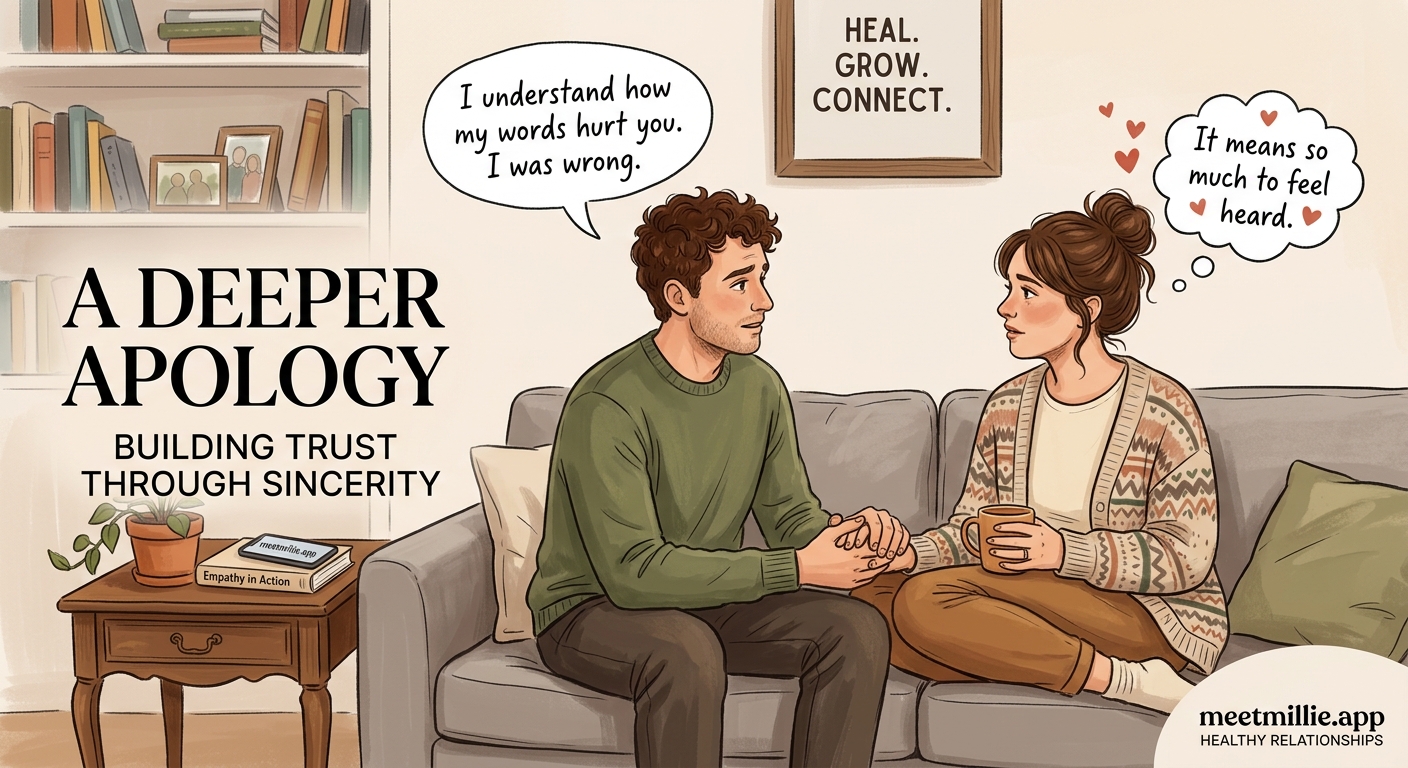
A real apology isn’t one sentence. It’s a complete acknowledgment that rebuilds trust through specific actions and words.
1. Name the Specific Harm You Caused
Don’t say “I’m sorry for what happened.” That’s vague and puts distance between you and your actions.
Say exactly what you did wrong. “I’m sorry I canceled our plans at the last minute without giving you a real explanation. I know you rearranged your whole evening to make time for me.”
Being specific shows you actually understand what hurt them. It proves you’ve thought about their perspective, not just your own guilt.
2. Take Full Responsibility Without Excuses
This is where most apologies die. The moment you add “but” or “because,” you’re shifting blame.
Wrong: “I’m sorry I snapped at you, but I’d had a terrible day.”
Right: “I’m sorry I snapped at you. That wasn’t fair to you, regardless of what was going on with me.”
Your reasons might be valid, but they don’t belong in the apology itself. Save the context for later, if they ask. Right now, your job is to own what you did.
3. Express Genuine Remorse
This isn’t about performing sadness. It’s about showing you understand the emotional impact of your actions.
“I can see that my forgetting your birthday made you feel unimportant to me. That must have really hurt, especially after you made such an effort for mine.”
Naming their feelings (when you can read them accurately) shows empathy. It tells them you’re not just going through the motions.
4. Commit to Specific Changes
Saying “it won’t happen again” means nothing without a plan.
Instead: “I’m going to set reminders for important dates and check in with you at the start of each week about our plans. I don’t want you to feel like an afterthought again.”
Concrete actions prove you’re serious. They give the other person something to hold you accountable to.
5. Ask What They Need (Then Listen)
After you’ve said your piece, give them space to respond.
“Is there anything else you need from me right now?” or “What would help you feel better about this?”
Sometimes they need time. Sometimes they need you to just listen while they explain how it felt. Sometimes they need you to leave them alone for a bit. Respect whatever they tell you.
The Step-by-Step Process for Delivering Your Apology
Knowing what to say is only half the work. How and when you say it matters just as much.
-
Choose the right time and place. Don’t ambush someone with an apology when they’re rushing out the door or in the middle of something else. Ask if they have time to talk. If they say no, respect that and try again later. Face-to-face is almost always better than text for serious apologies, though texting can work for smaller missteps if that’s how you normally communicate.
-
Start without preamble. Don’t spend five minutes explaining why you’re apologizing or how hard this is for you. Just begin. “I need to apologize for canceling on you last week.” Get to the point.
-
Deliver all five components clearly. Go through each element we covered above. Don’t rush. Pause between thoughts. Make eye contact if you’re in person. Let the weight of your words settle.
-
Give them space to respond. After you finish, stop talking. Don’t fill the silence with more explanations or justifications. Let them process. Let them speak. Even if their response is anger or more hurt, receive it without getting defensive.
-
Follow through on your commitments. This is where the real work begins. An apology is worthless if your behavior doesn’t change. Set those reminders. Check in like you promised. Show up differently.
Common Apology Mistakes That Make Things Worse

Even well-intentioned apologies can backfire if you make these errors.
| Mistake | Why It Fails | Better Approach |
|---|---|---|
| “I’m sorry if I hurt you” | The “if” suggests you’re not sure you did anything wrong | “I’m sorry I hurt you” (no qualifier) |
| Apologizing via text for major issues | Feels impersonal and easy to ignore | Request a phone call or in-person conversation |
| Bringing up their past mistakes | Deflects from your accountability | Stay focused on what you did |
| Rushing them to forgive you | Pressures them and centers your comfort | Give them time and space to process |
| Over-apologizing for everything | Dilutes the meaning and becomes manipulative | Apologize only when you’ve genuinely caused harm |
| Apologizing but repeating the behavior | Shows your words were empty | Change your actions permanently |
The biggest mistake? Apologizing before you’re actually ready to change. If you’re not committed to doing better, wait. An insincere apology does more damage than no apology at all.
When Timing Matters More Than You Think
You can say all the right words and still have your apology rejected because of when you chose to deliver it.
Apologizing too soon, before you’ve fully understood what you did wrong, leads to incomplete apologies. You’ll miss important details. You’ll have to come back later with additions, which makes the whole thing feel less genuine.
Apologizing too late, after the other person has already decided you don’t care, means you’re fighting an uphill battle. They’ve already written the story in their head about what your silence meant.
The sweet spot? As soon as you’ve had time to reflect on what happened and understand the full impact of your actions. For minor issues, that might be a few hours. For major betrayals, it might be a day or two.
But don’t confuse “taking time to reflect” with “avoiding the conversation.” If you need time, you can say so. “I know I messed up, and I want to talk about it properly. Can we set aside time tomorrow evening?” That shows respect for both the situation and their feelings.
What to Do When Your Apology Gets Rejected
Not every apology will be accepted, and that’s okay. You can’t control how someone else responds.
If they say they’re not ready to hear it, respect that. Tell them you’ll be ready whenever they are, and then give them space. Don’t bring it up again unless they do.
If they accept your words but not your presence (they forgive you but don’t want to continue the relationship), accept that too. Sometimes trust, once broken, can’t be rebuilt. Your apology can still matter to them even if it doesn’t repair the relationship.
If they throw your apology back in your face or use it as ammunition, stay calm. Don’t get defensive. You can say something like, “I understand you’re still angry. I’m not trying to make this go away. I just wanted you to know I recognize what I did.” Then step back.
The purpose of an apology isn’t to make someone forgive you. It’s to acknowledge harm and take responsibility. What they do with that is up to them.
“A meaningful apology is one of the most profound gifts you can give someone. It says, ‘You matter more than my ego. Your pain matters more than my comfort. I see you, and I’m choosing to do better.'”
How to Apologize in Different Relationship Contexts
The core principles stay the same, but the delivery shifts depending on who you’re apologizing to.
In romantic relationships: Apologies need to address emotional safety. Your partner needs to know you won’t keep hurting them in the same way. Be specific about how you’ll protect their feelings going forward. If you struggle with understanding what your partner needs, learning about their communication style can help prevent future misunderstandings.
To friends: Friendships often lack the formal “repair conversations” that romantic relationships have. Don’t let that stop you from being thorough. Friends deserve the same level of care and accountability.
To someone you’re dating casually: Even if the relationship is new, your actions still have impact. Apologize fully. Don’t use the casualness of the relationship as an excuse to be careless with someone’s feelings. If you’ve noticed patterns of attracting people who don’t value you, examining how you handle accountability might reveal important insights.
After a first date mishap: Maybe you showed up late, talked about your ex too much, or said something thoughtless. A simple, direct apology via text works here. “I realized I dominated the conversation last night and barely asked about you. That was rude, and I’m sorry. I’d like to do better if you’re open to trying again.”
Signs Your Apology Is Actually Working
You won’t always get immediate feedback, but there are indicators that your apology landed.
- They engage with the conversation instead of shutting down
- They ask questions about your plan to change
- Their body language softens (uncrossed arms, eye contact returns)
- They share how they felt, trusting you with their vulnerability
- They give you another chance, even a small one
Remember that forgiveness isn’t the same as trust. Forgiveness can happen relatively fast. Trust rebuilds slowly, through consistent changed behavior over time.
The Long Game of Making Amends
A sincere apology doesn’t end when the conversation does. Making amends means proving, through actions, that you meant what you said.
If you apologized for being unreliable, become the most dependable person in their life. If you apologized for not listening, put your phone away during conversations and ask thoughtful follow-up questions. If you apologized for being critical, practice offering support instead of judgment.
Track your own progress. Set check-ins with yourself. After a month, ask yourself: Have I actually changed, or did I just say nice words and go back to my old patterns?
And if you slip up again (because you’re human and you will), acknowledge it immediately. “I know I promised to be more thoughtful about making plans, and I just did the same thing again. I’m sorry. This is clearly a deeper pattern I need to work on.”
Ongoing accountability builds more trust than a perfect track record ever could.
Rebuilding Trust After You’ve Apologized
Trust doesn’t return because you apologized well. It returns because you became someone trustworthy.
This means:
- Consistency over time (weeks and months, not days)
- Transparency about your struggles and progress
- Accepting that they might need reassurance for a while
- Not getting frustrated when they don’t “just get over it”
- Celebrating small moments when they take a risk on trusting you again
Some relationships heal completely. Some heal but look different than before. Some don’t heal at all. All of those outcomes are valid.
Your job is to show up as your best self regardless of which path unfolds. That’s what integrity looks like.
When You Need to Apologize for How You Apologized
Sometimes you’ll get the first apology wrong. You’ll include excuses you didn’t realize were excuses. You’ll minimize something that actually mattered a lot. You’ll apologize for the wrong thing entirely.
When this happens, apologize again. For real this time.
“I’ve been thinking about what I said yesterday, and I realize my apology was incomplete. I focused on explaining myself instead of really hearing how I hurt you. Can I try again?”
There’s no shame in getting it wrong the first time. There’s only shame in refusing to try again.
Moving Forward After Making Things Right
You’ve apologized. You’ve changed your behavior. The relationship is healing or has reached a new normal. Now what?
Don’t bring up your apology repeatedly. Don’t fish for reassurance that you’re forgiven. Don’t make your growth into a performance that requires their validation.
Just be different. Be better. Let your changed behavior speak for itself.
And when you inevitably mess up in some new way (because relationships are complicated and humans are messy), you’ll know exactly how to handle it. You’ll have practiced the skill of sincere apology. You’ll know it’s not about being perfect. It’s about being accountable.
That’s the real gift of learning how to apologize sincerely. Not that you’ll never hurt anyone again, but that when you do, you’ll know how to make it right.