
You know the routine. You tell yourself you won’t look. You make it through breakfast, maybe even lunch. Then your thumb opens Instagram like it has a mind of its own, and suddenly you’re three stories deep into your ex’s weekend plans, analyzing every caption for hidden meaning.
It feels impossible to stop. But here’s the truth: every time you check, you’re reopening the wound you’re trying to heal.
Breaking the cycle of checking your ex’s social media requires both practical barriers and emotional work. This guide provides actionable steps to physically block access, redirect obsessive thoughts, and understand why digital stalking prevents healing. You’ll learn specific techniques to replace the habit, recognize your triggers, and build a healthier relationship with social media during recovery.
Why you can’t stop looking (and why it matters)
Your brain treats checking your ex’s profile like a slot machine.
Sometimes you see something that confirms they’re miserable without you. That feels good. Other times you see them laughing with friends or, worse, with someone new. That feels terrible.
But both outcomes trigger a dopamine response that keeps you coming back.
Psychologists call this intermittent reinforcement, and it’s the same mechanism that makes gambling addictive. You never know what you’ll find, so your brain convinces you that just one more check might give you the information you need to feel better.
Spoiler: it won’t.
Every visit to their profile does three harmful things. First, it keeps them emotionally present in your daily life. Second, it prevents you from building a narrative of your own life without them. Third, it robs you of the mental space needed to process the breakup honestly.
You’re not healing. You’re just collecting data points that fuel your anxiety.
The physical barriers that actually work
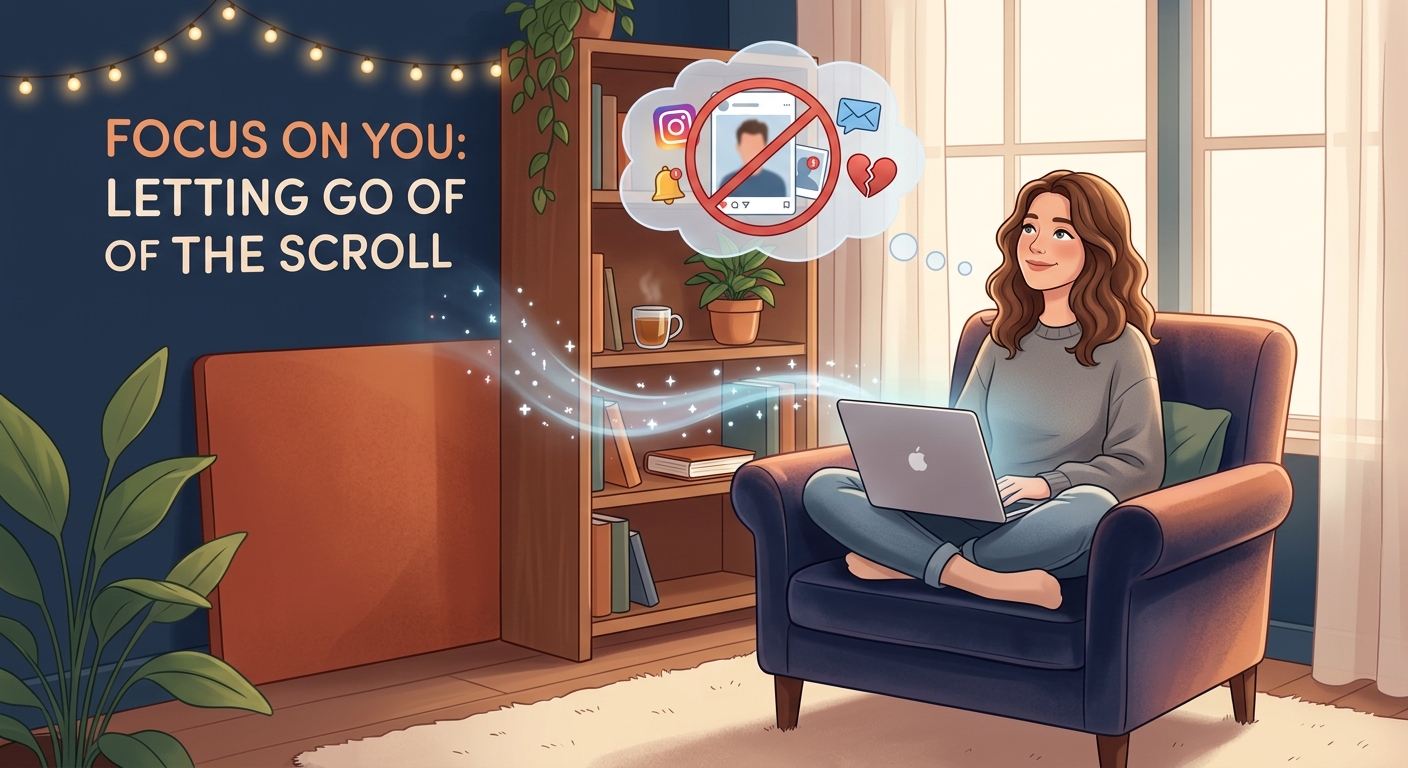
Willpower fails. Structure succeeds.
Here’s your step-by-step plan to make checking physically difficult:
-
Unfollow, mute, and restrict them on every platform. Not just Instagram. Facebook, TikTok, Twitter, LinkedIn, Snapchat. Everywhere. If the platform allows you to mute without unfollowing, do that first. It’s less dramatic and reduces the temptation to reverse the decision impulsively.
-
Block their close friends and family. This feels extreme, but their cousin’s vacation photos featuring your ex in the background will derail your progress just as effectively as their main profile.
-
Delete the apps from your phone for 30 days. Not logged out. Deleted. Redownloading an app creates enough friction that you might catch yourself before you spiral. Keep them on your computer if you need them for work, but install a browser extension that blocks specific profiles.
-
Change your unlock pattern or passcode. Muscle memory drives a lot of mindless scrolling. A new passcode forces you to be conscious about what you’re doing with your phone.
-
Ask a friend to change your passwords. For two weeks, give someone you trust control of your social media passwords. Check in with them once daily for five minutes of supervised scrolling if you absolutely must, but otherwise, you’re locked out.
This isn’t about punishing yourself. It’s about removing the option during moments when your self-control is weakest.
What to do when the urge hits
The urge to check will come. Often at night. Often when you’re bored or lonely.
You need a replacement behavior ready.
Here’s what works better than white-knuckling through the craving:
- Text three friends something specific about your day. Not about your ex. About a podcast you heard, a lunch you ate, a thought you had. Reconnect with your own life.
- Open your notes app and write what you think you’ll find. Be specific. “I think I’ll see a photo of them at a concert.” Then write how you’d feel. “I’d feel replaced and worthless.” Now you’ve processed the emotion without actually checking.
- Do something physical for 60 seconds. Twenty jumping jacks. A wall sit. A plank. Anxiety lives in your body, and movement disrupts the loop.
- Watch a 10-minute video on something you’re trying to learn. Guitar tutorials, cooking techniques, language lessons. Give your brain a different dopamine source.
The urge typically peaks and fades within 10 minutes. You just need to ride it out.
If you’re struggling with obsessive thoughts beyond just social media, learning how to stop overthinking every text message you send can help you build better mental habits overall.
Common mistakes that keep you stuck

| Mistake | Why it backfires | Better approach |
|---|---|---|
| Checking “just once a week” | Creates anticipation and makes each check more emotionally charged | Complete break for at least 30 days |
| Using a finsta or friend’s account | You’re still feeding the obsession, just through a side door | Block on all accounts, ask friends not to update you |
| Keeping them followed “to be mature” | Maturity is protecting your mental health, not performing indifference | Unfollow now, re-evaluate in six months if needed |
| Looking only at their stories, not posts | Stories are designed to be addictive and often show idealized moments | Both are harmful, both need to stop |
| Checking right before bed | Guarantees you’ll sleep poorly and wake up anxious | Phone stays out of bedroom after 9pm |
The “checking less” approach doesn’t work. Your brain needs a full reset.
Understanding your specific triggers
Not all urges to check are created equal.
Some happen because you’re bored. Others because you’re lonely. Some because you saw something that reminded you of them.
For one week, keep a simple log. Every time you want to check (whether you do or not), write down:
- The time
- What you were doing right before
- How you were feeling
- What you hoped to find
Patterns will emerge.
Maybe you always want to check after work. Maybe it’s when you see couples in public. Maybe it’s Sunday nights when you used to spend time together.
Once you know your triggers, you can plan around them. If Sunday nights are hard, schedule a standing dinner with friends. If seeing couples triggers you, have a podcast queued up for your commute.
You can’t avoid every trigger, but you can stop being ambushed by them.
The story you’re telling yourself
Here’s an uncomfortable question: what are you actually looking for?
Most people say they want closure or to know if their ex is okay. But dig deeper and the real answers appear:
“I want to see them suffering so I know the relationship mattered.”
“I want to see them thriving so I can stop feeling guilty about the breakup.”
“I want to see them with someone new so I can finally give up hope.”
“I want to see them alone so I can believe they still want me back.”
None of these needs can be met by their Instagram story.
You’re using their social media as a mirror for your own unresolved feelings. The problem is, it’s a funhouse mirror that distorts everything.
“Checking your ex’s social media is like asking someone who hurt you to tell you you’re worthy. They can’t give you what you need, and asking them over and over just reinforces the idea that your value comes from their attention.” (Relationship therapist and breakup recovery specialist)
The story you need isn’t on their profile. It’s the one you’re building in your own life right now.
Building a new relationship with social media
Eventually, you’ll be ready to use social media normally again.
But “normally” might look different than before.
Here’s how to know you’re ready to re-engage:
- You can see a photo of them without your day being ruined
- You’re genuinely curious about their life, not desperate for information
- You have your own content to share that isn’t about them or the breakup
- You’ve gone two weeks without thinking about what they might post
Even then, start slowly. Follow them back if you want, but keep the mute on for another month. Let yourself get used to the idea that they exist in your digital space without needing to monitor them.
Some people decide never to re-follow. That’s completely valid.
The goal isn’t to prove you’re over it by performing indifference online. The goal is to build a life where their online presence doesn’t determine your emotional state.
When you’re ready to date again
Here’s the thing nobody tells you: you’ll know you’re actually ready to move forward when you stop checking.
Not because you’ve replaced them, but because you’ve reclaimed your attention.
That mental energy you were spending analyzing their posts? It becomes available for your own growth. For new connections. For actually showing up on a date without half your mind wondering what they’re doing.
If you’re starting to feel ready but aren’t sure, check out these signs you’re actually ready to date again after a breakup. One of the biggest indicators is that you can go days without thinking about your ex’s social media.
Your next 30 days
Here’s your roadmap:
Days 1 to 3: Remove all access. Unfollow, delete apps, change passwords. This will feel dramatic. Do it anyway.
Days 4 to 14: The urges will be strongest here. Use your replacement behaviors religiously. Text your support people. Journal. Move your body. Don’t negotiate with yourself.
Days 15 to 21: You’ll notice longer stretches where you don’t think about checking. This is progress, not a sign that “just one look” would be fine now.
Days 22 to 30: Start noticing what you’ve gained. More sleep. Less anxiety. More presence with friends. A clearer sense of who you are without them.
At day 30, reassess. Most people realize they want to extend the break. The freedom feels too good to give up.
You already know what you’ll find
Here’s the hardest truth: you already know what you’ll see if you check.
Either they look happy, which will hurt. Or they look sad, which won’t actually make you feel better. Or they look neutral, which will feel ambiguous and make you want to check again tomorrow for more data.
There’s no version of their social media that gives you what you actually need, which is peace.
Peace comes from choosing yourself. From redirecting the energy you’re spending on them back into your own recovery.
Every day you don’t check is a day you’re choosing your future over your past.
The person you’re becoming doesn’t need to know what they’re doing this weekend. She’s too busy building something new.
Start today. Delete the app. Text a friend. Take the first step toward the version of yourself who doesn’t need to look anymore.
You’ve got this.