
You sit down with your coffee, finally home after a long day. Your partner is scrolling through their phone across the table. You both mumble something about dinner. Then silence.
Sound familiar?
Most couples don’t drift apart because they stop loving each other. They drift because they stop checking in. The good news? You don’t need hours of deep conversation every night. A 5 minute relationship check in can keep you connected, even when your schedules are packed.
A 5 minute relationship check in is a daily practice where couples share their emotional state, upcoming plans, and appreciation for each other. This brief but intentional conversation prevents emotional distance, builds trust, and maintains intimacy without requiring major time commitments. The key is consistency, not perfection. Even busy couples can protect their connection with just five focused minutes each day.
Why Most Couples Skip the Check In (And Why That’s a Problem)
Life gets loud. Work deadlines pile up. Kids need help with homework. The dishwasher breaks. Before you know it, weeks pass where you’ve coordinated logistics but haven’t actually connected.
Research shows that emotional disconnection happens gradually. You don’t wake up one day as strangers. You get there through a thousand small moments of not checking in.
The problem isn’t that you’re too busy for your relationship. The problem is thinking connection requires more time than you have. A meaningful check in takes less time than scrolling social media before bed.
What Makes a Check In Actually Work
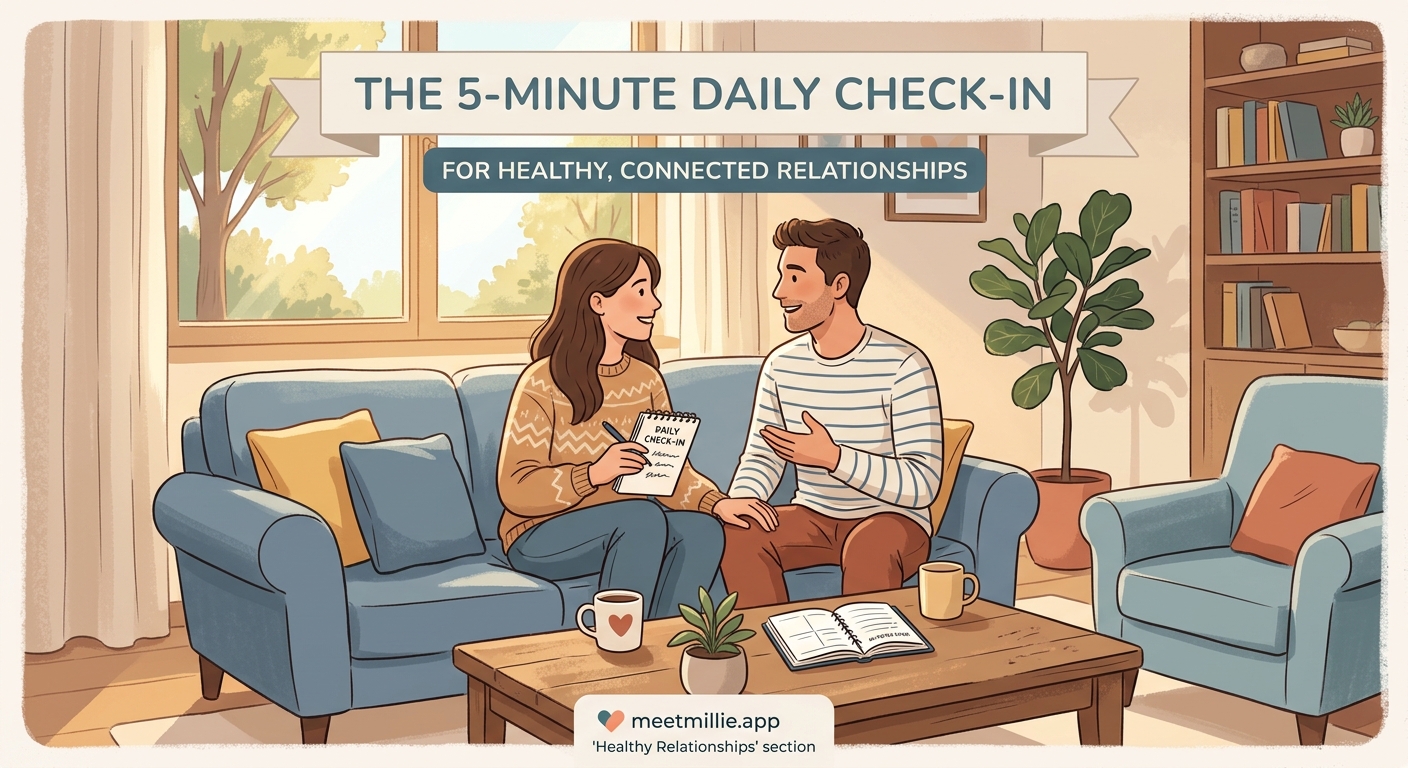
Not all check ins are created equal. Asking “how was your day?” while staring at your laptop doesn’t count. Neither does a text exchange about who’s picking up groceries.
A real check in has three qualities:
- Presence: You’re both mentally there, not multitasking
- Intention: You’re aiming to understand, not just update
- Consistency: It happens regularly, not just when problems arise
The magic isn’t in the length. It’s in the reliability. Your partner knows that every day, no matter what, you’ll have those five minutes together.
The Simple 5 Minute Framework
Here’s a structure that works for couples who don’t have time for complicated systems.
-
Set the scene (30 seconds): Find a spot where you won’t be interrupted. Turn off the TV. Put phones face down. Sit facing each other if possible.
-
Share your emotional weather (2 minutes): Each person gets one minute to answer “how are you feeling right now?” Not how was your day. How are you feeling. Stressed? Excited? Tired? Grateful? Name it.
-
Flag what’s coming (1 minute): Mention anything on your radar for tomorrow or the week ahead. Big presentation? Tough conversation with a friend? Dentist appointment you’re dreading? This prevents surprises and lets your partner support you.
-
Express one appreciation (1 minute): Each person shares one specific thing they appreciate about the other. Not generic praise. Specific. “I noticed you cleaned out the fridge without me asking” beats “you’re great.”
-
Check the connection (30 seconds): Ask “is there anything you need from me right now?” Sometimes the answer is a hug. Sometimes it’s space. Sometimes it’s just “no, I’m good.”
That’s it. Five minutes. No therapy speak required.
Common Mistakes That Kill the Check In Habit
Even simple practices can fall apart if you hit these traps.
| Mistake | Why It Fails | Better Approach |
|---|---|---|
| Treating it like a meeting | Turns emotional connection into a task | Keep the tone warm, not transactional |
| Skipping when things are good | Builds the habit only during crisis | Check in especially when life feels smooth |
| Multitasking during the check in | Sends the message that it’s not important | Protect those five minutes like an appointment |
| Using it to solve problems | Creates pressure and avoidance | Save problem solving for longer conversations |
| Making it optional | Allows the habit to fade | Anchor it to something you already do daily |
The biggest mistake? Thinking you’ll remember to do it without a plan. You won’t. Anchor your check in to something that already happens every day. After dinner. Before bed. With morning coffee. Make it automatic.
When Your Schedules Don’t Line Up
Different work hours? Kids’ bedtime chaos? One partner travels for work?
The 5 minute relationship check in still works. You just need to adjust the delivery method.
For couples with mismatched schedules, try voice memos. Record your check in when you have a moment. Your partner listens and responds when they can. It’s not the same as face to face, but it’s infinitely better than nothing.
Some couples do their check in over lunch via video call. Others do it first thing in the morning before anyone else wakes up. One couple I know does theirs in the car during their shared commute.
The format matters less than the consistency.
What to Actually Talk About (When You’re Not Sure)
Some days, the check in flows naturally. Other days, you both stare at each other wondering what to say.
Here are prompts that work when conversation feels stuck:
- What’s taking up the most mental space for you right now?
- What’s one thing that made you smile today?
- What are you looking forward to this week?
- What’s one thing I could do to make tomorrow easier for you?
- What’s something you’ve been meaning to tell me but haven’t found the moment?
You can also share what you’re grateful for, what’s worrying you, or what you’re curious about. The content matters less than the act of sharing.
Understanding what’s your partner’s love language can help you tailor these conversations to what actually makes them feel heard and valued.
How to Handle the Awkward First Week
Starting a new relationship habit feels weird. You’ll both feel self conscious. That’s normal.
The first few check ins might feel forced. You might giggle nervously. You might not know what to say. Your partner might give one word answers at first.
Keep going anyway.
By day four or five, it starts feeling less awkward. By week two, you’ll notice when you skip it. By week three, it becomes part of your rhythm.
“The couples who stay connected aren’t the ones who never get busy. They’re the ones who protect small moments of connection even when life gets chaotic. Five minutes of intentional conversation does more for your relationship than an hour of distracted time together.” – Dr. John Gottman
Adapting the Check In as Your Relationship Changes
The check in that works when you’re newlyweds might need tweaking when you have a newborn. The version that works when you’re both working from home might shift when one of you starts traveling.
That’s fine. The framework stays the same, but the content and timing can flex.
Some couples add a weekend version that’s longer. Others do a shorter version on weekdays and a more in depth one on Sundays. Some skip it on date nights because they’re already connecting.
The point isn’t rigid adherence to a system. It’s maintaining the habit of regular emotional check ins, whatever form that takes for you right now.
If you’re navigating how your relationship has outgrown the honeymoon phase, these check ins become even more valuable. They help you stay connected as your relationship matures.
What Happens When You Actually Stick With It
After a month of daily check ins, most couples notice a shift.
Small resentments don’t build up because you’re addressing them before they become big. You feel more like a team because you know what your partner is dealing with. Intimacy increases because you’re sharing emotional reality, not just logistics.
You also catch problems earlier. If your partner mentions feeling stressed about work three days in a row, you can suggest they take an evening off before they hit burnout. If you notice they seem distant, you can ask about it instead of making up stories in your head.
The 5 minute relationship check in works because it creates a reliable space for honesty. You don’t have to wait for the right moment or build up courage for a big talk. You have a built in moment every single day.
Making It Stick When Motivation Fades
You’ll have days when you don’t feel like checking in. You’re tired. You had a fight earlier. You just want to zone out.
Do it anyway.
The check in matters most on the days when it feels hardest. Those are the days when disconnection is most likely to take root.
Some strategies that help:
- Set a phone reminder for the same time every day
- Keep a simple tracker (just mark an X on a calendar each day you do it)
- Tell a friend you’re trying this and report back weekly
- Remember that five minutes is shorter than most commercial breaks
Consistency beats intensity every time. A mediocre check in that happens daily beats a perfect one that happens occasionally.
Signs Your Check In Is Working
How do you know if this practice is actually helping?
You’ll notice you’re less surprised by your partner’s mood swings because you’ve been tracking their emotional weather. You’ll feel less alone in your stress because you’ve been sharing it. You’ll have more inside jokes and shared references because you’re staying current with each other’s lives.
You might also notice that bigger conversations happen more easily. When you’re already in the habit of emotional honesty for five minutes a day, extending that to longer talks feels natural.
The check in becomes your relationship’s early warning system. It catches small issues before they become big ones. It maintains warmth even during busy seasons. It reminds you both that you’re on the same team.
Your Relationship Deserves Five Minutes
You probably spend more time choosing what to watch on Netflix than you do checking in with your partner. That’s not a judgment. It’s just reality for most busy couples.
The 5 minute relationship check in isn’t about adding another obligation to your day. It’s about protecting what matters most with a practice so simple you can’t use “too busy” as an excuse.
Start tonight. Set a timer for five minutes. Follow the framework. See what happens.
Your relationship doesn’t need grand gestures or weekend retreats to stay strong. It needs consistent, intentional moments of connection. Five minutes at a time.