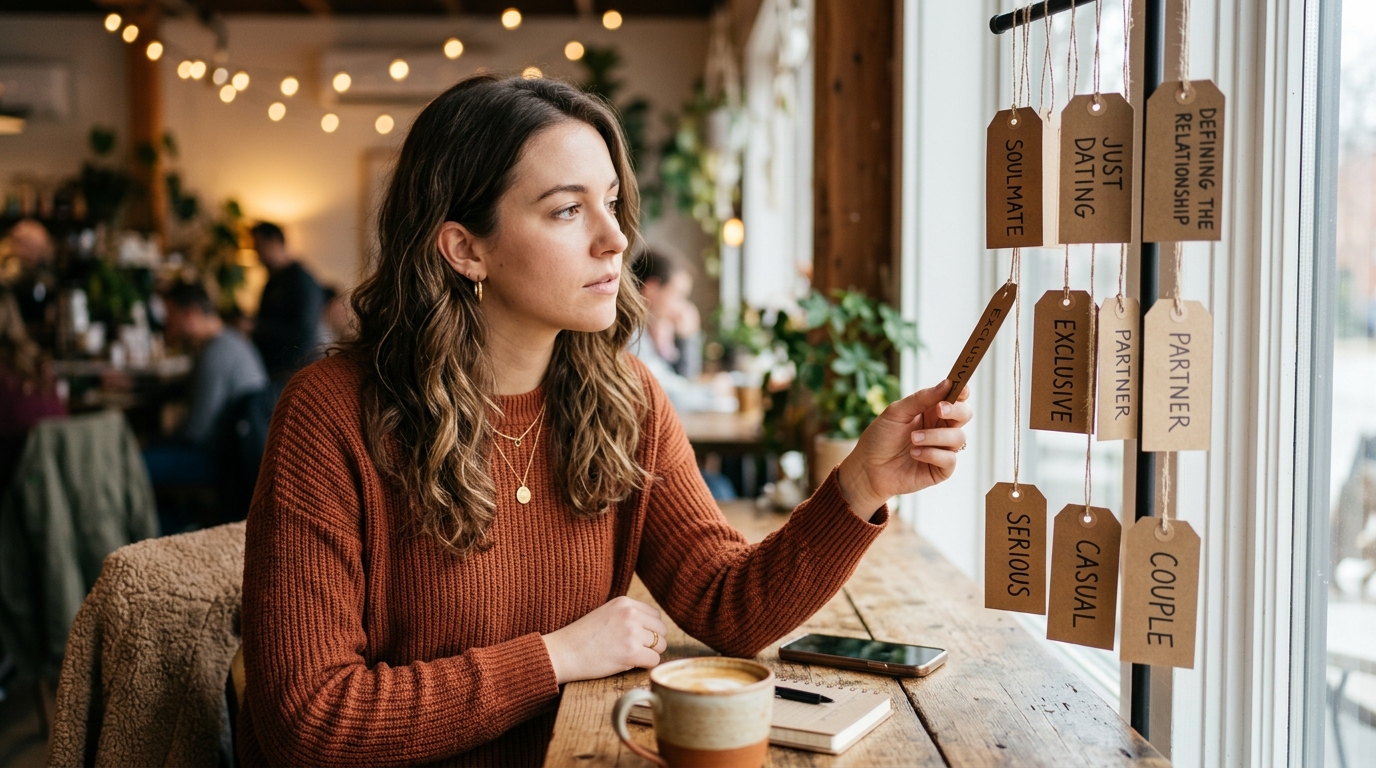
You’ve been seeing someone for weeks. Maybe months. You text every day. You’ve met their friends. You’re basically acting like a couple. But when you try to bring up the “what are we?” conversation, they freeze up. Or worse, they tell you they’re “not really into labels right now.”
Sound familiar?
People avoid labels in relationships for complex reasons ranging from fear of commitment and past trauma to cultural shifts in dating norms. Understanding these psychological triggers, the influence of dating app culture, and generational attitudes toward relationships can help you navigate undefined connections with more clarity and set boundaries that protect your emotional wellbeing.
The psychology behind label resistance
When someone tells you they don’t want to define the relationship, it’s rarely about the word itself. Labels are just shorthand for expectations, boundaries, and commitment levels. What they’re really saying is that they’re not ready for what those words represent.
Fear sits at the center of most label avoidance. Not always fear of you specifically, but fear of what happens next. Once you call someone your boyfriend or girlfriend, the relationship becomes real in a way it wasn’t before. You can’t pretend it’s casual anymore. You can’t keep your options open without being dishonest.
That scares people.
Attachment theory offers some insight here. People with anxious attachment styles might avoid labels because they fear abandonment. Defining the relationship makes it more painful if it ends. People with avoidant attachment styles resist labels because commitment feels suffocating. They need escape routes, even if they never use them.
Past relationship trauma plays a huge role too. If someone’s last serious relationship ended badly, they might associate labels with pain. The word “boyfriend” or “girlfriend” becomes a trigger that brings back memories of arguments, betrayal, or heartbreak. Avoiding the label feels like protecting themselves from repeating the same mistakes.
“When we avoid defining our relationships, we’re often trying to avoid the vulnerability that comes with admitting we care about someone. It’s a defense mechanism that backfires more often than it protects us.” – Dr. Alexandra Solomon, clinical psychologist
Sometimes the resistance isn’t about fear at all. It’s about identity. Younger generations especially are rethinking what relationships should look like. They question whether traditional relationship structures serve them. They wonder if monogamy is the only valid option. They want flexibility to create relationships that fit their lives instead of forcing their lives to fit relationship templates.
This isn’t always a bad thing. But it becomes problematic when one person wants clarity and the other uses “questioning traditional structures” as an excuse to avoid commitment.
How dating app culture changed the game
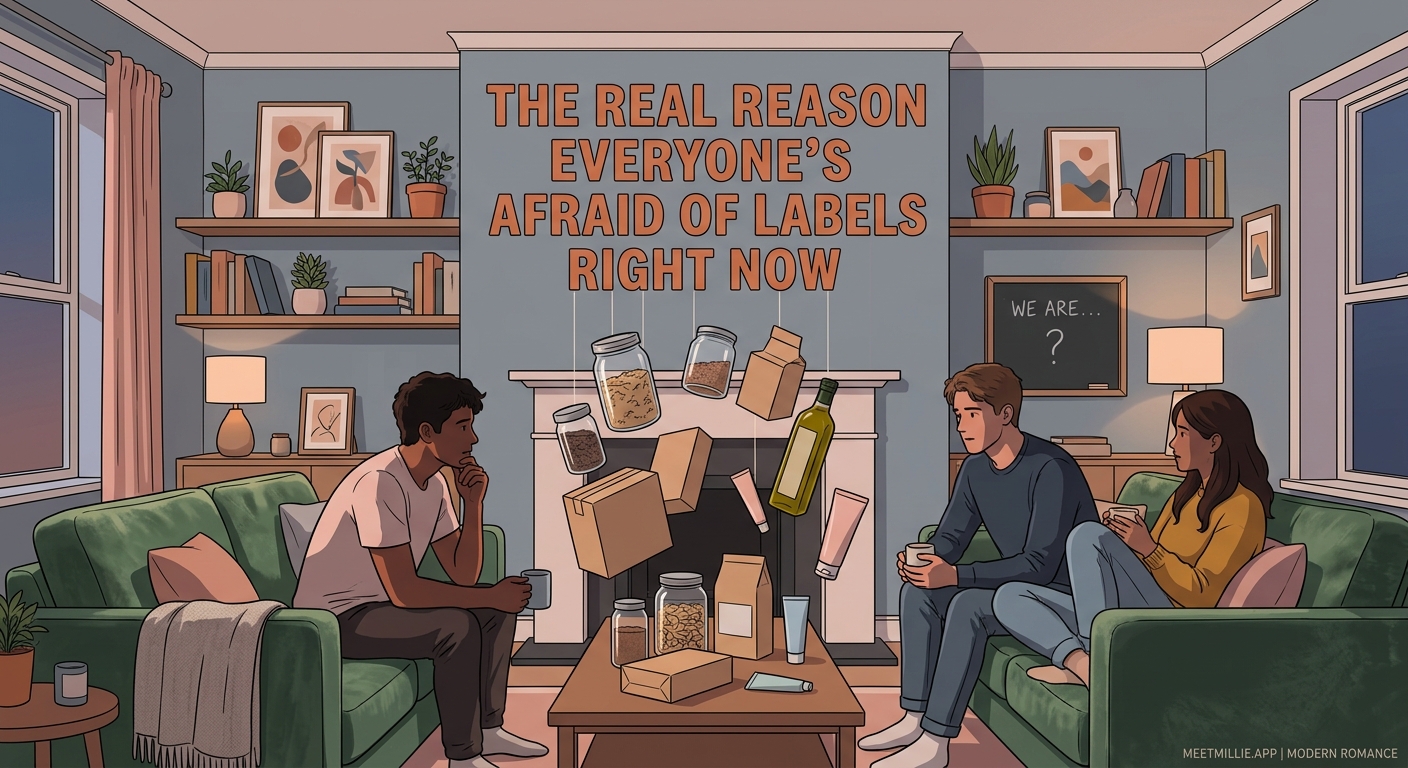
Dating apps didn’t invent commitment issues. But they definitely made them worse.
When you have hundreds of potential matches at your fingertips, committing to one person means closing off all those other possibilities. Even if you really like someone, there’s always that nagging thought: what if someone better is just one swipe away?
Psychologists call this the paradox of choice. Too many options make us less satisfied with the choices we make. We’re always wondering if we settled. We’re always keeping one eye on the door.
Dating apps also train us to treat people as disposable. If a conversation gets boring, you unmatch. If someone annoys you, you ghost. If you’re not feeling it anymore, you just stop responding. This casual approach to human connection bleeds into how we handle actual relationships.
Labels feel permanent in a culture that treats everything as temporary.
The language of dating apps reinforces this too. You’re not dating someone, you’re “talking” to them. You’re not in a relationship, you’re “hanging out.” Even when things get serious, people say they’re “seeing someone” instead of calling that person their partner. The vocabulary itself creates distance.
Here’s what changed with app culture:
- Constant access to new potential matches reduces relationship investment
- Gamification of dating makes commitment feel like losing the game
- Profile browsing becomes a habit even when you’re happy with someone
- Fear of missing out drives people to keep options open indefinitely
- Easy access to alternatives makes working through relationship challenges feel optional
The abundance of choice also creates what researchers call decision paralysis. When you have too many options, you struggle to commit to any of them. You keep waiting for perfect clarity that never comes. Meanwhile, the person you’re actually with feels your hesitation and pulls away.
The “keeping options open” mentality
Let’s be honest about what’s really happening when someone won’t put a label on things. Often, they want the benefits of a relationship without the accountability that comes with it.
They want someone to text goodnight. Someone to make plans with on weekends. Someone to sleep with regularly. But they also want the freedom to pursue other people without technically cheating. Labels would make that impossible.
This isn’t always malicious. Sometimes people genuinely don’t know what they want. They like you, but they’re not sure if they like you enough. They’re waiting for some magical moment of certainty that might never arrive.
But here’s the problem with keeping options open indefinitely. You’re not actually keeping your options open. You’re choosing the option of not choosing. And that’s still a choice that affects the other person.
When you refuse to define a relationship, you’re essentially saying: “I want you to act like we’re together, but I don’t want to be held to the same standard.” That’s not fair to anyone involved.
The keeping options open mentality also prevents real intimacy from developing. Vulnerability requires safety. Safety requires commitment. If someone always has one foot out the door, you can never fully relax into the connection. You’re always performing, always trying to be the option they finally choose.
Generational shifts in relationship attitudes
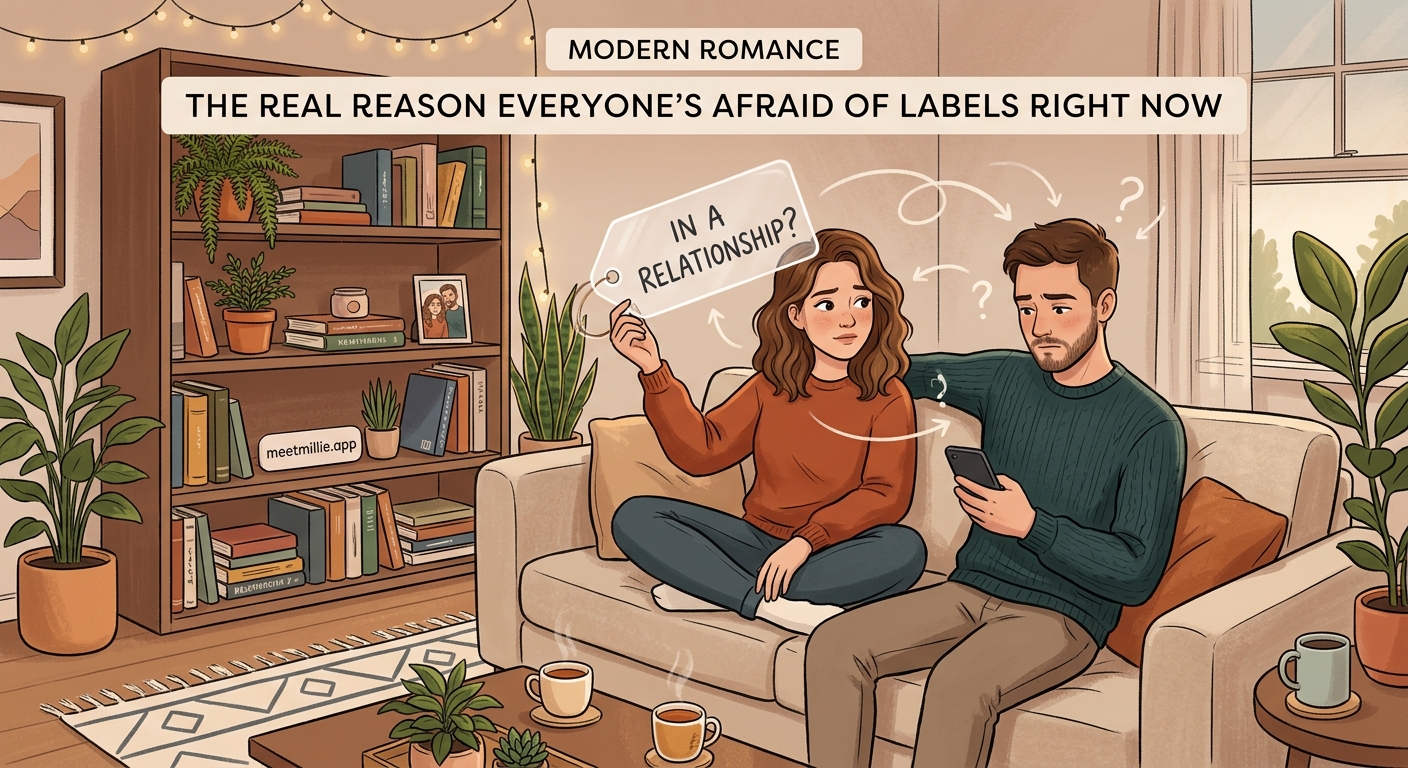
Millennials and Gen Z approach relationships differently than previous generations. They’re getting married later. They’re less likely to view marriage as necessary. They’re more open to non-traditional relationship structures.
Some of this comes from economic factors. When you’re drowning in student debt and can barely afford rent, planning a wedding feels absurd. When you’re not financially stable, making long-term commitments feels risky.
But economics only explain part of it. There’s also been a cultural shift in how younger people view independence. Previous generations saw relationships as something you entered to become complete. Younger generations want to feel complete on their own first.
They’ve watched their parents’ marriages end in divorce. They’ve seen how financial dependence trapped people in unhappy relationships. They’re determined not to repeat those patterns. So they prioritize their careers, their friendships, their personal growth. Relationships become something you add to an already full life, not the foundation of your entire existence.
This creates a tension. On one hand, it’s healthy to have a strong sense of self outside your relationship. On the other hand, building a life with someone requires making them a priority. The pendulum has swung so far toward independence that some people struggle with interdependence.
Younger generations also grew up with social media. They’ve seen how public relationship declarations can backfire. When you post couple photos and relationship status updates, breaking up becomes more humiliating. Everyone knows. Everyone has opinions. Everyone asks what happened.
Keeping things unlabeled means keeping them private. If it doesn’t work out, you don’t have to explain yourself to your entire social network.
| Generation | Average Age at First Marriage | Attitude Toward Labels |
|---|---|---|
| Baby Boomers | Early 20s | Labels as relationship milestones |
| Gen X | Mid 20s | Labels with some flexibility |
| Millennials | Late 20s to early 30s | Cautious about labels, value independence |
| Gen Z | TBD (many not yet married) | Redefining what labels mean |
When “taking it slow” becomes stalling
There’s a difference between taking things slow and refusing to move forward at all.
Taking it slow means you’re building a foundation carefully. You’re getting to know each other before making big commitments. You’re letting feelings develop naturally instead of forcing them. This is healthy.
Stalling means you’re stuck. Months pass and nothing changes. You’re not getting closer. You’re not building toward anything. You’re just existing in this undefined space that serves one person’s needs while leaving the other person confused and frustrated.
Here’s how to tell the difference:
-
Check for progress over time. Are you meeting each other’s friends and family? Are you making future plans together? Are you having deeper conversations? If yes, you’re taking it slow. If nothing has changed in months, you’re stalling.
-
Notice how they talk about the future. Do they include you in their plans, even if they don’t use relationship labels? Or do they avoid any mention of next month, next year, or anything beyond this weekend?
-
Pay attention to their actions, not just their words. Someone who’s genuinely taking it slow still shows up consistently. They prioritize you. They’re reliable. Someone who’s stalling keeps you at arm’s length.
The phrase “I’m not ready for a relationship right now” deserves special attention. Sometimes it’s true. They just got out of something serious. They’re dealing with personal issues. They need time to heal.
But often, what they really mean is: “I’m not ready for a relationship with you.” If months pass and they’re still not ready, that’s your answer. They’re hoping you’ll get tired of waiting and end things so they don’t have to.
What does taking things slow actually mean in modern dating can help you understand whether someone is being thoughtful or just stringing you along.
The real cost of undefined relationships
Staying in an undefined relationship takes a toll on your mental health. You can’t plan for the future because you don’t know if they’ll be in it. You can’t fully invest because you’re protecting yourself from potential rejection. You exist in this constant state of uncertainty that drains your energy.
You also can’t set proper boundaries. If someone’s not your partner, can you ask them not to see other people? Can you expect them to prioritize you? Can you be upset when they cancel plans last minute? The lack of definition means you have no framework for what’s reasonable to expect.
This ambiguity often leads to anxiety. You overanalyze every text. You read into every cancelled plan. You wonder if they’re losing interest or if this is just how they are. You can’t trust your instincts because you have no baseline for what normal looks like in this non-relationship.
For people with anxious attachment styles, undefined relationships are particularly painful. The uncertainty triggers all their deepest fears about not being good enough, about being abandoned, about not mattering to someone they care about.
But even securely attached people struggle with prolonged ambiguity. Humans need some level of predictability to feel safe. We need to know where we stand. When that’s constantly in question, it affects our self-esteem, our ability to focus on other areas of life, and our overall wellbeing.
Common costs of staying in label-free limbo:
- Constant anxiety about where you stand
- Inability to make future plans with confidence
- Feeling like you can’t express your needs or boundaries
- Jealousy and insecurity when they interact with others
- Resentment that builds over time
- Missing out on people who would commit to you
- Erosion of self-worth as you accept less than you deserve
The opportunity cost matters too. Every month you spend waiting for someone to choose you is a month you could spend finding someone who’s excited to be with you from the start.
How to protect yourself in the gray area
If you find yourself in an undefined relationship, you have choices. You can wait it out and hope they eventually commit. You can walk away and find someone who’s ready. Or you can set boundaries that protect you while giving the situation some time to develop.
Here’s a framework for navigating the gray area without losing yourself:
-
Set a personal deadline. Don’t share it with them, but decide how long you’re willing to stay in uncertainty. Three months? Six months? Whatever feels right for you. When that deadline arrives, reassess honestly.
-
Keep living your life. Don’t put everything on hold waiting for them to figure out what they want. Pursue your goals. Spend time with friends. Stay open to other possibilities if you’re not exclusive.
-
Communicate your needs clearly. Tell them what you’re looking for. Ask them what they’re looking for. If those things don’t align, you have important information. How to stop overthinking every text message you send can help you communicate without spiraling.
You also need to watch for breadcrumbing behavior. This is when someone gives you just enough attention to keep you interested but never enough to move the relationship forward. They text when you start pulling away. They make vague future plans. They give you hope without giving you commitment.
Why breadcrumbing hurts more than ghosting explains how to recognize this pattern before you waste months or years on someone who’s just keeping you as a backup option.
Sometimes the person avoiding labels has valid reasons that have nothing to do with their feelings for you. They might be going through a difficult time at work. They might be dealing with family issues. They might have mental health challenges that make commitment feel overwhelming right now.
In these cases, you have to decide if you’re willing to be patient. But patience should have limits. And it should be based on clear communication about what they’re dealing with and what timeline they’re working with, not just vague promises that things will be different “someday.”
What to do when you want different things
The hardest situation is when you’re clear about wanting a defined relationship and they’re clear about not wanting one. You like each other. You have chemistry. You enjoy spending time together. But you’re fundamentally incompatible in terms of what you want right now.
In this scenario, someone has to compromise. Either you accept the undefined situation longer than you’re comfortable with, or they commit before they’re ready. Neither of these options typically ends well.
The mature choice is usually to walk away. Not because either person is wrong, but because your needs don’t match. They’re not a bad person for wanting to keep things casual. You’re not needy for wanting commitment. You’re just looking for different things.
Walking away is painful, especially when you have real feelings for someone. But staying is often more painful. You’ll resent them for not giving you what you need. They’ll feel pressured and pull away further. The connection that was good will turn sour.
Before you have the final conversation, get clear on what you actually want. Not what you think you should want, or what your friends say you should want. What do you genuinely need to feel secure and happy?
Some people are fine with undefined relationships for long periods. They enjoy the freedom and flexibility. If that’s genuinely you, great. But if you’re only pretending to be okay with it because you’re afraid of losing them, you’re not being honest with yourself or them.
When you do have the conversation, be direct. Don’t hint. Don’t hope they’ll figure it out. Say clearly: “I’ve really enjoyed getting to know you, but I’m looking for a committed relationship. If that’s not what you want right now, I understand, but I need to move on.”
Their response will tell you everything you need to know. If they immediately step up and commit, they were ready but needed a push. If they ask for more time, set a specific deadline. If they get defensive or try to make you feel bad for having needs, you definitely made the right choice to walk away.
Moving forward with clarity
Understanding why people avoid labels doesn’t make it hurt less when you’re on the receiving end. But it does help you make better decisions about what you’re willing to accept.
Not everyone who avoids labels is playing games. Some are genuinely working through their own issues. Some are questioning what they want from relationships in general. Some are trying to protect themselves from getting hurt again.
But their reasons, however valid, don’t obligate you to wait around indefinitely. You get to decide what you’re willing to accept. You get to have standards. You get to walk away from situations that don’t serve you, even if the other person is nice and the connection is real.
The right person for you won’t make you feel crazy for wanting clarity. They won’t make you feel needy for wanting commitment. They won’t leave you guessing about where you stand for months on end.
Trust that you deserve someone who’s excited to claim you, not someone who treats your relationship status like a secret they’re not ready to share. The label itself isn’t the point. The willingness to be all in is what matters. And you can’t build anything real with someone who’s only halfway there.
If you’re ready to get back out there and meet people who know what they want, understanding the first message formula that actually gets responses can help you start conversations that lead somewhere real.