
You’ve heard about love languages. Maybe you’ve even taken the quiz yourself. But here’s the thing: knowing your own love language is only half the equation. Understanding how your partner receives love can transform your relationship in ways that feel almost magical. The challenge? Your partner might not know their own love language, or they might struggle to articulate it. That’s where observation, curiosity, and a few strategic conversations come in.
Discovering your partner’s love language requires active observation of what they request, complain about, and naturally give. Watch how they express love to others, notice their emotional reactions to different gestures, and have open conversations about what makes them feel valued. Combining these approaches reveals patterns that identify whether they value words of affirmation, quality time, receiving gifts, acts of service, or physical touch most.
Watch What They Complain About
Your partner’s complaints often reveal their deepest emotional needs.
When someone says “we never spend time together anymore,” they’re likely telling you their love language is quality time. If they mention “you never say you appreciate me,” words of affirmation probably matter most to them.
Listen for patterns in what bothers them. These aren’t just random grievances. They’re breadcrumbs leading you straight to their emotional core.
Pay attention during arguments too. The things that hurt your partner most deeply usually connect directly to their primary love language. If they get upset when you forget an anniversary, gifts might be significant. If they withdraw when you don’t help with chores, acts of service could be their language.
Notice What They Request Most Often

People ask for what they need.
Your partner might regularly say things like “can we just talk?” or “will you help me with this project?” These requests aren’t random. They’re windows into what makes them feel loved and valued.
Track these patterns over a few weeks:
- Do they often ask you to sit and chat with them?
- Do they request help with tasks around the house?
- Do they hint about wanting compliments or encouragement?
- Do they initiate physical closeness like hugs or hand holding?
- Do they mention things they’d love to have or receive?
The answers reveal priorities. Someone who constantly wants your undivided attention values quality time. Someone who asks for back rubs or cuddles speaks the language of physical touch.
Observe How They Show Love to You
Here’s a secret: people tend to give love the way they want to receive it.
If your partner regularly brings you coffee in bed, fixes things around the house, or runs errands for you, acts of service probably resonate with them. If they’re always complimenting you or sending encouraging texts, words of affirmation likely fill their tank.
This method isn’t foolproof. Some people give what they wish they received but never got growing up. Still, it’s a solid starting point for understanding their emotional vocabulary.
Watch how they treat others too. How do they celebrate their best friend’s birthday? How do they comfort a family member? These behaviors often reflect their own love language preferences.
Have a Direct Conversation
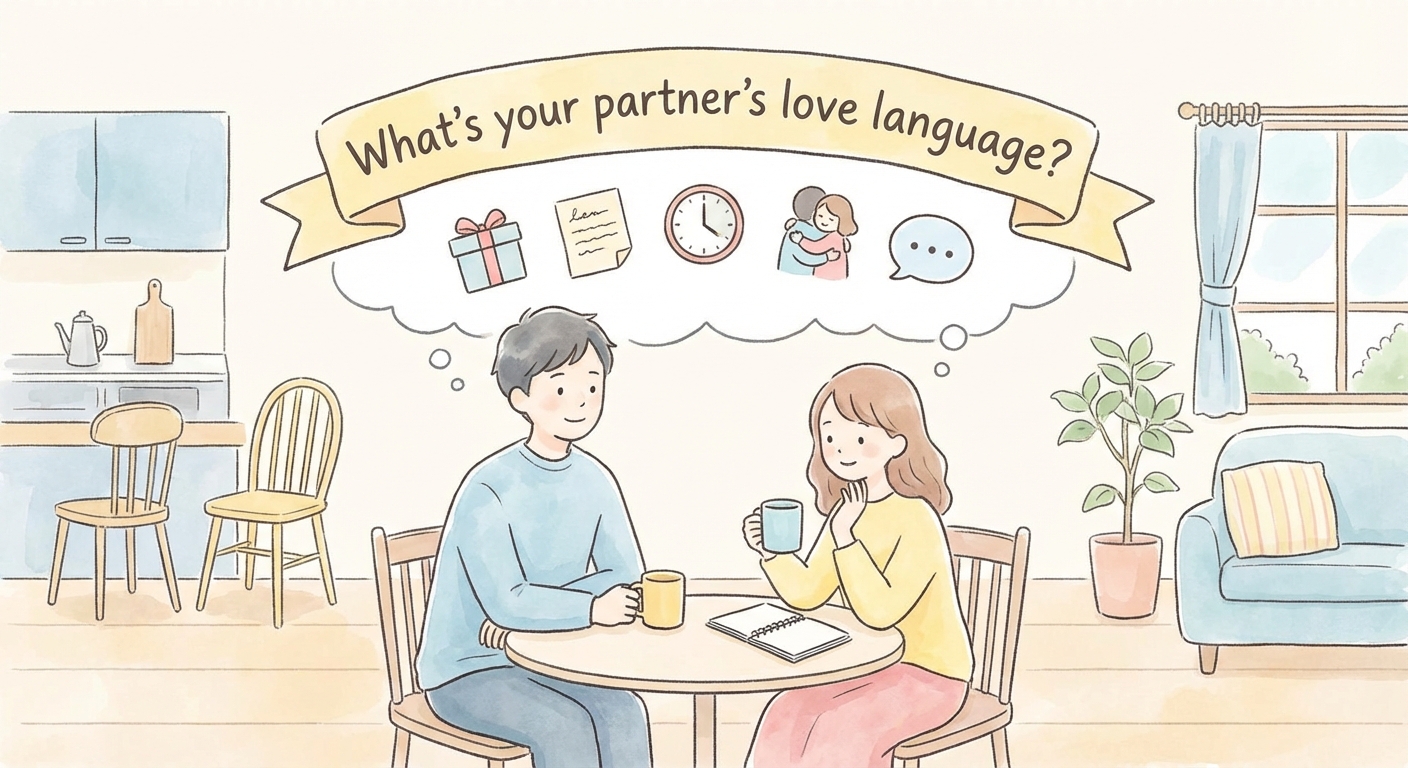
Sometimes the simplest approach works best.
Bring up the topic casually. You might say something like “I’ve been reading about how people feel loved differently, and I want to make sure I’m showing up for you in ways that matter.”
Ask open ended questions:
- When do you feel most loved by me?
- What’s something I’ve done recently that made you feel really appreciated?
- If you could change one thing about how we connect, what would it be?
- What did past partners do that made you feel valued?
- When you’re having a rough day, what helps you feel better?
Their answers provide direct insight. Someone might say “I feel most loved when we cook dinner together and talk about our day.” That’s quality time. Another might say “when you notice I’m stressed and do the dishes without me asking.” That’s acts of service.
Test Different Approaches
Run small experiments to see what gets the biggest reaction.
Try each love language deliberately over a week or two:
- Words of affirmation week: Leave notes, send thoughtful texts, give specific compliments
- Quality time week: Plan undistracted time together, put phones away, focus fully on them
- Receiving gifts week: Bring home their favorite snack, pick up something that reminded you of them
- Acts of service week: Handle tasks they usually do, anticipate their needs, lighten their load
- Physical touch week: Initiate more hugs, hold hands, give massages, sit close together
Watch their reactions carefully. Which gestures light them up? Which ones they mention to friends? Which make them visibly happier or more relaxed?
The love language that creates the strongest positive response is probably their primary one.
Look for Patterns in Their Reactions
Emotional responses don’t lie.
Notice when your partner seems most grateful, most excited, or most content. What preceded those moments?
| Their Reaction | Possible Love Language |
|---|---|
| Lights up when you compliment them in front of others | Words of Affirmation |
| Gets emotional when you plan a special date | Quality Time |
| Keeps every small gift you’ve given them | Receiving Gifts |
| Relaxes visibly when you handle a task for them | Acts of Service |
| Becomes affectionate after cuddling on the couch | Physical Touch |
Also watch for negative reactions. If your partner seems hurt when you’re distracted during conversations, quality time matters deeply. If they get upset when you’re not physically affectionate in public, physical touch is probably their language.
Consider Their Childhood and Background
Our early experiences shape how we understand love.
Think about how your partner was raised. Did their parents express affection verbally, or were they more action oriented? Was physical affection common in their family, or rare?
People who grew up with limited verbal affirmation often crave words of encouragement as adults. Those who had parents always doing things for them might value acts of service. Someone whose family rarely touched might either avoid physical affection or deeply desire it.
These patterns aren’t universal, but they provide helpful context. Understanding your partner’s history helps you understand their present needs.
Pay Attention to What They Do During Conflict
Stress reveals truth.
When your partner is upset, what do they seek? Do they want to talk it through? That suggests words of affirmation or quality time. Do they want space and then appreciate when you’ve handled something practical in the meantime? Acts of service might be their language.
Some people need physical comfort during hard times. Others want thoughtful gestures that show you’re thinking of them. These stress responses offer valuable clues.
“The way someone seeks comfort during difficult moments often reveals their deepest emotional needs. When we’re vulnerable, we naturally reach for what truly fills us up.”
Notice Their Social Media and Communication Style
Digital behavior reflects emotional priorities.
Does your partner frequently post about meaningful experiences and time spent with loved ones? Quality time probably matters. Do they share gifts they’ve received or given? That’s a clue.
Look at how they communicate with you digitally too. Long, thoughtful messages suggest they value words. Frequent “thinking of you” texts with small gestures might indicate they appreciate both words and gifts.
Someone who sends lots of memes and stays in constant contact might be seeking quality time through digital presence. Someone who offers to help you with tasks via text values acts of service.
Ask About Their Ideal Relationship
Future focused questions bypass current relationship dynamics.
Ask your partner: “In your ideal relationship, what does a perfect weekend look like?” or “What would make you feel most loved on a random Tuesday?”
Their answers paint a picture of their priorities. Someone might describe long conversations and shared activities (quality time). Another might talk about spontaneous gifts and thoughtful surprises (receiving gifts). Yet another might focus on partnership and shared responsibilities (acts of service).
These hypotheticals remove pressure and allow your partner to dream about what they truly want.
Common Mistakes to Avoid
Don’t assume your love language matches theirs.
This is the biggest trap couples fall into. You show love the way you want to receive it, but your partner might speak an entirely different language. Your thoughtful gifts might mean less to them than 20 minutes of uninterrupted conversation.
| Mistake | Why It Fails | Better Approach |
|---|---|---|
| Assuming they want what you want | Different people have different needs | Observe and ask rather than assume |
| Testing only once | People have complex, layered needs | Try multiple approaches over time |
| Ignoring their complaints | Complaints reveal unmet needs | Listen for patterns in what bothers them |
| Forcing the quiz | Not everyone relates to formal assessments | Use real world observation instead |
| Expecting one clear answer | Most people have primary and secondary languages | Look for top two or three preferences |
Also avoid making it too complicated. You’re not conducting scientific research. You’re simply trying to understand what makes your partner feel valued and loved.
Combine Multiple Methods for Accuracy
No single approach tells the whole story.
Use observation, conversation, and experimentation together. What someone says they value might differ slightly from what actually fills their emotional tank. Their actions might reveal needs they can’t articulate.
Look for consistency across different methods. If your partner complains about lack of quality time, requests more date nights, and lights up when you plan special experiences together, you’ve found their language.
Most people have a primary love language and one or two secondary ones. Your partner might value quality time most, but also appreciate words of affirmation. Understanding this nuance helps you meet their needs more completely.
Understanding Changes Over Time
Love languages can shift with life circumstances.
A new parent might suddenly value acts of service more than ever before. Someone dealing with health issues might crave physical touch or words of encouragement. Career stress might make quality time feel more precious.
Check in regularly. What filled your partner’s tank five years ago might not be their primary need today. Relationships evolve, and so do the ways we need to feel loved.
Ask periodically: “How can I best support you right now?” or “What would make you feel most loved this season?” These questions acknowledge that needs change.
Putting Your Discovery into Practice
Knowing your partner’s love language means nothing without action.
Once you’ve identified their primary language, make it a priority. If it’s quality time, protect your time together fiercely. Put away phones during dinner. Plan regular date nights. Create rituals that guarantee connection.
If it’s words of affirmation, build a habit of verbal appreciation. Notice specific things they do well. Express gratitude out loud. Send encouraging messages during their workday.
For acts of service, look for ways to lighten their load. Handle tasks they dislike. Anticipate needs before they ask. Show love through helpful action.
With receiving gifts, remember that it’s not about expense. Thoughtful, meaningful gestures matter most. Pick up their favorite candy. Bring home flowers on a random Tuesday. The thought counts far more than the price tag.
For physical touch, increase affectionate contact. Hold hands during walks. Hug longer. Sit close on the couch. Make physical connection a daily priority.
Making Love Languages Work for Both of You
Understanding goes both ways.
Share your own love language with your partner too. Help them understand what makes you feel valued. The goal isn’t for one person to do all the adjusting.
Create a relationship where both people feel seen, heard, and loved in the ways that matter most to them. That might mean you give quality time while receiving words of affirmation. It might mean you both value different things, and that’s perfectly fine.
The beauty of love languages is that they provide a framework for mutual understanding. They help you stop speaking past each other and start connecting more deeply.
Your Partner Feels Loved When You Speak Their Language
Figuring out your partner’s love language isn’t about perfection. It’s about paying attention.
Watch how they give and receive love. Listen to their requests and complaints. Try different approaches and notice what resonates. Have honest conversations about needs and preferences.
The effort you put into understanding them communicates love all by itself. It shows you care enough to learn their emotional vocabulary. That matters more than getting it right immediately.
Start today with one simple step: ask your partner what made them feel most loved this week. Their answer will point you in the right direction. From there, keep observing, keep asking, and keep showing up in ways that fill their specific tank. That’s how good relationships become great ones.