You’ve got a first date coming up and suddenly your closet feels like a puzzle you can’t solve. That perfectly casual shirt now looks too wrinkled. The dress that felt great last weekend seems too formal. You’re not alone in this struggle.
Choosing what to wear on a first date depends on your venue, weather, and [personal style](https://www.ncbi.nlm.nih.gov/pmc/articles/PMC6292445/). Match your outfit formality to the location, prioritize comfort and confidence, and add one signature piece that shows personality. Avoid overdressing or underdressing by researching the venue beforehand. Your outfit should help you feel like yourself, just slightly elevated.
Understanding the Venue Makes All the Difference
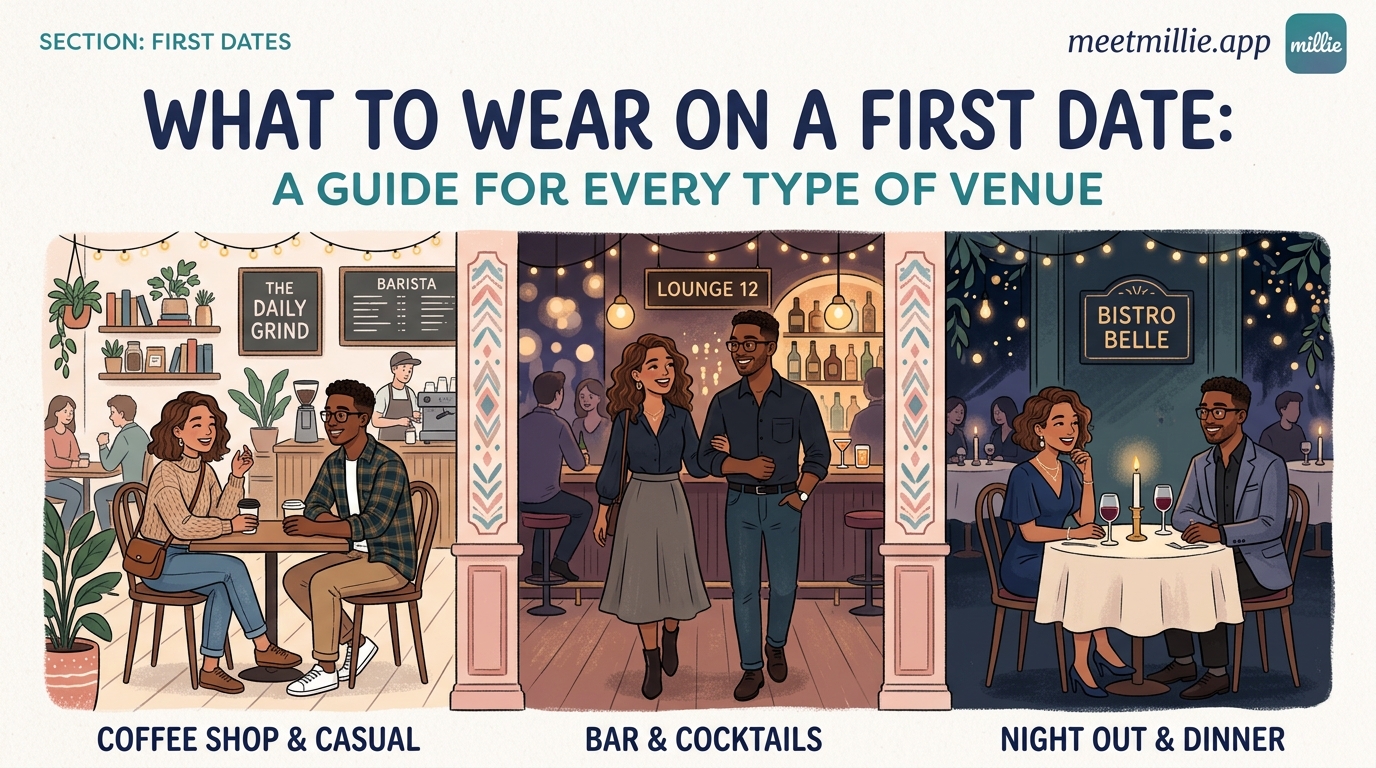
The location sets the tone for everything, including your outfit. A coffee date calls for something different than dinner at an upscale restaurant. You wouldn’t wear hiking boots to a wine bar, and you shouldn’t show up to a nature walk in heels.
Start by asking yourself three questions. What’s the setting? What will you be doing? What’s the weather like? These answers guide every choice you make.
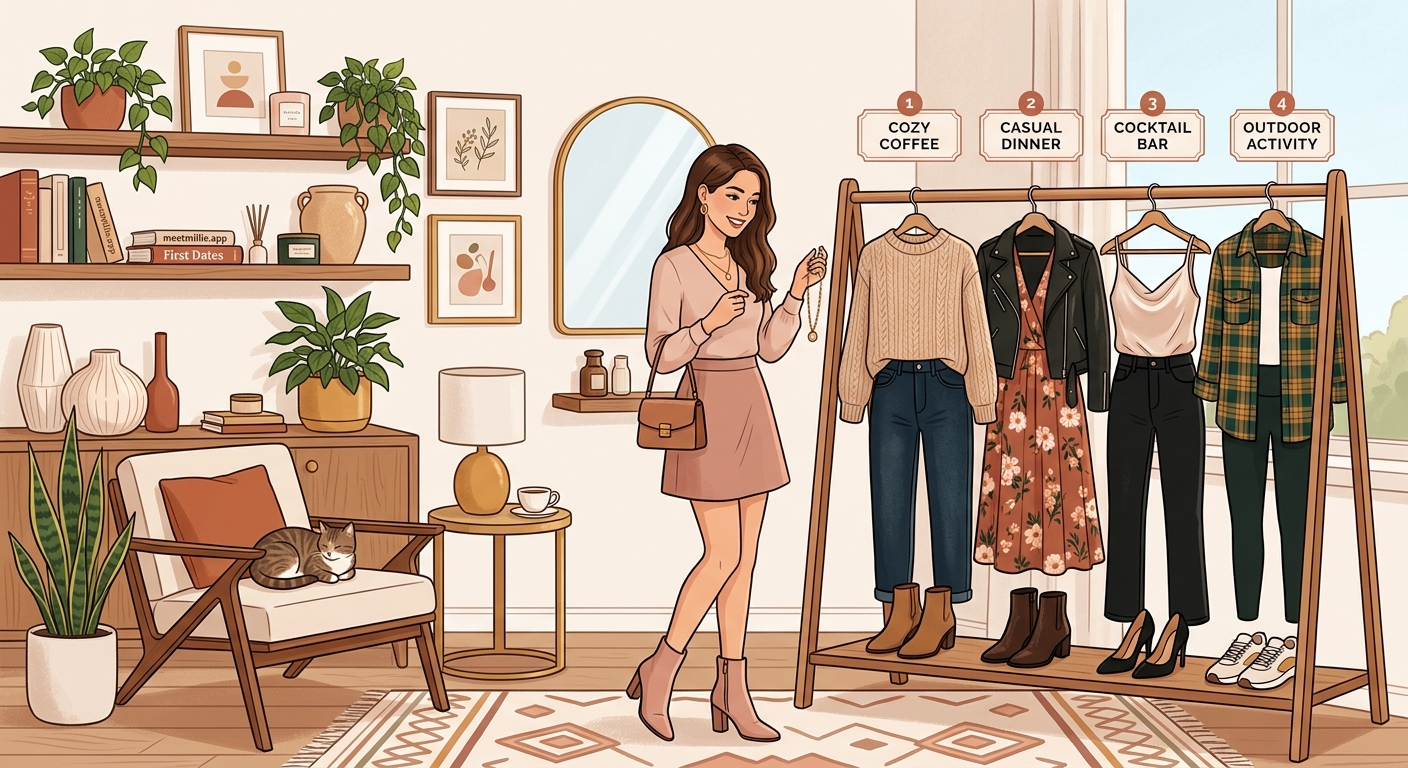
Coffee shops and casual cafes work best with relaxed outfits. Think clean jeans or chinos with a fitted top. Add a light jacket or cardigan for layers. Sneakers or ankle boots keep things comfortable.
Dinner dates need slightly more polish. A nice blouse or button-down shirt paired with dark jeans or slacks hits the right note. Closed-toe shoes elevate the look without going overboard.
Bar or lounge settings let you lean into style. A well-fitted dress or dark jeans with a statement top works well. Add interesting jewelry or a watch that sparks conversation.
Outdoor dates require practical thinking. Wear sturdy shoes you can actually walk in. Choose breathable fabrics if it’s warm, and layer if it’s cool. Your date will appreciate that you came prepared.
The Three-Step Formula for First Date Outfits
Follow this process to build an outfit that works every time.
-
Start with one piece you feel great in. This could be your favorite jeans, a dress that fits perfectly, or a shirt that makes you stand out. Build everything else around this anchor piece.
-
Add complementary items that match the venue formality. If your anchor is casual, keep everything else casual. If it’s dressy, elevate the other pieces to match.
-
Include one signature element that shows who you are. A unique watch, interesting earrings, a vintage jacket, or colorful shoes. This gives your date something to remember and talk about.
This formula removes guesswork. You’re not starting from scratch each time.
Outfit Ideas by Date Type
Different venues need different approaches. Here’s what works for common first date scenarios.
Coffee Date
– Fitted jeans or casual pants
– Clean sneakers or loafers
– Simple top with a cardigan or denim jacket
– Minimal accessories
Dinner at a Restaurant
– Dark jeans or dress pants
– Button-down shirt or blouse
– Leather shoes or heels
– One statement accessory
Drinks at a Bar
– Well-fitted dress or dark jeans with a nice top
– Ankle boots or dress shoes
– Jacket or blazer
– Interesting jewelry
Outdoor Activity
– Athletic or outdoor appropriate pants
– Comfortable closed-toe shoes
– Breathable layers
– Functional accessories like a watch or sunglasses
Museum or Gallery
– Smart casual pants or skirt
– Comfortable walking shoes
– Layered top (galleries can be cold)
– Crossbody bag to keep hands free
Common Mistakes and How to Avoid Them
| Mistake | Why It Happens | Better Approach |
|---|---|---|
| Wearing brand new shoes | Wanting to look polished | Break in shoes at least twice before the date |
| Overdressing for the venue | Trying too hard to impress | Match formality to the location, not your anxiety |
| Choosing uncomfortable clothes | Prioritizing looks over feel | Pick outfits you’ve worn successfully before |
| Ignoring the weather | Focusing only on appearance | Check the forecast and plan layers accordingly |
| Wearing too much fragrance | Thinking more is better | One or two sprays maximum, applied hours before |
The biggest mistake is wearing something that doesn’t feel like you. Your date wants to meet the real person, not a costume version.
Color and Pattern Guidelines That Actually Work
Colors affect how people perceive you. Neutral tones like navy, gray, black, and white work for almost any setting. They’re safe without being boring.
Earth tones like olive, tan, and burgundy add warmth. They photograph well and pair easily with other pieces.
Bright colors show confidence. A red dress or cobalt blue shirt makes a statement. Use them when you want to stand out.
Patterns need careful handling. Small patterns like subtle stripes or tiny prints add interest without overwhelming. Large, busy patterns can distract from conversation.
Stick to one patterned piece per outfit. If you wear patterned pants, keep your top solid. Patterned shirt? Solid pants.
“The best first date outfit is one you forget you’re wearing. When you’re comfortable in your clothes, you can focus on the person in front of you instead of adjusting your collar or tugging at your hemline.” — Dating coach Sarah Chen
Seasonal Adjustments for Year-Round Dating
Summer dates call for breathable fabrics. Cotton, linen, and lightweight blends keep you cool. Avoid anything too tight or restrictive in heat.
- Light colors reflect sun
- Short sleeves or sleeveless with a light layer
- Sandals work for casual venues
- Bring sunglasses for outdoor spots
Fall offers the best layering opportunities. A great jacket can transform a simple outfit.
- Layered looks with cardigans or blazers
- Boots become your best friend
- Rich colors like burgundy and forest green
- Light scarf for added style
Winter requires strategic warmth without bulk.
- Wool or cashmere sweaters
- Dark jeans or pants
- Boots with traction
- A coat you can easily remove indoors
Spring brings unpredictable weather. Prepare for anything.
- Light layers you can add or remove
- Water-resistant shoes
- Transitional colors
- Always check the evening temperature
The Grooming Details That Complete Your Look
Your outfit is only part of the picture. Personal grooming matters just as much.
Hair should look intentional. Whether styled or natural, it should appear clean and cared for. If you use product, don’t overdo it.
Nails tell a story. Keep them clean and trimmed. A simple manicure works better than chipped polish.
Facial hair needs attention. Trim or shave according to your style. Make sure it looks deliberate, not neglected.
Teeth matter more than most people think. Brush before you leave. Keep mints handy but use them discreetly.
Skin care shows effort. Moisturize before getting dressed. Address any obvious concerns without obsessing.
Your clothes should be clean and wrinkle-free. Iron or steam anything that needs it. Check for stains or damage before heading out.
Accessories That Add Without Overwhelming
The right accessories elevate an outfit. The wrong ones distract from it.
Watches work for everyone. They’re functional and stylish. Choose one that matches your outfit formality.
Jewelry should be minimal. One or two pieces maximum. Let them be conversation starters, not distractions.
Bags need to be practical. A small crossbody or clutch works better than a large tote. Keep it simple and functional.
Belts should match your shoes when possible. They add polish to casual outfits.
Sunglasses are fine for outdoor dates but take them off during conversation. Keeping them on creates a barrier.
Hats work for outdoor activities but can feel too casual for restaurants or bars. Read the room.
Building Confidence Through Preparation
Try on your complete outfit at least one day before the date. Walk around your home in it. Sit down. Move naturally. Make sure nothing pinches, rides up, or feels restrictive.
Take a photo of yourself in the outfit. Look at it objectively. Does it represent who you are? Does it fit the venue? If something feels off, adjust it now.
Have a backup option ready. Sometimes the weather changes or your first choice doesn’t feel right that day. A second outfit removes last-minute panic.
Check all the details the night before. Are your shoes clean? Is everything ironed? Do you have the right undergarments? Small details create big confidence.
Set out your entire outfit before bed. This includes accessories, shoes, and any grooming products you’ll need. Morning-of decisions lead to rushed mistakes.
When to Break the Rules
These guidelines work for most situations, but your personal style matters more than any rule.
If you always wear bold colors, don’t suddenly switch to all black. If vintage clothes are your thing, incorporate them. If you live in sneakers, find a clean pair that works.
The goal is to look like yourself on a good day. Not someone else on their best day.
Some dates call for specific dress codes. If your date mentions the venue has requirements, follow them. Research beforehand if you’re unsure.
Cultural or religious considerations might affect your choices. Honor what matters to you. The right person will respect your values.
Your Outfit is Ready, Now Enjoy the Date
Getting dressed for a first date doesn’t need to be stressful. You now have a clear framework that works for any venue. Start with the location, follow the three-step formula, and choose pieces that make you feel confident.
Remember that your date is probably just as nervous about their outfit choice. They’re focused on making a good impression too. The best thing you can wear is genuine interest in getting to know them. Your clothes are just the packaging for the real you.
Pick your outfit, set it out, and then let it go. When the date arrives, you’ll be ready to focus on what actually matters: the conversation, the connection, and the possibility of something great.