You’ve probably heard someone say “my love language is quality time” or “he just doesn’t understand that acts of service matter to me.” The concept has become so mainstream that it’s hard to scroll through relationship advice without bumping into it. But here’s the thing: popularity doesn’t equal effectiveness.
Love languages lack robust scientific validation, but many couples find the framework helpful for improving communication. The real benefit isn’t the categories themselves but the conversations they spark about needs and preferences. Experts suggest using them as a starting point for dialogue rather than rigid rules, while recognizing that individual preferences are more nuanced than five simple categories can capture.
What the research actually shows
Gary Chapman introduced the five love languages in 1992: words of affirmation, acts of service, receiving gifts, quality time, and physical touch. The book sold millions of copies. But scientific backing? That’s a different story.
Multiple studies have tried to validate the framework. Most found little evidence supporting the idea that people fall neatly into these five categories or that matching love languages predicts relationship satisfaction.
A 2017 study published in the Journal of Social and Personal Relationships found no correlation between partners having the same love language and relationship quality. Another study in 2018 showed that people don’t consistently prefer one love language over others. Most of us want all five, just in varying degrees.
The biggest issue is that Chapman’s framework wasn’t developed through rigorous research. He based it on his observations as a marriage counselor. That doesn’t make it worthless, but it does mean we should approach it differently than evidence-based therapeutic approaches.
Here’s what relationship researchers do agree on: communication about needs matters. A lot.
Why couples still find them useful
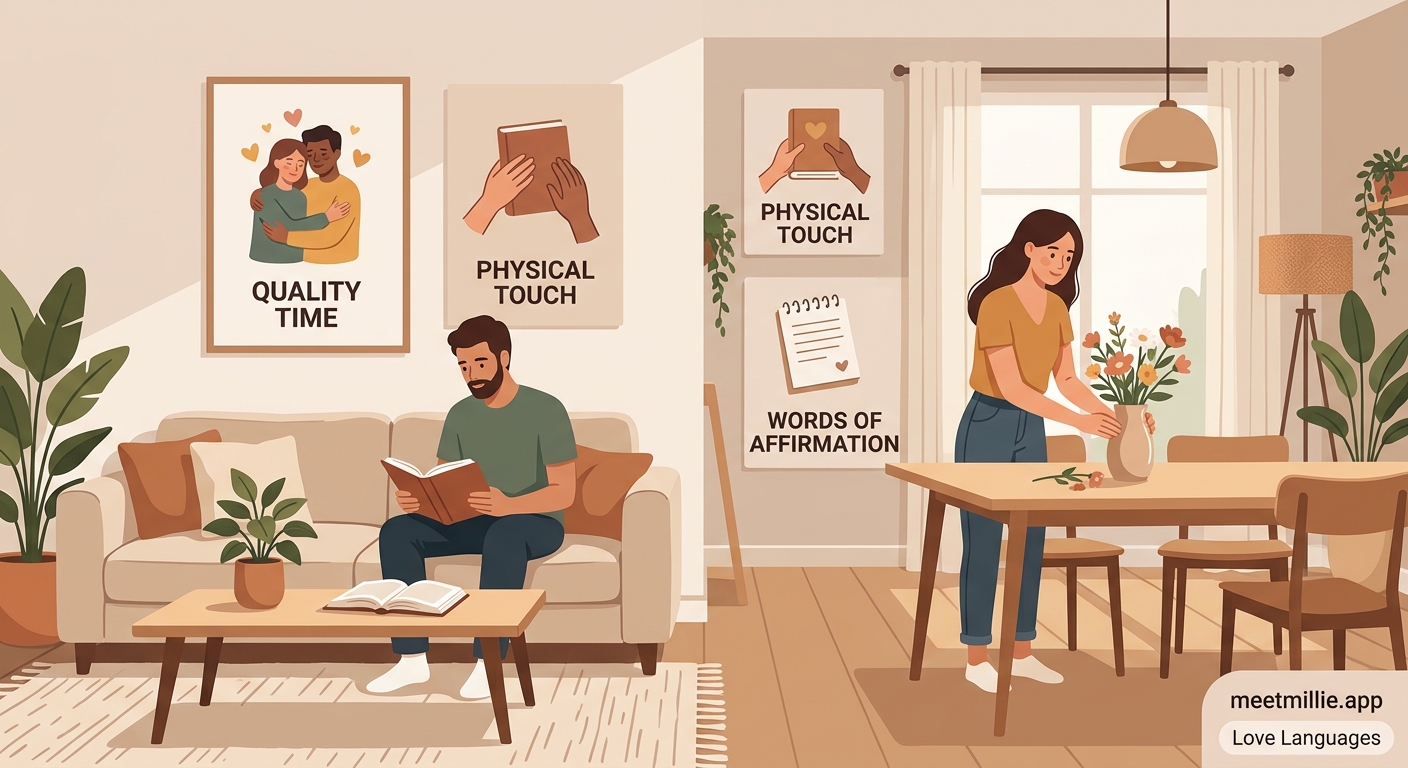
Despite the lack of scientific validation, thousands of couples swear by love languages. And there’s a good reason for that.
The framework gives people vocabulary. Before learning about love languages, someone might feel frustrated that their partner doesn’t “get” them. After, they can say “I feel loved when you help with household tasks” instead of just feeling resentful.
It normalizes different preferences. When you realize that your partner genuinely feels loved through physical touch while you prefer quality time, it stops feeling like rejection. You’re just wired differently.
The categories provide structure for difficult conversations. Talking about emotional needs can feel vulnerable and abstract. Having five concrete categories makes it easier to start the discussion, even if your actual preferences are more complex.
“Love languages work not because they’re scientifically accurate, but because they give couples permission to talk about what they need. The conversation is the intervention, not the framework itself.” – Dr. Jennifer Harman, relationship researcher
Many therapists use love languages as a starting tool, then help couples develop more personalized understanding of their specific needs.
The problems experts point out
Relationship researchers have identified several limitations worth considering.
The framework is too simplistic. Human emotional needs don’t fit neatly into five boxes. You might prefer words of affirmation in public but physical touch in private. Your preferences might change based on stress levels, life stages, or even the day of the week.
It can become an excuse. Some people use their love language to avoid growth. “That’s just not my love language” becomes a way to dismiss a partner’s needs rather than finding compromise.
The categories overlap significantly. Is cooking dinner an act of service or quality time? Is a thoughtful gift about the object or the words written in the card? The boundaries aren’t as clear as the framework suggests.
It puts responsibility on the giver rather than addressing reception. The framework focuses on how your partner should show love, but research shows that how we receive and interpret gestures matters just as much.
Cultural and individual variation gets ignored. The five languages reflect Western, middle-class relationship norms. People from different backgrounds might express and receive love in ways that don’t fit these categories at all.
How to use them without the downsides
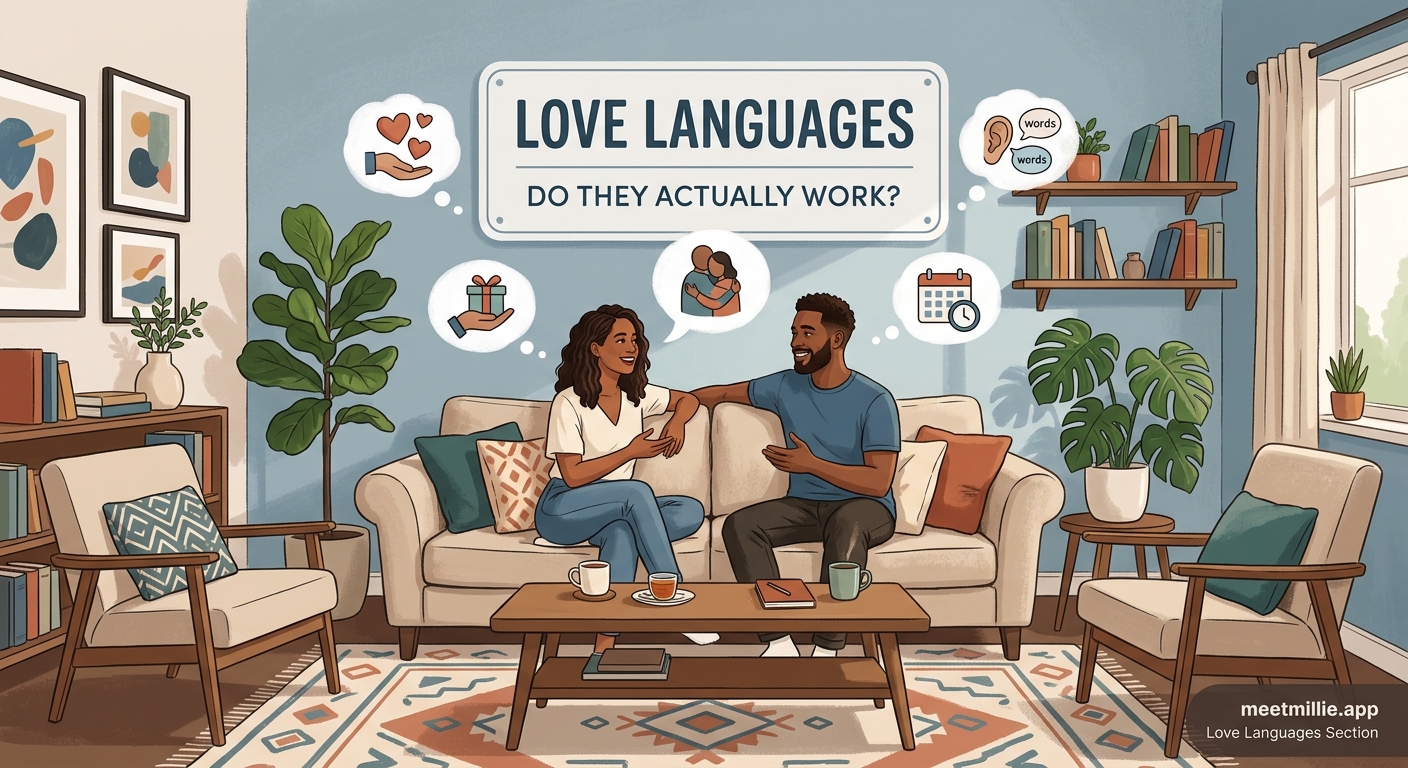
If you want to try the love languages approach, here’s how to do it thoughtfully.
-
Take the assessment together but treat it as a conversation starter, not a diagnosis. Discuss your results and whether they feel accurate.
-
Ask follow-up questions that go deeper than the categories. What specific acts of service matter most? What kind of quality time feels meaningful versus obligatory?
-
Revisit the conversation regularly. Your preferences will shift as your relationship evolves, especially during major life transitions like moving past the honeymoon phase.
-
Focus on patterns rather than rules. Notice when your partner seems most loved and appreciated, even if it doesn’t fit neatly into a category.
-
Combine it with other relationship tools. Love languages shouldn’t replace therapy, communication skills training, or other evidence-based approaches.
What works better according to science
Researchers have identified relationship practices with stronger evidence behind them.
The Gottman Method has decades of research showing that specific communication patterns predict relationship success. This includes things like responding positively to bids for attention, managing conflict constructively, and maintaining a positive-to-negative interaction ratio.
Attachment theory helps couples understand their emotional patterns and triggers. This framework has extensive scientific validation and explains why people have different comfort levels with intimacy and independence.
Emotion-focused therapy addresses the underlying emotional needs driving relationship conflicts. Rather than focusing on love languages, it helps partners understand and respond to each other’s core vulnerabilities.
Direct needs assessment means simply asking your partner what makes them feel loved and valued. Skip the categories entirely and have ongoing, specific conversations about preferences.
Many of these approaches require more effort than taking a love language quiz. But they’re more likely to create lasting change.
| Approach | Scientific Support | Ease of Use | Depth of Impact |
|---|---|---|---|
| Love Languages | Limited | Very easy | Surface level |
| Gottman Method | Strong | Moderate | Deep |
| Attachment Theory | Strong | Moderate | Deep |
| Emotion-Focused Therapy | Strong | Requires therapist | Very deep |
| Direct Communication | Strong | Easy but vulnerable | Customizable |
When love languages might actually help
The framework works best in specific situations.
Early relationship conversations. When you’re just starting to get serious, love languages provide an easy entry point for discussing needs. They’re less intimidating than jumping straight into attachment styles or childhood wounds.
Repairing after conflict. After a fight, asking “what would make you feel loved right now?” and using the love language framework can help you both reset.
Long-distance relationships. The categories help you think creatively about showing love when physical touch and quality time are limited. You might lean harder into words of affirmation or sending thoughtful gifts.
Relationships with communication barriers. If you struggle to articulate emotional needs, having five categories to choose from makes it easier to start. You can point to “acts of service” even if you can’t explain exactly why it matters.
Teaching kids about relationships. The simplified framework helps children and teenagers start thinking about how different people show and receive care.
The real question you should ask
Instead of “do love languages work?” try asking “what does my partner need to feel loved, and how can I find that out?”
That question leads to actual conversation. It acknowledges that your partner is an individual, not a category. It opens the door to ongoing dialogue rather than a one-time assessment.
You might discover that your partner feels most loved when you remember small details from their stories. That doesn’t fit neatly into any love language, but it’s specific and actionable.
Or you might learn that they need different things during stressful work weeks versus relaxed weekends. That nuance gets lost when you’re trying to pick one primary love language.
The couples who benefit most from love languages are the ones who use them as a starting point, not an ending point. They take the quiz, discuss the results, and then keep talking. They notice patterns, ask questions, and adjust their approach based on what actually works.
Common mistakes people make
Avoid these traps when working with the love language framework.
-
Assuming your partner’s love language matches yours. This is projection, and it leads to giving what you want to receive rather than what they actually need.
-
Using it as a weapon. “I told you my love language is quality time, so you’re failing me” turns a communication tool into a scorecard.
-
Ignoring the context. Your partner might love receiving gifts on special occasions but feel uncomfortable with expensive surprises. The category doesn’t tell you everything.
-
Stopping at identification. Knowing your love languages means nothing if you don’t change your behavior based on that knowledge.
-
Forgetting about yourself. Some people focus so much on speaking their partner’s love language that they neglect communicating their own needs.
If you find yourself overthinking every interaction, you might be taking the framework too seriously. It should simplify communication, not complicate it.
What relationship experts recommend instead
Most therapists suggest a more personalized approach.
Start with observation. Pay attention to when your partner lights up, relaxes, or seems genuinely appreciated. Notice what they complain about missing when you’re busy or distracted.
Ask specific questions. Instead of “what’s your love language?” try “what’s something I did recently that made you feel really loved?” or “when do you feel most connected to me?”
Create your own categories. Maybe your partner feels loved through shared projects, intellectual conversations, or adventures together. None of those fit the standard five languages, and that’s fine.
Build in regular check-ins. Set aside time monthly or quarterly to discuss what’s working and what’s not. Needs change, especially during transitions.
Focus on responsiveness. Research shows that how quickly and positively you respond to your partner’s bids for attention matters more than grand gestures. That’s not a love language, but it’s evidence-based.
Making it work in real life
Here’s what using love languages thoughtfully looks like in practice.
Sarah and Marcus took the love language quiz early in their relationship. Sarah scored high on quality time, Marcus on physical touch. Instead of stopping there, they talked about specifics.
Sarah realized that quality time meant undivided attention, not just being in the same room. Marcus learned that physical touch didn’t always mean sex. A hand on her back while cooking together mattered just as much.
They also discovered preferences that didn’t fit the framework. Sarah felt especially loved when Marcus remembered her coffee order without asking. Marcus appreciated when Sarah sent him articles about his hobbies.
A year later, during a stressful work period, Sarah’s needs shifted. She wanted acts of service more than quality time because she was overwhelmed. They adjusted.
That flexibility is what makes the framework useful. It’s a tool, not a rulebook.
Why the conversation matters more than the label
The most valuable thing about love languages isn’t the five categories. It’s the permission they give you to talk about emotional needs without feeling selfish or demanding.
Before the framework existed, people still had these needs. They just didn’t always have language for them. Now you can say “I need more words of affirmation” instead of just feeling insecure and not knowing why.
But you could get the same benefit by simply asking “what makes you feel loved?” and listening carefully to the answer. The categories are training wheels. Eventually, you might not need them.
Some couples develop their own shorthand. They know that “I need a reset” means quality time together. “I’m running on empty” means acts of service would help. These personalized signals work better than generic categories because they’re tailored to your specific relationship.
What actually predicts relationship success
Research consistently shows that these factors matter more than love languages.
Emotional attunement. Can you recognize when your partner is stressed, hurt, or needs support? Do you respond with care rather than defensiveness?
Conflict management. Every couple fights. Successful ones repair after conflicts, take responsibility for their part, and avoid contempt and criticism.
Shared meaning. Do you have common goals, values, and vision for your life together? This matters more than matching love languages.
Trust and reliability. Do you follow through on commitments? Can your partner count on you during difficult times?
Friendship and fondness. Do you genuinely like each other? Can you laugh together and enjoy each other’s company outside of romance?
None of these show up in a love language quiz. But they’re what actually keeps relationships strong over time.
Should you bother with love languages at all?
Here’s the honest answer: it depends.
If you’re struggling to communicate about needs and the framework gives you an easy starting point, use it. Just don’t stop there.
If you’re already good at direct communication, you probably don’t need the categories. Keep doing what works.
If your relationship has serious issues, love languages won’t fix them. Consider therapy with someone trained in evidence-based approaches.
If you’re just curious and want to learn more about your partner, go ahead and take the quiz together. Treat it like a personality test at a party: fun and potentially insightful, but not definitive.
The framework has helped millions of people start important conversations. That’s worth something, even if the science is shaky.
Where love languages fit in your relationship toolkit
Think of love languages as one tool among many. They’re useful for certain jobs but not others.
They’re great for starting conversations about appreciation and affection. They’re terrible for addressing serious conflicts or trauma.
They work well early in relationships when you’re still learning about each other. They’re less useful in long-term partnerships where you already know each other deeply.
They help when you’re feeling disconnected and want a simple way to reconnect. They don’t help when the problem is deeper than just different preferences.
Use them when they’re helpful. Ignore them when they’re not. And always remember that your relationship is more complex than any framework can capture.
Building something better than categories
The best relationships aren’t built on love languages. They’re built on curiosity, attention, and genuine care.
That means noticing the small things. Your partner mentioned wanting to try a new restaurant three weeks ago. They always smile when you play that one song. They seem stressed every Sunday night before the work week.
It means asking questions and actually listening. Not to categorize the answers, but to understand the person in front of you.
It means adjusting your approach based on what you observe. Not because a quiz told you to, but because you care about making your partner feel valued.
Love languages might help you start that process. But the real work happens in the daily moments when you choose to pay attention, respond with kindness, and keep learning about the person you love.
That’s not a framework. It’s just love.