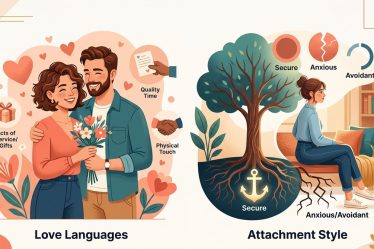
You’ve been together for years. The gestures that used to make your heart race now feel routine. Meanwhile, you crave something different from your partner, something you didn’t need before. You might wonder if something’s wrong with you or your relationship.
Nothing’s broken. You’re just changing.
Love languages absolutely can and do change over time. Major life transitions like becoming parents, career shifts, health challenges, and aging naturally reshape what makes you feel loved. Recognizing these shifts and communicating them to your partner prevents emotional disconnection. The strongest relationships adapt as both people evolve, treating changing needs as growth rather than problems to fix.
Why your love language isn’t set in stone
Most people discover their love language once and assume it’s permanent. That’s not how humans work.
Your emotional needs shift based on life circumstances. A new parent who once thrived on quality time might desperately need acts of service when they’re running on three hours of sleep. Someone who valued gifts in their twenties might crave words of affirmation after a career setback in their forties.
Think of love languages as preferences, not personality traits. Your favorite food probably isn’t the same as it was ten years ago. Your emotional needs evolve the same way.
Research on attachment styles shows that people’s relationship patterns can shift based on experiences and life stages. Love languages follow similar patterns. They’re influenced by stress, health, work demands, family dynamics, and personal growth.
The person you were when you took that love language quiz five years ago isn’t the person you are today. Your needs shouldn’t be either.
Life stages that trigger love language shifts
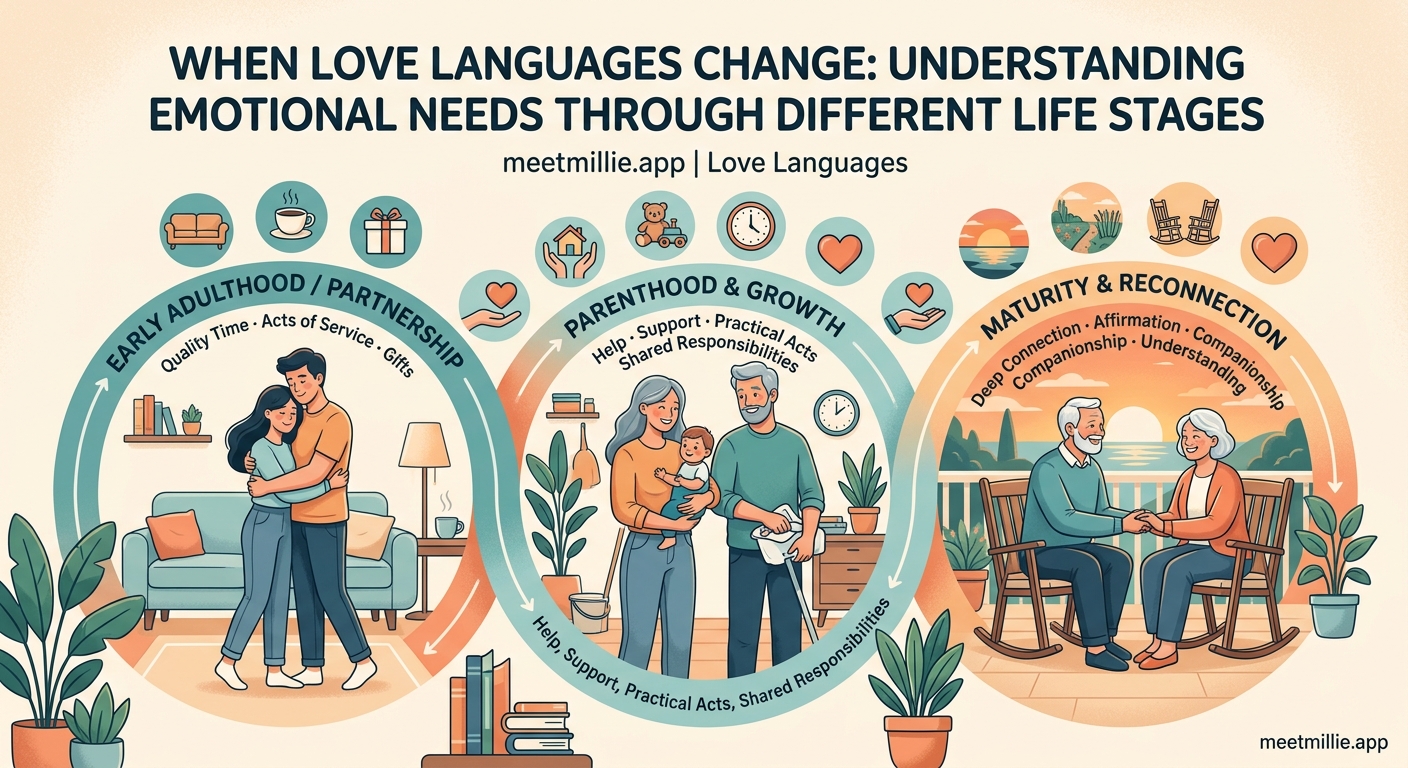
Certain transitions almost guarantee your emotional needs will change. Here are the big ones:
Becoming parents
New parents often experience dramatic shifts. Physical touch might drop on your priority list when you’ve been touched by a baby all day. Acts of service become currency when you’re drowning in diapers and dishes.
One partner might need more words of affirmation during the vulnerable early parenting phase. The other might crave quality time away from the chaos.
Career changes
Job loss, promotions, retirement, or career pivots reshape how you want to receive love. High-stress work periods often increase the need for acts of service and physical touch. Retirement might shift focus back to quality time and shared experiences.
Health challenges
Chronic illness or injury changes everything. Physical touch becomes complicated if you’re in pain. Acts of service become essential when basic tasks feel impossible. Words of affirmation matter more when your body feels like it’s betraying you.
Aging together
Long-term couples often see love languages shift as they age. Physical touch might become more important as intimacy evolves. Quality time takes on new meaning when you realize time is finite. Gifts might matter less when you’ve accumulated enough stuff.
Empty nest transitions
When kids leave home, couples rediscover each other. The love languages that worked during active parenting might not fit this new phase. You’re building a different relationship now.
How to recognize when your love language has changed
Most people don’t wake up and realize their needs have shifted. The signs are subtle.
You might notice:
- Gestures that used to fill your tank now feel empty
- You’re irritated by efforts your partner makes, even though they’re trying
- You find yourself wishing for something different but can’t name it
- Old conflicts resurface because the same solutions don’t work anymore
- You feel disconnected even when your partner is doing what they’ve always done
Pay attention to what you’re craving. If you keep thinking “I wish they would just…” that’s your clue.
“The biggest mistake couples make is assuming that what worked in year one should work in year ten. People grow. Needs change. The relationship has to grow too.” – Dr. Emily Chen, relationship therapist
Steps to identify your current love language
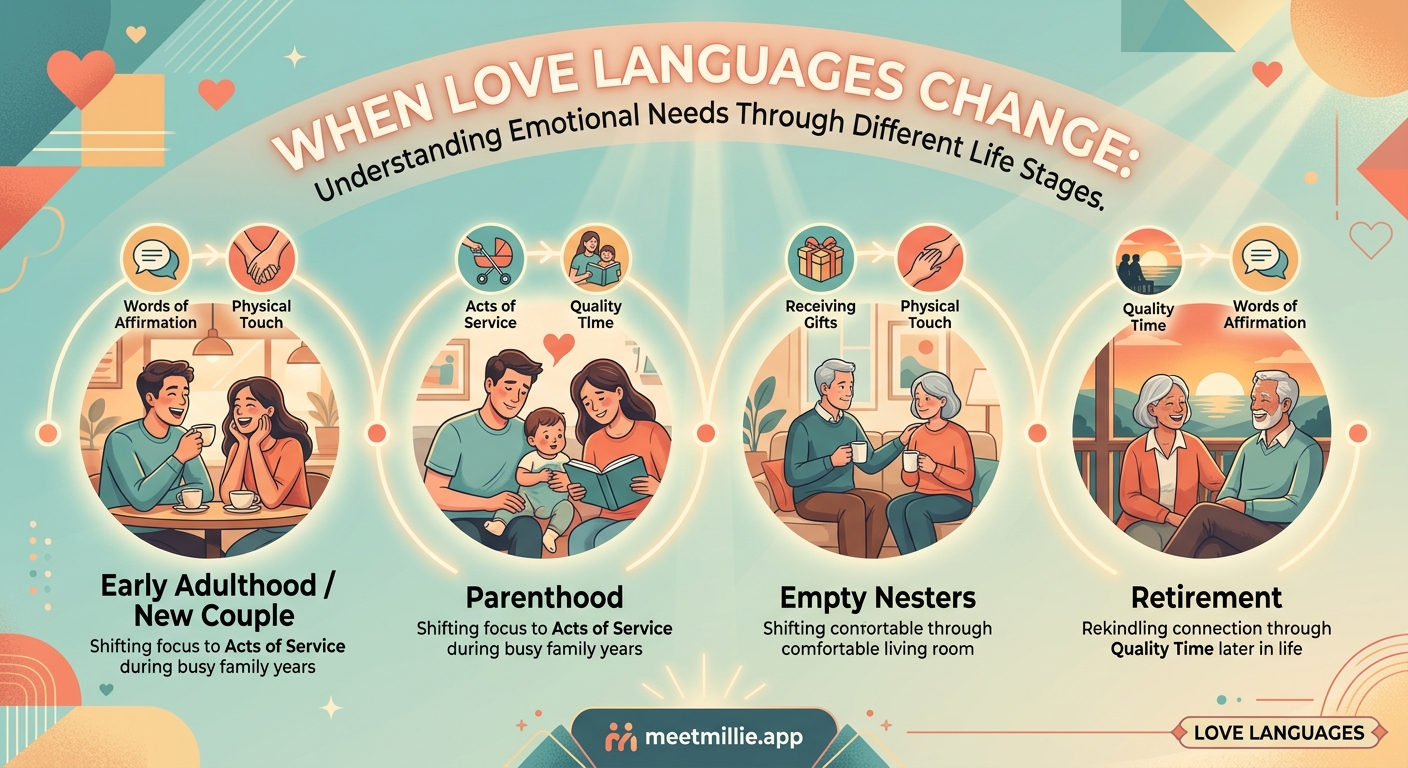
Figuring out your evolved needs takes intentional reflection. Here’s how to do it:
-
Review the past six months. What moments made you feel most loved? What did your partner do that genuinely filled you up? Look for patterns.
-
Notice what you complain about. Your complaints often reveal unmet needs. “You never help around the house” might signal acts of service. “We don’t talk anymore” points to quality time or words of affirmation.
-
Consider what you give. We often give love the way we want to receive it. If you’ve started doing more acts of service, you might need them in return.
-
Test your assumptions. Try asking for what you think you need. See how it feels when you receive it. Sometimes we’re wrong about our own needs.
-
Track your emotional responses. Keep a simple note on your phone for a week. When do you feel most connected? Most frustrated? Most appreciated?
Common love language shifts and what triggers them
| Life Stage | Common Shift | Why It Happens |
|---|---|---|
| New parents | Quality Time → Acts of Service | Survival mode requires practical help |
| High-stress career | Words of Affirmation → Physical Touch | Need grounding and comfort over validation |
| Health crisis | Gifts → Acts of Service | Practical needs outweigh symbolic gestures |
| Empty nest | Acts of Service → Quality Time | More time available, less daily maintenance |
| Retirement | Physical Touch → Quality Time | Desire for shared experiences and adventure |
| Loss or grief | Any language → Words of Affirmation | Need emotional validation and support |
These aren’t rules. They’re common patterns that might help you recognize your own shifts.
Talking to your partner about changing needs
This conversation feels vulnerable. You’re essentially saying “what you’ve been doing isn’t working anymore.” That’s scary.
Frame it as evolution, not criticism.
Try this approach:
“I’ve noticed something about myself lately. The things that make me feel loved have shifted. It’s not that what you do doesn’t matter. I think I just need something different right now because [life circumstance]. Can we talk about it?”
Be specific about what you need now. Vague requests like “I need more quality time” don’t help. Try “I’d love if we could have dinner together twice a week without phones, even if it’s just 30 minutes.”
Expect this to be an ongoing conversation, not a one-time fix. Understanding how what’s your partner’s love language has evolved takes time and patience.
What to do when your love languages no longer align
Mismatched love languages feel lonely. You’re both trying, but missing each other.
First, acknowledge that perfect alignment is rare. Most couples have different primary love languages. That’s normal.
The goal isn’t matching. It’s understanding.
Here’s what helps:
-
Create a translation guide. If you need quality time but they speak acts of service, help them understand that doing dishes together counts as both.
-
Schedule regular check-ins. Set a monthly reminder to ask each other: “What’s making you feel loved right now? What do you need more of?”
-
Compromise on effort. You might not naturally speak their language, but you can learn. They can too.
-
Validate the attempt. When your partner tries to love you in your language, even if they’re clumsy at it, acknowledge the effort.
-
Don’t keep score. This isn’t about equal exchange. Some seasons require more giving from one partner.
The conversation about whether love languages actually work matters less than whether you’re both willing to adapt.
Mistakes that make love language shifts harder
Certain approaches sabotage the adjustment process:
-
Assuming your partner should just know. They can’t read your mind. Your needs changed. Tell them.
-
Treating it like a test. Don’t wait to see if they figure it out. That’s setting them up to fail.
-
Dismissing their confusion. If they’re genuinely trying to understand but struggling, be patient. This is new for them too.
-
Expecting instant adaptation. Habits take time to change. Your partner has been loving you one way for years. Give them grace as they learn new patterns.
-
Using it as ammunition. “See, you don’t even know my love language anymore” is a weapon, not communication.
-
Ignoring their shifts too. This goes both ways. Ask what’s changed for them.
Building a relationship that grows with you
The strongest relationships treat change as normal, not threatening.
Build in flexibility from the start. Make “how are we doing?” conversations routine. Create space for both people to evolve.
Some couples do annual relationship reviews. Others check in monthly. Find a rhythm that works for you.
Remember that relationships outgrow the honeymoon phase naturally. That’s not a bad thing. It’s growth.
Keep these practices in mind:
- Ask about needs before assuming
- Notice when old patterns stop working
- Stay curious about your partner’s inner world
- Treat their changing needs as information, not criticism
- Celebrate growth instead of mourning what was
When professional help makes sense
Sometimes you need outside support to navigate these shifts. Consider couples therapy if:
- You’ve tried talking but keep having the same fight
- One or both of you feels consistently unloved despite effort
- Major life transitions have created distance you can’t bridge alone
- You’re stuck in patterns that feel impossible to break
- Communication about needs triggers defensiveness or shutdown
A good therapist helps you understand not just what changed, but why. They can facilitate conversations that feel too loaded to have alone.
There’s no shame in getting help. Actually, seeking support shows you value the relationship enough to invest in it.
Your relationship is supposed to evolve
You’re not the same person you were five years ago. Your partner isn’t either. Expecting your relationship to stay static while you both grow is unrealistic.
Can love languages change over time? Absolutely. They should.
The question isn’t whether your needs will shift. It’s whether you’ll communicate those shifts and adapt together. The couples who make it aren’t the ones who never change. They’re the ones who change together, staying curious about who their partner is becoming.
Start paying attention to what fills you up now, not what used to. Have the conversation. Give your partner the roadmap to your current heart, not the one from three years ago. Your relationship will be stronger for it.