Thinking about why some relationships feel effortless while others are riddled with misunderstandings can be confusing. You might find yourself loving someone deeply but still feeling disconnected or misunderstood. Or perhaps you notice recurring patterns that hold you back from true intimacy. These experiences often stem from the way we express and receive love, shaped by our core attachment styles and love languages. Understanding how love language vs attachment style influence your relationships is a game-changer in building deeper bonds.
Love language and attachment style are different ways of expressing emotional needs. Recognizing their unique roles helps you understand your romantic patterns and fosters healthier connections.
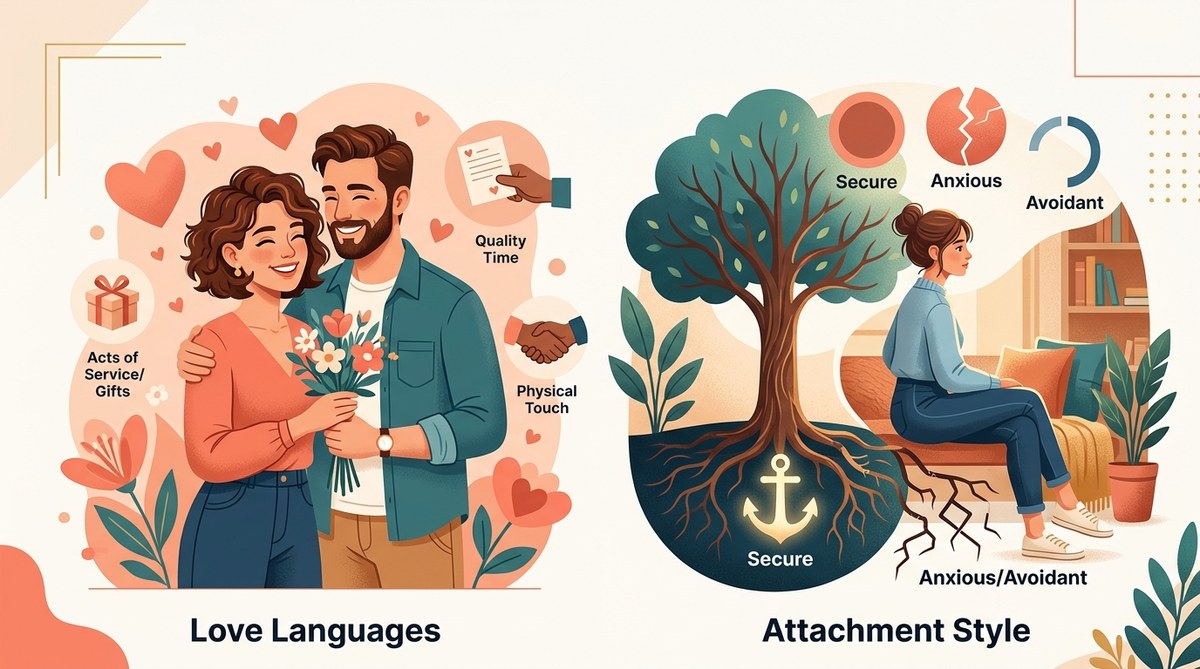
When you hear terms like love language and attachment style, it’s natural to wonder how they interact. Both influence how we relate to others but operate on different levels. Love languages describe the specific way someone prefers to give and receive love. Attachment styles reflect the deep-seated patterns formed in early relationships that shape our trust, intimacy, and emotional responses. Together, they create a complex map of your relationship behavior.
The core differences between love language and attachment style
Understanding the distinction between these two concepts is crucial. Love languages are about how you prefer to show affection and feel loved. For example, some people feel most loved through acts of service, while others thrive on words of affirmation. Knowing your love language helps you communicate your needs clearly and appreciate your partner’s way of expressing love.
Attachment style, on the other hand, is rooted in your childhood experiences and influences your overall approach to intimacy. There are four primary attachment styles:
- Secure
- Anxious
- Avoidant
- Disorganized
Each style impacts how you respond to closeness, conflict, and vulnerability. For example, someone with an anxious attachment might crave constant reassurance, while an avoidant individual might shy away from intense emotional situations.
How love language and attachment style influence your romantic dynamics
While they are different, love language and attachment style often interact in fascinating ways. For instance, a person with a secure attachment might comfortably understand and express their love language, leading to satisfying interactions. Conversely, someone with an anxious attachment might overemphasize their love language, seeking validation through constant affirmation.
Here are some ways they influence relationships:
- Communication: Your love language guides how you prefer to express affection, but attachment style affects how receptive you are to your partner’s signals.
- Conflict: Attachment styles influence reactions to disagreements—secure individuals handle them calmly, while anxious or avoidant types may withdraw or become defensive.
- Trust: Secure attachment fosters trust, making it easier to appreciate different love languages. In insecure styles, misunderstandings about love expressions can deepen insecurities.
By understanding your attachment style and love language, you can better interpret your partner’s actions and avoid miscommunications.
Recognizing the signs of mismatched love languages and attachment styles
Sometimes, couples assume they are incompatible because they misunderstand each other’s love expressions. For example, one partner might prioritize quality time, while the other values physical touch. If their attachment styles differ—say, one is anxious and the other avoidant—they might misread each other’s intentions.
Signs of a mismatch include:
- Feeling unloved despite efforts
- Repeated misunderstandings
- Emotional distance
- Frustration over different ways of showing affection
Knowing the difference between love language vs attachment style helps you see that these issues are often solvable with awareness and communication.
Practical steps to align love languages and attachment needs
Addressing mismatched love languages and attachment styles involves intentional effort. Here are three practical steps to foster harmony:
-
Identify your love languages and attachment style
Take time to reflect or use assessments like the The 5 Love Languages and attachment style quizzes. Understanding your preferences and patterns is the foundation for change. -
Communicate openly with your partner
Share what makes you feel loved and secure. For example, if you value words of affirmation, let your partner know how much a simple compliment means. Encourage them to share their needs too. -
Practice empathy and flexibility
Recognize that your partner’s way of expressing love might differ from yours. Be willing to adapt and accept their love language, even if it’s not your default. This requires patience, especially if attachment insecurities are involved.
Tips for improving relationship harmony
- Be patient and consistent in expressing love in your partner’s preferred way
- Validate each other’s emotional needs regularly
- Seek couples therapy if patterns persist
Techniques and mistakes in understanding love language vs attachment style
| Techniques | Mistakes to Avoid |
|---|---|
| Using love languages to tailor your affection | Assuming your partner’s love language is the same as yours |
| Recognizing your attachment triggers | Ignoring early attachment patterns that influence current behavior |
| Communicating needs clearly | Blaming your partner for misunderstandings |
| Practicing active listening | Dismissing emotional responses as overreactions |
Expert advice on navigating love language and attachment differences
“Understanding your attachment style and love language is like having a map of your emotional landscape. It allows you to navigate relationships with greater awareness and compassion.” — relationship therapist
Building a resilient connection through awareness
Knowing how love language vs attachment style influence your relationships empowers you to build a bond based on understanding rather than assumptions. When you recognize your own patterns and those of your partner, it becomes easier to communicate effectively. This awareness can transform conflicts into opportunities for growth.
Remember, no relationship is perfect. Misalignments are natural. The key is how you respond to them. With patience and a willingness to learn, you can create a partnership rooted in genuine understanding and mutual respect.
Making love work with a deeper understanding
Fostering a healthy relationship involves integrating the knowledge of how love languages and attachment styles shape your behavior. You can develop personalized strategies to meet each other’s emotional needs better. For example, if your partner is avoidant but loves acts of service, you might focus on small, consistent gestures that respect their boundaries.
By applying these insights daily, you strengthen your connection and create a safe space for vulnerability and growth.
Final thoughts for nurturing your romantic journey
Having clarity on your love language and attachment style is a powerful step toward a more fulfilling relationship. It helps you see that differences aren’t barriers but opportunities to learn and adapt. Take the time to identify your needs, communicate openly, and practice patience. Your effort can lead to a deeper, more resilient bond that withstands life’s ups and downs.
Just remember: understanding yourself and your partner’s emotional worlds is the key to transforming connection into genuine intimacy. Use this knowledge to nurture your relationship every day and enjoy the journey toward greater love and understanding.