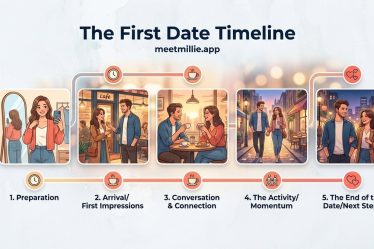
You sit down across from someone new. The drinks arrive. You ask where they grew up, what they do for work, if they have any siblings. Standard stuff. An hour later you know their job title and their favorite brunch spot, but you have no idea if this person could actually be your partner. That is the problem with most first dates. We trade surface level facts and call it connection.
But what if you could ask one question that cuts through the noise? A question that reveals how someone thinks, what they value, and whether you two are heading in the same direction? It exists. And it is not about their zodiac sign or their ideal vacation.
The single most predictive first date question is not about hobbies or career goals. It is about how someone reacts to a challenge they have already overcome. Asking about a past struggle and the lesson they took from it reveals emotional maturity, self awareness, and conflict resolution style. These traits matter more for long term success than shared interests or physical chemistry.
Why Most First Date Questions Miss the Mark
Think about the questions you usually ask. What do you do? Where did you go to school? Do you like to travel? These are fine for breaking the ice, but they tell you almost nothing about compatibility. You can learn a person’s entire career history and still have no clue if they handle stress well or if they take responsibility when things go wrong.
The problem is that standard questions let people give rehearsed answers. Everyone has a polished version of their life story ready to go. That version is not a lie, but it is also not the full picture. To predict whether a relationship will last, you need to see how someone operates when life gets messy. You need to understand their internal wiring, not just their external resume.
The One Question That Reveals Everything
Here it is. The question that separates a forgettable first date from a promising one.
“Tell me about a time things did not go the way you planned. What happened, and what did you learn from it?”
That is it. No complicated setup. No trick. But this question works because it forces the other person to do three things at once. They have to be honest about a real moment of struggle. They have to show how they process disappointment. And they have to articulate a lesson, which reveals whether they are capable of growth.
What Their Answer Tells You
- If they blame someone else entirely, that is a red flag. Long term relationships require accountability.
- If they cannot think of an example, they may be avoiding vulnerability or lack self reflection.
- If they describe a setback and explain what they changed about themselves, that signals emotional intelligence.
- If they focus only on the outcome (I got a new job eventually) without mentioning their own growth, they may be results driven but not introspective.
This question does more than any list of hobbies ever could. It shows you their character in action.
How to Ask It Without Sounding Like an Interview
The biggest fear people have with this question is that it feels like a job interview. You can avoid that by leading with your own story first. Share a small moment where you messed up or faced a hard situation. Then ask them.
For example, you could say, “I once planned this big surprise for a friend and it completely backfired. I learned that I need to check in with people instead of assuming what they want. What about you? Has there been a time when something did not go as you hoped?”
When you offer vulnerability first, you give them permission to do the same. The conversation becomes a mutual exchange instead of an interrogation. This approach also builds trust, which is the foundation of any real connection.
A Practical Process for Using This on Your Next Date
Follow these steps to make the question feel natural and effective.
-
Start with light conversation. Spend the first 15 to 20 minutes on easy topics. Talk about the venue, a funny story from your week, or something you noticed in their profile. Build a little comfort before you go deeper.
-
Share your own story first. As mentioned, lead with a brief personal example. Keep it real but not traumatic. The goal is to show you are willing to be open.
-
Ask the question with curiosity. Use a warm tone. Say something like, “I am curious about how you handle curveballs. Can you think of a time something did not go your way?”
-
Listen without interrupting. Let them finish their entire story. Do not jump in with your own similar experience right away. Just listen.
-
Follow up with one clarifying question. Ask something like, “What was the hardest part of that for you?” or “How did that change the way you approach things now?” This shows you are genuinely interested and helps you learn even more.
-
Pay attention to their body language. Are they relaxed or tense? Do they make eye contact? Do they seem proud of their growth or embarrassed by the memory? Their physical cues add context to their words.
What Not to Do: Common Mistakes
Even a great question can backfire if you ask it the wrong way. Here is a table that breaks down the techniques that work and the mistakes that do not.
| Effective Technique | Common Mistake |
|---|---|
| Lead with your own vulnerability | Ask the question cold without context |
| Use a warm, curious tone | Sound like you are testing them |
| Let them finish before responding | Interrupt to share your own story |
| Ask a follow up question | Move on to a new topic immediately |
| Accept their answer without judgment | React with shock or criticism |
The goal is connection, not evaluation. If you approach this question with genuine interest, they will feel safe opening up. If you treat it like a checklist, they will feel put on the spot.
Why This Question Predicts Long-Term Success
Research on relationships consistently shows that how a couple handles conflict matters more than how much they have in common. Shared interests are great, but they do not sustain a partnership through job changes, health issues, or family stress. What sustains a partnership is each person’s ability to reflect, adapt, and take responsibility.
When you ask about a past challenge, you are essentially getting a preview of how this person will behave when your relationship hits a rough patch. Will they blame you? Will they shut down? Or will they say, “That did not go well. What can I learn from this?”
A person who can answer that question honestly is someone who can grow with you. A person who deflects or avoids the question is likely to repeat the same patterns in a relationship.
“The strongest predictor of relationship success is not how often you agree. It is how you repair after disagreement. Asking about a past failure shows you how someone repairs with themselves.” — Dr. Emily Sanders, relationship psychologist.
Signs the Question Is Working Well
You will know you asked the right question when you notice these signs during the date.
- The conversation slows down. They pause to think before answering.
- They make eye contact and lean in.
- They ask you a similar question in return.
- They seem relieved to talk about something real instead of small talk.
- After they answer, the rest of the date feels more connected and less scripted.
If any of these happen, you are on the right track. You are building the kind of connection that can actually lead to something lasting.
Using the Question Across Different Dating Scenarios
This question works whether you met on an app, through friends, or at a bar. The delivery changes slightly based on the setting.
If you are on a dating app date, you can reference something from their profile to lead in. For example, “You mentioned in your profile that you love hiking. Have you ever had a hiking trip go totally wrong? What happened?”
If you were set up by friends, you can use that as context. “Our friends seem to think we would get along. I am curious, what is something that surprised you about yourself in the last year?”
If you met organically, you can keep it simple. “This is fun. I want to ask you something a little different. Can you tell me about a time you had to change your plan completely?”
The question is flexible. The key is to make it feel like a natural part of the conversation, not a scripted move.
What to Do With the Information You Gather
Once you hear their answer, you have real data to work with. Do not overanalyze one story, but do pay attention to patterns.
- If they told a story about a work failure and said they learned to communicate better, that is a green flag.
- If they told a story about an ex and blamed the entire breakup on that person, take note.
- If they laughed off the question and said they never fail, that is a yellow flag. Everyone fails.
Use what you learn to decide if you want a second date. This question is not about judging someone. It is about finding out if your emotional styles are compatible. If their answer shows self awareness and growth, that is a strong sign you can build something real together.
Putting It All Into Practice
You do not need a list of 50 questions to find a great partner. You need one good question and the courage to ask it. The rest of the conversation will follow naturally when you create space for honesty.
Next time you are on a first date, skip the script. Ask about the moment things fell apart and what came after. That is where the real story lives. That is where you will see if this person is someone who can walk through life with you, not just next to you.
If you want more guidance on making your first dates count, check out our guide on 7 conversation starters that actually work on a first date. It pairs well with the deep question approach and helps you keep the momentum going.
The best relationships start with honest conversations. You have the tool now. Go use it.